
Form follows function:
Sustainability as both theme and mode of the DGfE Conference “Education, Democracy and Sustainability” at TU Dresden
From September 23 to 25, 2025, the annual conference of the DGfE Commission on Education for Sustainable Development (ESD) took place at TU Dresden. The event, entitled “Education, Democracy & Sustainability – Contributions to Theory Development and Empirical Research,” was hosted by the Chair of Nutrition and Home Economics / Vocational Didactics.

Sustainability was not only the central theme of the presentations, workshops, and discussion forums – ranging from A for areas of responsibility and work contexts of ESD to Z for civic (German: zivil) engagement in sustainability and democracy– but was also reflected in the design, planning, communication, and implementation of the event itself.
Together with various stakeholders within and beyond TU Dresden – in particular through collaboration with the Environmental Protection Group and the Green Office of TU Dresden – it was possible to largely realize the vision of a sustainable event. The following provides a brief overview of the key measures implemented.
Even in selecting the venue, several aspects required careful consideration: barrier-free accessibility by public transport, nearby accommodation options, and much more. The organizing team ultimately found an ideal location at August-Bebel-Straße 20 – a building familiar to many members of TU Dresden as the “Kino im Kasten.” The site is characterized by its calm and welcoming surroundings as well as its convenient access by suburban train, tram, and bus. To assist participants, the route from the nearest stops to the venue was clearly signposted and thoroughly described and communicated in advance of the event.
Technology and communication were also key sustainability aspects of the event. Presentation and workshop materials were predominantly digital. All sessions took place in bright rooms equipped with blackout options, allowing for minimal use of electric lighting. The student assistants responsible for technical support were trained and instructed to operate the equipment in a timely and energy-efficient manner. For unavoidable printing, ecologically certified paper by the brand Steinbeis (“Rethinking Paper No. 4”) was used.
Room planning and guest management were closely linked to the topics of single-use items, conference and promotional materials, as well as the broader field of waste prevention and management. All disposable products and giveaway items for participants were omitted. Only for an award ceremony, as well as for keynote speakers and honorary guests, were a few sustainable or reusable gifts presented, such as TU Dresden coffee mugs. Common conference materials such as folders, paper, and similar items were likewise omitted entirely. This approach was communicated to participants in advance to ensure the smooth running of the event, and borrowed materials from the resources of the Chair of Nutrition and Home Economics / Vocational Didactics were made available where needed.
Proper waste separation was supported by three-compartment bins placed in the conference rooms and throughout the building. Separate containers for food and organic waste were provided in the catering area to ensure that these materials were not disposed of with residual waste.

Catering followed a predominantly vegan and at least vegetarian concept, featuring regional providers and ingredients that were, wherever possible, organically certified. Numerous alternative and substitute products, such as oat drinks, were deliberately used. Participants were able to indicate their dietary needs when registering. Specific allergen-related requests were, of course, accommodated, and all food items were labeled in accordance with regulations. In selecting suppliers and producers, aspects of social and economic sustainability were also considered, with a preference for small businesses. Meals were served on porcelain tableware, which additionally contributed to an appealing presentation and dining experience.

All beverages – predominantly sourced regionally, with juices being organically certified – were served from reusable glass bottles in TU-owned reusable cups. In addition, tap water was offered as the most sustainable alternative, which, incidentally, is among the most strictly regulated food products in Germany up to the point of household connection.

Last but not least, the social dimension, as one of the pillars of sustainability, was also taken into account. To foster a pleasant and enriching atmosphere, various interactive formats were included. Conversation card sets developed by the John Dewey Research Center for the Didactics of Democracy at TU Dresden were placed on available standing tables and meeting points. These were designed to encourage participants to engage in dialogue through a variety of question-and-answer prompts, many of which related to sustainability.
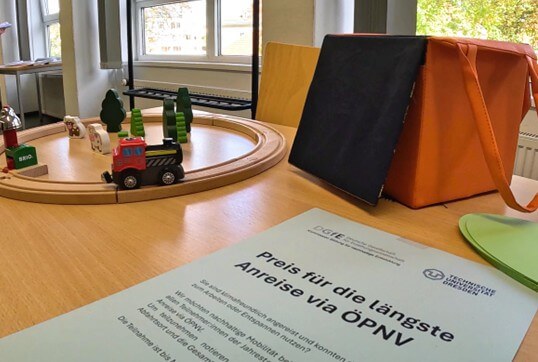
A highlight in this regard was the awarding of a prize for the longest climate-friendly journey by public transport, a contest open to all participants. The winner was a participant who had traveled to the conference by train from Italy.

In the end, and much to the joy and relief of everyone involved, both from an organizational perspective and based on participant feedback, it could be concluded that the conference ran smoothly and to the satisfaction of all parties. The commitment of the team from the Chair of Nutrition and Home Economics / Vocational Didactics proved worthwhile – as reflected in the participants’ responses in particular.