
Jul 31, 2026
New Publication: How Wind Turbines Influence Agricultural Microclimates
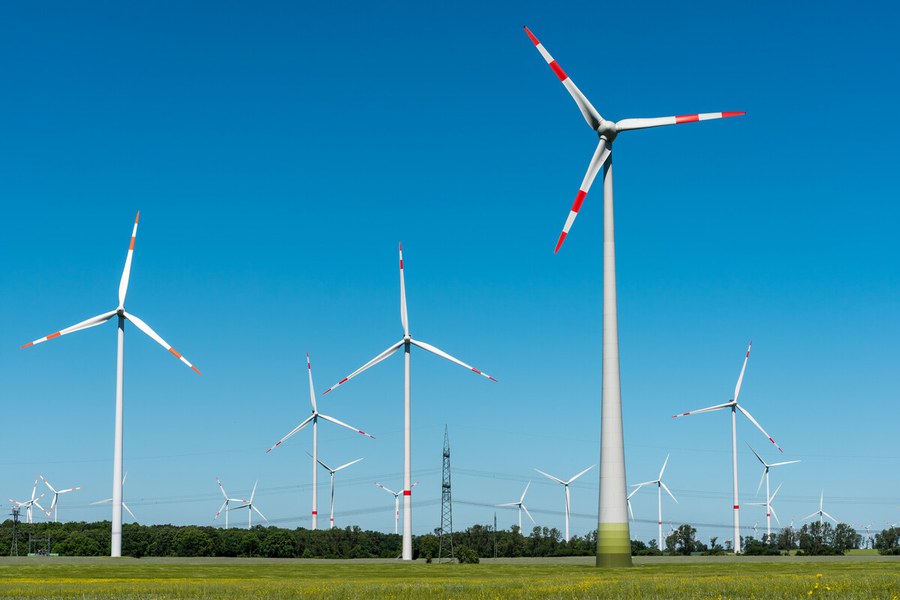
We are pleased to announce the publication of the article "Impact of Wind Turbines on Near-Surface Microclimate and Soil Moisture Under Different Stability Regimes" in the journal Boundary-Layer Meteorology. The study was conducted by Boysen-TU Dresden RTG doctoral researcher Sampath Weerappulli (Project F3) under the supervision of Prof. Mauder and Dr. Wanner.
As renewable energy continues to expand, wind farms are increasingly being installed on agricultural land. While they contribute to sustainable electricity generation, wind turbines also alter airflow and turbulence close to the ground, potentially affecting the local microclimate experienced by crops. Understanding these interactions is becoming ever more important as agriculture faces growing challenges from climate extremes such as heatwaves, droughts, and spring frosts.
In this study, the authors applied the Large Eddy Simulation (LES) method to investigate how wind turbines influence the near-surface microclimate under a broad range of atmospheric stability conditions, from strongly unstable daytime conditions to strongly stable nighttime conditions. The simulations examined changes in air and surface temperature, turbulent heat exchange, evapotranspiration, and soil moisture caused by turbine-induced turbulence.
The results show that the effects of wind turbines strongly depend on atmospheric stability. During unstable daytime conditions, turbine-induced mixing resulted in only modest changes in air and surface temperatures. In contrast, under stable nighttime conditions, wind turbines generated enhanced turbulence that mixed warmer air downward, leading to noticeable warming near the ground. The simulations also revealed systematic changes in the surface energy balance and evapotranspiration, demonstrating that wind turbines can influence soil–atmosphere interactions in ways that may affect agricultural conditions.
Overall, the findings improve our understanding of how renewable energy infrastructure interacts with agricultural ecosystems. The study highlights both the opportunities and the potential trade-offs associated with the co-location of wind energy production and agriculture.
The article is available as Open Access at the following link: