
Mar 17, 2026
Karl Petzold: Pioneer of Building Climatology
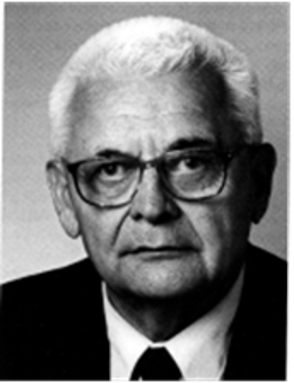
Karl Petzold
Karl Petzold, born on April 27th,1926 in Zwickau, shaped the field of Building Climatology like virtually no one else. After a difficult youth during the Second World War, he earned the German Abitur in 1946, which qualified him for university entrance. Afterward, he went on to study Mechanical Engineering in Dresden. His professional career took him through the chemical industry and the Institut für Luft- und Kältetechnik Dresden (Institute of Air and Refrigeration Technology Dresden), where he obtained his doctorate and authored his first groundbreaking publications. In 1968, TU Dresden appointed him Professor and Head of the Institut für Technische Bauhygiene und Haustechnik (Institute of Technical Building Hygiene and Building Services). From 1972 to 1992, he led the research and teaching field of "Building Climatology" there, developing it into an internationally recognized discipline. During his nearly 25-year tenure, he published more than 200 scientific papers, supervised 40 doctoral dissertations, and shaped countless projects. His focus was on energy and mass transfer in buildings, always with the goal of climate-responsive building. His legacy is preserved in the books "Thermal Load" (Wärmelast) and "Room Air Temperatures" (Raumlufttemperaturen), which to this day provide valid calculation models for Building Climatology. Petzold emphasised the interplay of urban connectivity, building design, and the sustainable use of resources as the key to a meaningful energy concept — reaching far beyond mere thermal insulation. Karl Petzold passed away on 14 March 2006, just before his 80th birthday. His life's work was honoured in 2007 at the 12th International Building Climatology Symposium at TU Dresden. Professor Karl Gertis, the doyen of European building physics, paid tribute to him as an outstanding scientist and visionary thinker. Karl Petzold leaves behind a scientific legacy that continues to inspire generations to this day.