
May 07, 2026
Yes we Care! Cluster of Excellence in exchange with the Chamber of Engineers
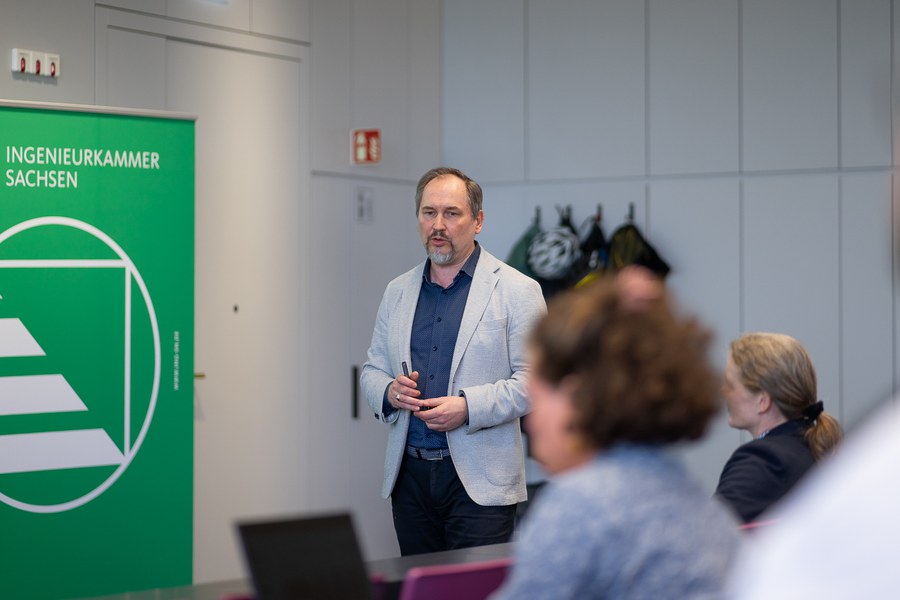
Spokesperson of the Cluster of Excellence Care: Prof. Dr.-Ing. Viktor Mechtcherine
The transformation of the construction industry is less a question of individual technologies than one of cooperation. Sustainability is created where research, planning and execution are systematically interlinked - and where ecological requirements are not seen as an add-on, but as a starting point.
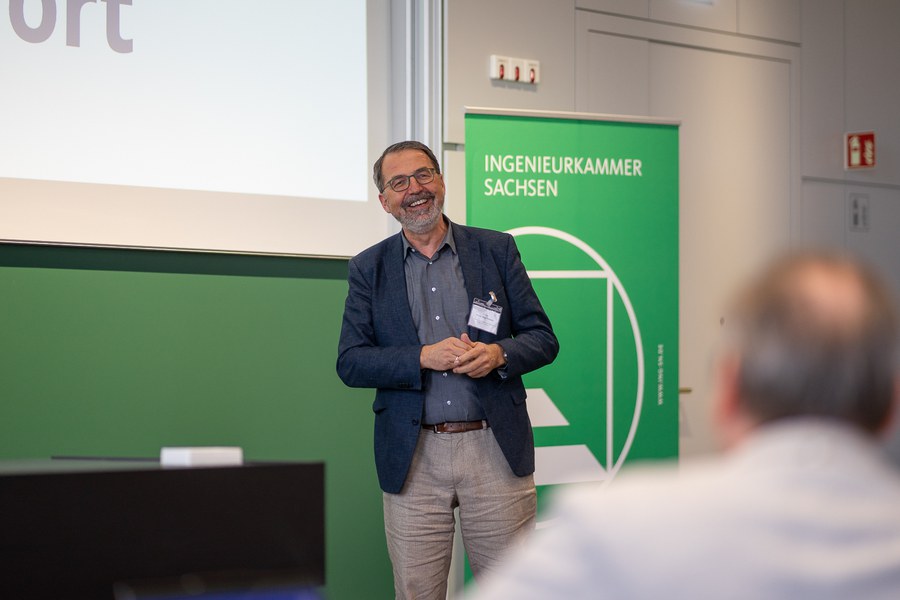
President of the Chamber of Engineers Saxony, Dr.-Ing. Hans-Jörg Temann
It is precisely at these interfaces that a new exchange format comes into play: the Sustainability Working Group for Construction at TU Dresden e.V. organizes regular networking meetings together with the "Sustainability and climate-friendly construction" expert committee of the Saxony Chamber of Engineers. The focus is on engineering-related topics such as sustainable planning and construction, infrastructure development, energy generation and sustainable transport concepts. The aim is a bidirectional transfer of knowledge: scientific approaches should be put into practice more quickly, while students and researchers gain an insight into specific applications and solution strategies.
As part of the sustainability networking meeting of TUD Dresden University of Technology and the Saxony Chamber of Engineers, this time the focus was on the Cluster of Excellence CARE (Climate-Neutral and Resource-Efficient Construction) of TU Dresden and RWTH Aachen University.
Introduced by the cluster spokesperson, Prof. Dr.-Ing. Viktor Mechtcherine, CARE pursues an interdisciplinary approach that goes beyond increasing efficiency. At its core is the question of how construction processes and materials can be rethought in such a way that climate neutrality can be achieved. This includes circular material cycles as well as resilient and resource-efficient production methods.
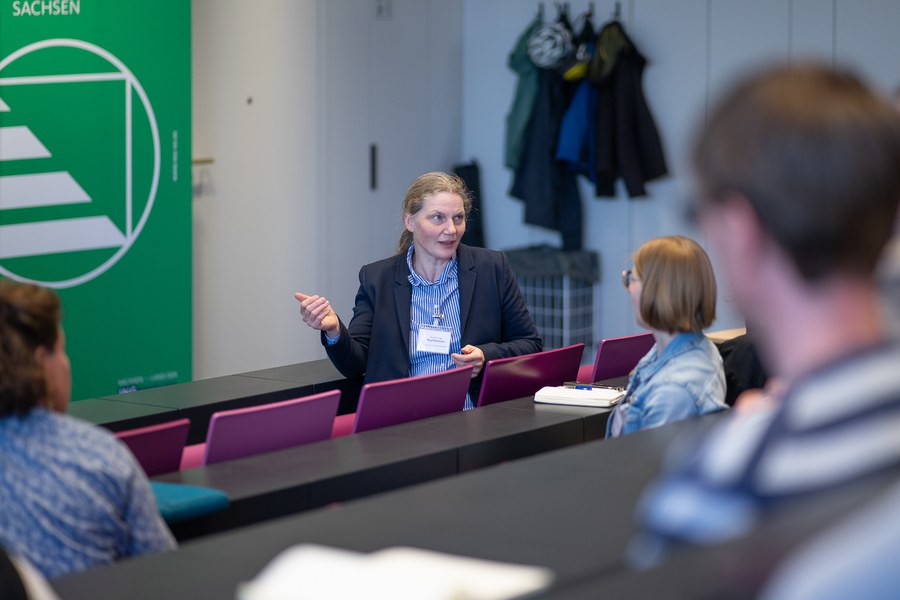
Prof. Dr.-Ing. Birgit Beckmann, Dean of the Faculty of Civil Engineering, as a listener and catalyst.
Leonie Gleiser's subsequent presentation of the "FRAME" project provided a concrete example of this research perspective. The focus is on additive manufacturing with clay - a material that has so far played a subordinate role in current construction practice. Through the use of robotics and digital planning methods, earth building is being taken to a new level here: precise, scalable and potentially connectable for industrial processes. The approach
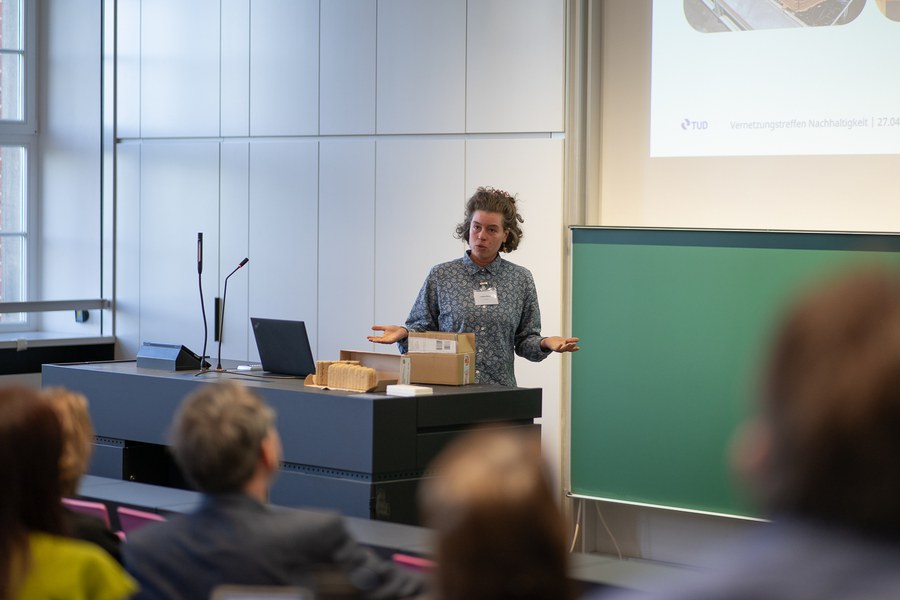
Leonie Gleiser on her research topic, FRAME
combines material-ecological advantages with technological innovation and is an example of how traditional building materials can be integrated into modern construction processes.
The meeting makes it clear that sustainable construction is not driven by new materials or technologies alone. The decisive factor is the networking of stakeholders - and the willingness to fundamentally question established processes.