
Research Group Forests & Communication

The research group's work is made possible by the generous funding and support of the Eva Mayr-Stihl Foundation.
Group Leader:
 © Rea Schneider
Dr. Sandra Liebal
Leader of the research group "forests & communication"
Send encrypted email via the SecureMail portal (for TUD external users only).
Certificate of DFN-PKI for encrypted email communication.
Aims & Background
The research group “Forests & Communication” is dedicated to exploring the complex interplay between forests and the ways we communicate about them. As a hub for both research and teaching, the group seeks to advance forest-related environmental communication through innovative, interdisciplinary approaches.
At its core, the group’s research investigates how communication about forests emerges and influences individuals, organizations, policy, and society. This includes studying personal conversations, educational settings, organizational communication, and public relations. Special emphasis is laid on effective, strategic communication. The group’s research program adopts a multidisciplinary perspective, drawing on environmental psychology, media and communication studies, political science, and education. The group integrates perspectives from a wide range of theoretical approaches, including the Actor-Centered Power Approach, Discursive Agency Approach, Framing Theory, and the Multilayer Model of Communication (see figure 1), to analyze the dynamics of forest-related communication. These approaches enable the group to explore the diverse communication strategies in forest-related communication, and to relate them with topics such as identity, forest-related values, framing, and performance.
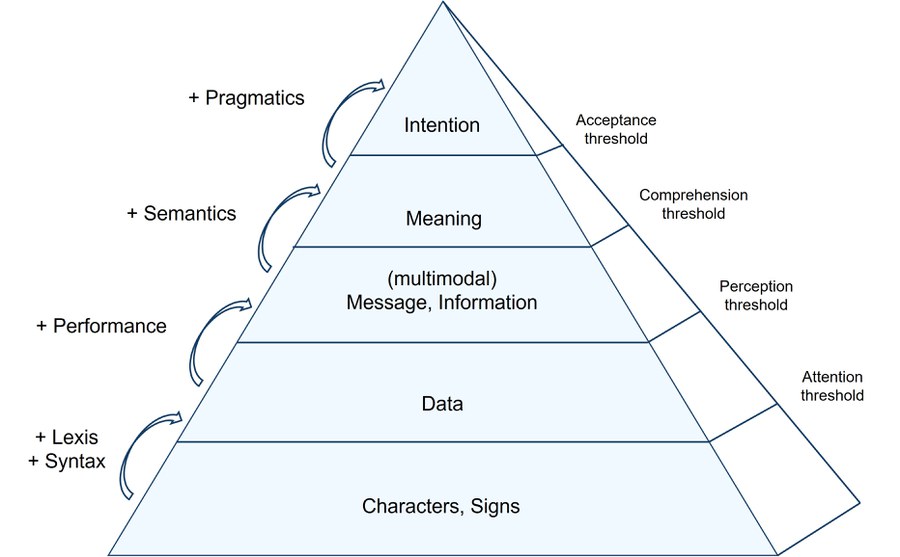
Fig. 1: Multilayer Model of Communication. Source: Liebal et al. 2025: 3. https://doi.org/10.1016/j.forpol.2025.103454
A particular focus lies on the negotiation of societal expectations regarding forests, including the concept of the social license to operate. This involves examining how different actors communicate about forests, navigate conflicts, and participate in shaping the future of forest landscapes. In this context, the group also examines public participation in shaping the future of forests, as well as the forestry sector’s self-perception and societal image.
In addition to its research efforts, “Forests & Communication” is committed to enhancing education in forest-related environmental communication. Existing course offerings shall be expanded and enriched with engaging learning formats. The group explicitly sees itself as a bridge between research and practice and aims to foster close collaboration both within TU Dresden and with external partners. Ultimately, “Forests & Communication” aims to contribute to a deeper understanding of the dynamic relationships between forests and society, while helping to raise the visibility of forest research and teaching in Tharandt.
Team
 © Rea Schneider
Member of academic staff
NameJosephine Köhler , M.Sc.
Send encrypted email via the SecureMail portal (for TUD external users only).
Professur für Tropische und Internationale Forstwirtschaft
Besucheradresse:
Cotta Bau, Room E10 Pienner Straße 7
01737 Tharandt
None
Office hours:
Contact by e-mail
 © A. Wandelt
Anna Wandelt , B.Sc.
Send encrypted email via the SecureMail portal (for TUD external users only).
Projects
12/2022 - 05/2026: Strengthening social dialogue to promote acceptance of reforestation measures as part of sustainable forest management (DIA-WALD): Projekt-Website or directly to Project results
Publications
2026
Liebal, S.; Hausl, M.T.; Viehweger, E.; Born, F.; Weber, N. (2026): Higher forestry education in Germany: students’ and graduates’ perspectives on study content, skill acquisition and career preparedness. International Forestry Review 28 (2), p. 165-191. DOI: https://doi.org/10.1505/146554826841270458
Liebal, S.; Köhler, J.; Viehweger, E.; Wandelt, A.; Hausl, M.T.; Weber, N. (2026): Mitmach-Aktionen als partizipative Maßnahmen im Wald: Eine empirische Analyse von Status quo, Anbieterzielen und Teilnehmermotivationen in Deutschland. Allgemeine Forst und Jagdzeitung (German Journal of Forest Research) 195. DOI: 10.23765/afjz0002107
2025
Liebal, S.; Wandelt, A.; Hausl, M. T.; Köhler, J.; Weber, N. (2025): How words shape the perception of forestry in Germany: Aligning content and language for effective strategic communication. Trees, Forests and People 22, 101064, https://doi.org/10.1016/j.tfp.2025.101064
Liebal, S.; Riemann, L.; Köhler, J. & Weber, N. (2025): Forests are more than trees and communication is more than words: Inter-and transdisciplinary research about effective multi-stakeholder communication in Germany. Forest Policy and Economics 178, 103562, https://doi.org/10.1016/j.forpol.2025.103562
Liebal, S.; Köhler, J. & Weber, N. (2025): Forest condition and forest restoration as topics of online communication–An analysis of website performance of selected forest actors in Germany. Forest Policy and Economics 172, 103454, https://doi.org/10.1016/j.forpol.2025.103454
Köhler, J.; Liebal, S. & Weber, N. (2025): Framing forest dieback since 2018 and relating forest restoration: An analysis of the direct communication of forest policy actors in Germany. Forest Policy and Economics 176, 103524, https://doi.org/10.1016/j.forpol.2025.103524
2026
Köhler, J. & Liebal, S.; Hausl, M.T.; Viehweger, E.; Wandelt, A. (2026): Handlungsempfehlung für die Durchführung von Mitmach-Aktionen im Wald – mit besonders Fokus auf Baumpflanzaktionen. Ergebnisse aus dem Forschungsprojekt DIA-WALD. Professur für Forstpolitik und Forstliche Ressourcenökonomie, TU Dresden. https://doi.org/10.25368/2026.069
2025
Liebal, S.; Köhler, J. & Weber, N. (2025): Wald versus Forst: Was hallt besser nach? AFZ - Der Wald 22, S. 38-41
Köhler, J.; Liebal, S. & Weber, N. (2025): Hauptsache Grün? Emotionale Wahrnehmung unterschiedlicher Waldschadensbilder durch Waldbesuchende. ProWald 03/2025, S. 12-14
Riemann, L.; Giurca, A.; Liebal, S.; Mack, P.; Tsubaki, R. (2026). The Missing Link: Leveraging Communication Science Insights for Forest Policy and Governance Research. In: Aggestam, F. (eds) Governing Forests Through Transformative Change. Advances in Global Change Research, vol 70. Springer, Cham. https://doi.org/10.1007/978-3-032-19072-7_7
Editorship
SILVA Publications – Proceedings of the SILVA Network Annual Conference: https://www.ica-silva.eu/publications/proceedings
Doctoral Thesis
Josephine Köhler - Waldbilder im Wandel: Wahrnehmung und Framing der Waldschäden seit 2018 am Beispiel des Freistaates Sachsen
Philip A. Caspari - From Information Provision to Strategic Branding? Marketing Logics and Communication Styles of Selected Forest-Focused Actors and Their Perceived Communication Effectiveness in Digital Communication
Liebal, S. (2025): Umweltkommunikation zum Waldzustand und zur Wiederherstellung von Waldlandschaften: Analyse von Online-Medien ausgewählter Akteure mit Waldbezug in Deutschland. Dissertation an der Technischen Universität Dresden, Professur für Forstpolitik und Forstliche Ressourcenökonomie, Tharandt. https://doi.org/10.25368/2026.054
B.Sc. and M.Sc. Thesis
Brenner, J. (2026): Forstliche Fachsprache und Ontologien: Grundlagen, Modellierung und Anwendung. Masterarbeit an der Technischen Universität Dresden, Professur für tropische und internationale Forstwirtschaft, Tharandt
Böhme, A. (2026): Typologisierung von Themen-, Lehr- und Erlebnispfaden und Ableitung konzeptioneller Gestaltungsansätze für einen Lehrpfad im Forstbotanischen Garten in Tharandt. Bachelorarbeit an der Technischen Universität Dresden, Professur für tropische und internationale Forstwirtschaft, Tharandt
Brunner, F. (2026): Kontext- und Inputevaluation des Projektes „Wald Wissen Wandel – interaktives Lernen im Marteloskop“. Bachelorarbeit an der Technischen Universität Dresden, Professur für tropische und internationale Forstwirtschaft, Tharandt
Ertel, C. (2025): Waldpädagogik in der Sekundarstufe II: Entwicklung eines Exkursionskonzepts im Lernbereich „Ökologie und Nachhaltigkeit“ für die Klassenstufe 11. Bachelorarbeit an der Technischen Universität Dresden, Professur für Forstpolitik und Forstliche Ressourcenökonomie, Tharandt.
Asanow, P. & Asanow, W. (2025): Bildung für nachhaltige Entwicklung im interkulturellen Kontext: Analyse eines Umweltprojekts mit Teilnehmern aus Deutschland, Tschechien und Marokko. Masterarbeit an der Technischen Universität Dresden, Professur für Forstpolitik und Forstliche Ressourcenökonomie, Tharandt.
coming soon :-)
Teaching at TU Dresden
- UWFMF 25 Zielgruppenspezifische Kommunikation: Modulverantwortung; Vorlesungen & Seminare
- UWFMF 11 Marketing: Modulverantwortung; Vorlesungen & Seminare
- UWFBF 32 Methoden der Umweltkommunikation: Vorlesungen & Seminare
- UWFBF 33 Soziale Kompetenz: Vorlesungen & Seminare
- UWFBF 06 Wissenschaftliches Arbeiten: Vorlesung & Seminare
Lehrbeteiligungen an anderen Universitäten und Bildungseinrichtungen
Georg-August-Universität Göttingen: Seminar und Workshop „Strategische Kommunikation“ im Rahmen des Moduls „Öffentlichkeitsarbeit“