
Jun 03, 2026
European Funded Research To Identify New Markers for Autism Spectrum Disorders in Children Born Preterm
Prof. Mareike Albert and her team at the Center for Regenerative Therapies Dresden (CRTD) are part of a new international consortium of research teams from Europe and Australia studying early markers of autism. The teams will use innovative approaches to identify markers of autism spectrum disorders in children born before 37 weeks of gestation. The MICRO-NEST project has secured 6 million EUR funding from Horizon Europe.
Autism spectrum disorders are among the top ten causes of nonfatal health burden for people under the age of twenty. The MICRO-NEST project aims to transform the detection and management of autism spectrum disorders in children born preterm – an under-researched population – whose long-term health can benefit from early intervention, therapy, and support.
Boys are not usually diagnosed until they hit their fifth birthday, with girls typically diagnosed even later. Professor Pierre Gressens, MICRO-NEST Project Coordinator, says that the project will lead to improved diagnosis and more equitable outcomes for children.
“These missed opportunities to provide support and therapies during critical moments in early life are compounded by inequity of access, and high lifetime costs for individuals, families, and health systems,” said Gressens. “MICRO-NEST addresses the early diagnosis gap by identifying early-life biological markers, generating new tools, and informing neonatal and autism support guidelines for anticipatory care.”
Preterm Birth As a Risk Factor
As a disruptive early-life event, preterm birth is a leading cause of neurodevelopmental, cognitive, and behavioral impairments. Children born preterm are three times more likely to be diagnosed with autism spectrum disorders due to alterations in brain development.
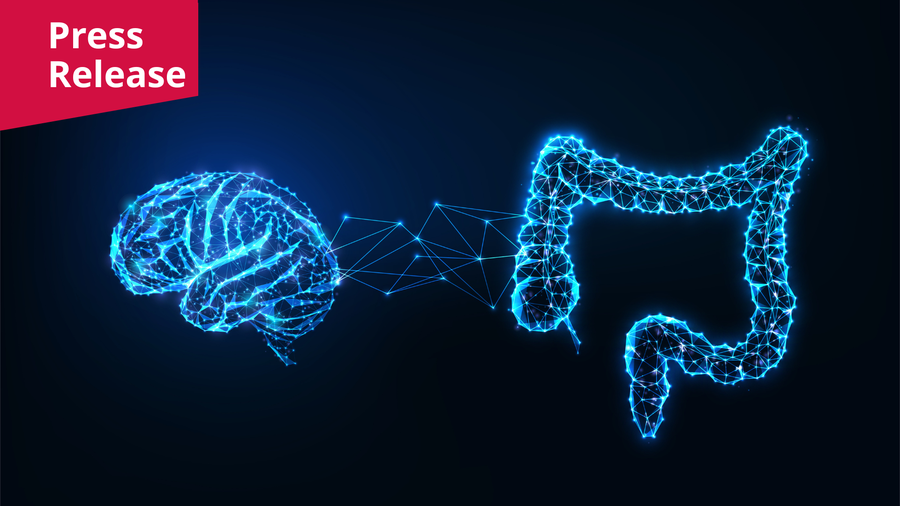
MICRO-NEST proposes that prenatal and perinatal microenvironments, including the immune system, gut microbiota, and early life events, form a developmental 'nest' that shapes the gene-driven trajectory of brain maturation. Many people with autism spectrum disorders live with gastrointestinal symptoms linked to an imbalance in the gut microbiome, making this a treatment priority.
Innovative and Interdisciplinary Approach
MICRO-NEST will use an innovative approach to integrate genomics, glycomics, immune profiling, microbiome analysis, epigenetics, and advanced brain imaging to map the mechanistic pathways linking preterm birth, inflammation, and autism spectrum disorders.
Prof. Mareike Albert and her group at the CRTD are leading experts on epigenetic profiling. “Our genes are a blueprint for life, but it is actually epigenetics that influences which chapters of that blueprint are being read,” says Prof. Mareike Albert, research group leader at the CRTD and Professor for Epigenomics and Neuronal Development at the Faculty of Biology at TU Dresden.
“Throughout our lives, our environment affects these molecular switches, silencing some genes and activating others. In the MICRO-NEST project, we will be using our expertise in epigenetics and brain development to characterize pre-clinical models of prematurity-related autism spectrum disorders.”
Digital Twin Technology
Through a comprehensive analysis of data from existing European studies and preclinical investigation, MICRO-NEST researchers will create an AI-enabled digital twin for autism – a first-of-its-kind tool for autism spectrum disorders diagnosis. With this technology, clinicians will be able to turn complex data into actionable insights to provide patients with a personalized plan of support and treatment of negative symptoms such as gastrointestinal discomfort.
Central to MICRO-NEST will be the collaboration between the researchers and people with lived experience of autism spectrum disorders and preterm birth.
A True Collaborative Effort
From the project outset, an ongoing consultation between researchers, patients, and caregivers will ensure that the outcomes of the research will be acceptable, enhance quality of life and benefit the most vulnerable members of society.
MICRO-NEST's expert team spanning Europe and Australia will embark on the five-year project from September 2026.
Partners:
Inserm (coordinator), RMIT Europe, University Medical Center Utrecht, University Hospital Essen, King’s College London, University of Edinburgh, Maastricht University, University of Rostock, Gothenburg University, Unapei, Global Foundation for the Care of Newborn Infants, TUD Dresden University of Technology, Genos Ltd, University of Geneva, Inserm Transfert SA, RMIT University.
About the Center for Regenerative Therapies Dresden (CRTD)
The Center for Regenerative Therapies Dresden (CRTD) of TUD Dresden University of Technology is an academic home for scientists from around 25 nations. Their mission is to discover the principles of cell and tissue regeneration and leverage this for the recognition, treatment, and reversal of diseases. The CRTD links the bench to the clinic, scientists to clinicians to pool expertise in stem cells, developmental biology, gene-editing, and regeneration towards innovative therapies for neurodegenerative diseases such as Alzheimer's and Parkinson's disease, hematological diseases such as leukemia, metabolic diseases such as diabetes, bone and retina diseases. The CRTD was founded in 2006 as a research center of the German Research Foundation (DFG) and funded until 2018 as a DFG Research Center, as well as a Cluster of Excellence. Since 2019, the CRTD is funded by the TU Dresden and the Free State of Saxony.
The CRTD is one of three institutes of the central scientific unit Center for Molecular and Cellular Bioengineering (CMCB) of the TU Dresden.
http://www.tud.de/crtd
http://www.tud/de/cmcb

Funded by the European Union. Views and opinions expressed are however those of the author(s) only and do not necessarily reflect those of the European Union. Neither the European Union nor the granting authority can be held responsible for them.