
Mar 26, 2026
Improving Individual Prevention: Researchers From Dresden and Aachen Develop AI Model To Predict Liver Cancer Risk
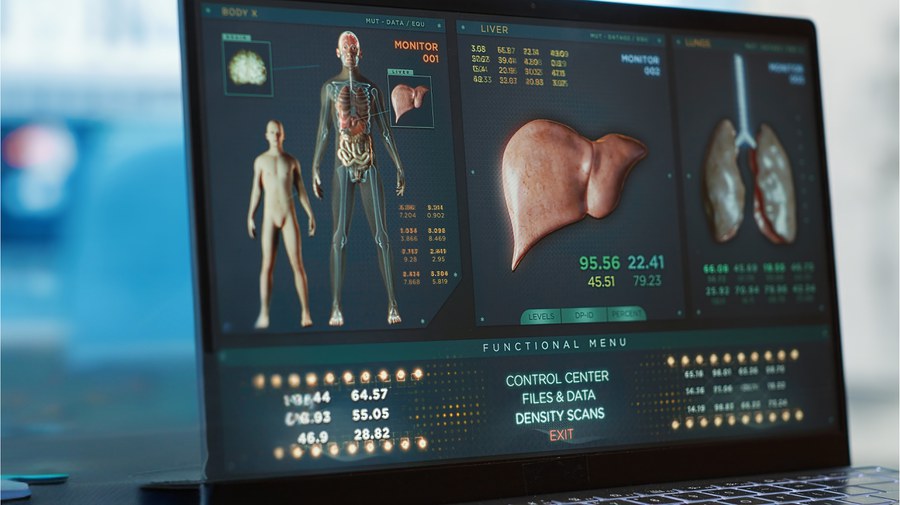
Early diagnosis is crucial for the successful treatment of liver cancer. However, many cases are detected too late because individual risk is difficult to assess. An international research team involving the Else Kröner Fresenius Center (EKFZ) for Digital Health and the CRTD at TUD Dresden University of Technology has now developed an AI model that can predict liver cancer risk based on routinely collected clinical data, such as pre-existing conditions, laboratory values, and lifestyle factors. The results were published in Cancer Discovery, the leading journal of the American Association for Cancer Research (AACR).
Liver cancer is often detected too late
Hepatocellular carcinoma (HCC), the most common form of liver cancer, is one of the deadliest cancers worldwide. It develops when liver cells change and multiply uncontrollably, often as a result of chronic liver damage. Early diagnosis significantly improves treatment outcomes, yet many patients are only diagnosed at an advanced stage. Current screening programs focus primarily on people who have already been diagnosed with liver cirrhosis, thereby overlooking other individuals at risk.
PRE-Screen-HCC: a reliable risk score for liver cancer based on routine data
For their study, the researchers analyzed health data from more than 900,000 individuals drawn from two large-scale studies: the UK Biobank for model development and the US All of Us Research Program for external validation. In total, nearly 1,000 confirmed HCC cases were included in the analysis. The model outperformed previously established HCC risk scores. Notably, the predictive performance based on routine data was comparable to that of models relying on complex genomic or metabolomic data. PRE-Screen-HCC classifies individuals into low-, medium-, and high-risk groups and could thus help target ultrasound screening more effectively.

Dr. Jan Clusmann
“Our work shows how population data that has so far been underutilized can be used to improve prevention and early detection of liver cancer,” says Jan Clusmann, lead author of the study and researcher at the EKFZ for Digital Health at TUD and Uniklinik RWTH Aachen. “The key advantage is that our model is based on routine data that is already available in everyday clinical practice. This could allow us to identify people who would benefit from ultrasound-based early detection at an earlier stage," adds the physician and scientist. His research project was funded by the German Cancer Aid as part of the Mildred Scheel Postdoctoral Program.
Publicly available AI model enables further development and broad application
The team led by Prof. Jakob N. Kather, Professor of Clinical Artificial Intelligence at TUD, and Prof. Carolin V. Schneider, Junior Professor of Prevention and Genetics of Metabolic Liver Diseases at RWTH Aachen University, places particular emphasis on the transparency of their results. To this end, the team also analyzed which types of routine data contribute particularly to risk prediction and how robust the results are across different population groups. All models and the underlying code, as well as a web-based risk calculator, have been made publicly available. This not only enables further external validation, for example in other population groups, but also future use and integration into agentic AI systems. In the long term, PRE-Screen-HCC could help to identify people at increased risk of liver cancer earlier and enable more targeted preventive screening.
“Our results demonstrate the potential of routine data for early detection when it is systematically analyzed at scale. In the future, algorithms such as the PRE-Screen-HCC we developed could be directly linked to patient records – for example, within the framework of the European Health Data Space,” explains Prof. Jakob N. Kather, Professor of Clinical AI at TUD and a specialist in internal medicine at the NCT/UCC of Dresden University Hospital Carl Gustav Carus.
“In clinical practice, we see that patients with a relevant risk of liver cancer cannot always be identified at an early stage. Our approach offers the opportunity to identify high-risk individuals earlier in the future and thereby improve their treatment prospects,” says Prof. Carolin V. Schneider, junior professor and physician at the Uniklinik RWTH Aachen and lead of the study.
Funding and participating partners
The study was funded by German Cancer Aid as part of the Mildred Scheel Postdoctoral Program. The work was led by Prof. Carolin V. Schneider, Uniklinik RWTH Aachen, and Prof. Jakob N. Kather, EKFZ for Digital Health, TUD. Researchers from the following institutions contributed: EKFZ for Digital Health at the Medical Faculty of TUD, University Hospital Carl Gustav Carus Dresden, Center for Regenerative Therapies Dresden (CRTD), National Center for Tumor Diseases (NCT) Heidelberg, Uniklinik RWTH Aachen, Charité – Universitätsmedizin Berlin, Düsseldorf University Hospital, Heinrich Heine University Düsseldorf, University of Pennsylvania (USA), Prince of Songkla University (Thailand), Université Paris Est Créteil, and Henri Mondor-Albert Chenevier University Hospital (France).
Publication
Jan Clusmann, Paul Henry Koop, David Y- Zhang, Felix van Haag, Omar S. M. El Nahhas, Tobias Seibel, Laura Žigutytė, Apichat Kaewdech, Julien Calderaro, Frank Tacke, Tom Luedde, Daniel Truhn, Tony Bruns, Kai Markus Schneider, Jakob N. Kather, Carolin V. Schneider: Machine learning predicts hepatocellular carcinoma risk from routine clinical data: a large population-based multi-centric study; Cancer Discovery, 2026.
Else Kröner Fresenius Center (EKFZ) for Digital Health
The EKFZ for Digital Health at the Faculty of Medicine at TUD Dresden University of Technology and University Hospital Carl Gustav Carus Dresden was established in September 2019. It receives funding of around 40 million euros from the Else Kröner Fresenius Foundation for a period of ten years. The center focuses its research activities on innovative, medical and digital technologies at the direct interface with patients. The aim here is to fully exploit the potential of digitalization in medicine to significantly and sustainably improve healthcare, medical research and clinical practice.
Contact
EKFZ for Digital Health at TUD
Anja Stübner and Dr. Viktoria Bosak
Science Communication
Tel.: +49 351 – 458 11379
Email: