
Human Behaviour in Design
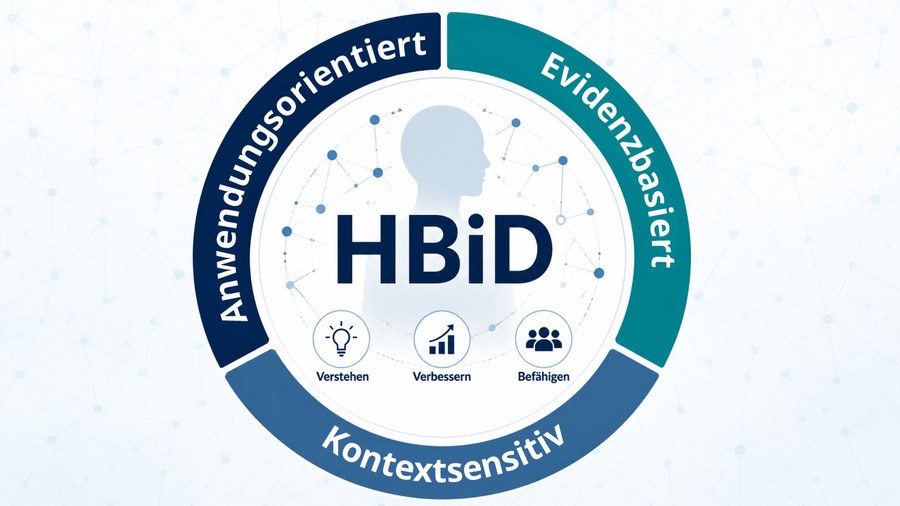
Table of contents
The HBiD research group conducts evidence-based, application-oriented, and context-sensitive research into the behavior of developers within the product development ecosystem to ensure methodological support for knowledge building and to facilitate cooperation, communication, and collaboration.
Contact
| Contact: | |
| Other Staff Members: | M.Sc. Roman Ognevoj |
Key Research Areas
Method acceptance and method development
- Explanatory approaches to the mechanisms underlying the use of methods; affordance
- Investigation of the dynamics involved in context-specific method adaptation
- Development of methods for assessing method acceptance
- Derivation of measures for method implementation; affordance in the context of method use
- Development of a simulation environment for analyzing human behavior in the development process
Publications:
- Gerschütz, B., Sauer, C., Wallisch, A., Mehlstäubl, J., Kormann, A., Schleich, B., ... & Wartzack, S. (2021). Toward Customized Digital Engineering: Challenges and Potential in Adapting Digital Engineering Methods for the Product Development Process. DOI: https://doi.org/10.18419/opus-11478
- Wallisch, A., Nicklas, S. J., & Paetzold, K. (2021). Method-accepted fields of action for increasing the application of methods in product development. Proceedings of the Design Society, 1, 2037–2046. DOI: https://doi.org/10.1017/pds.2021.465
- Wallisch, A., & Paetzold, K. (2018). A qualitative inventory of user integration methods and their usage in product development research and practice. In DS 92: Proceedings of the DESIGN 2018 15th International Design Conference (pp. 115–126). DOI: https://doi.org/10.21278/idc.2018.0235
- Wallisch, A., & Paetzold, K. (2022). Lessons Learned: A Plea for Integrating Design Thinking into Engineering Curricula. In Different Perspectives in Design Thinking (pp. 220–244). CRC Press.
Knowledge Construction, Representation, and Utilization
- Efficient design of assistance and expert systems, as well as their integration and differentiation from method development
- Development of methods and tools for knowledge building in interdisciplinary development organizations
-
Strategic use of knowledge for sustainable competency development
-
Investigation of the impacts of AI on processes of knowledge building, knowledge utilization, and decision-making processes
Publications:
- Gomez, A. P., Kretzschmar, M., Paetzold-Byhain, K., & Isaksson, O. (2025). A team of three: the role of generative AI in the development of design automation systems for complex products. Proceedings of the Design Society, 5, 309–318. DOI: https://doi.org/10.1017/pds.2025.10045
Communication, Coordination, Collaboration
- Investigation of the mechanisms underlying agile work and lean processes
- Development of concepts for integrating people as developers into data and information flows within the company
- Identification of factors influencing prototype design in order to use them in a targeted manner as communication tools
Publications
- Paetzold-Byhain, K., Michalides, M., & Weiss, S. (2025). A Conceptualization of Agility: Utilization and Future Research for the Development of Mechatronic Systems. Systems, 14(1), 28. DOI: https://doi.org/10.3390/systems14010028
- Pendzik, M., Sembdner, P., & Paetzold, K. (2023). Identification and Classification of Uncertainties as the Foundation of Agile Methods. Proceedings of the Design Society, 3, 2165–2174. DOI: https://doi.org/10.1017/pds.2023.217
- Michalides, M., Bursac, N., Nicklas, S. J., Weiss, S., & Paetzold, K. (2023). Analyzing current challenges in scaled agile development of physical products. Procedia CIRP, 119, 1188–1197. DOI: https://doi.org/10.1016/j.procir.2023.02.188
- Paetzold, K., & Stoiber, L. (2025). Development of a communication model for the efficient exchange of information between user and designer. Proceedings of the Design Society, 5, 1365–1374. DOI: https://doi.org/10.1017/pds.2025.10150
- Paetzold-Byhain, K., Stoiber, L., & Ognevoj, R. (2025). Potential and Limitations of Prototypes in Developer-User Communication. In DS 140: Proceedings of the 36th Symposium Design for X (DFX2025) (pp. 141–149). DOI: 10.35199/dfx2025.15
- Nicklas, S. J., & Paetzold, K. (2020). Information Exchange in Prototyping Processes: Identification and Description of Disturbance Variables. In DS 106: Proceedings of the 31st Symposium Design for X (DFX2020) (pp. 151–160). DOI: https://doi.org/10.35199/dfx2020.16
- Nicklas, S. J., Atzberger, A., Briede-Westermeyer, J. C., & Paetzold, K. (May 2020). The User-Driven Minimum Feasible Product—Toward a Novel Approach to User Integration. In Proceedings of the Design Society: DESIGN Conference (Vol. 1, pp. 1495–1504). Cambridge University Press. DOI: https://doi.org/10.1017/dsd.2020.49
-
Culture Shock?! AGILien—The Travel Guide
Projects
Current: DFG Project —Investigating the Interrelationships of Agile Methods for Information Flow Design to Increase Flexibility and Efficiency in the Development of Mechatronic Systems
Publications:
- Musawi, A., Ognevoj, R., Bugueno, M., Batora, M., Ritzer, K., Bursac, N., & Paetzold, K. (2026). Effective Daily Scrum Meetings—An AI-Based Analysis Method for Optimizing Collaboration Among Development Teams in Agile Product Development. Konstruktion, 78(4), 46–50. DOI: 10.37544/0720-5953-2026-04-46
- Batora, M., Ognevoj, R., Musawi, A., Bugueno, M., Nikou, E. R. P., Busch, M., ... & Bursac, N. (2026). Understanding the Influence Mechanisms in Agile Collaboration: A Network Analysis. *Procedia CIRP*, 142, 404–409. DOI: 10.1016/j.procir.2026.05.282
- Ognevoj, R., Musawi, A., Bugueno, M., Busch, M., Batora, M., Ritzer, K., ... & Paetzold-Byhain, K. (2026). From Models to Impact: A Human-AI Approach for Effective Support of Collaborative Teams in Agile Product Development. Proceedings of the Design Society, 6, 267–276. DOI: 10.1017/pds.2026.10385