
Feb 26, 2026
Mini organs in space: TUD research project investigates the effects of weightlessness on liver tissue
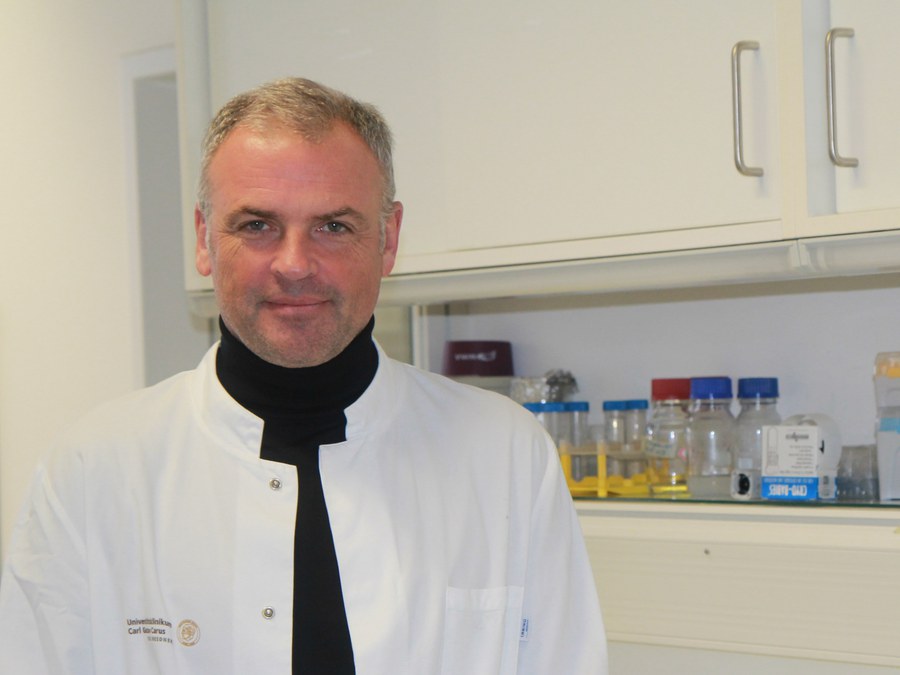
Prof. Nils Cordes.
Space missions pose unique challenges to the human body: microgravity and increased radiation exposure alter fundamental biological processes, particularly in immune, nerve, and muscle cells. Against the backdrop of the federal government’s Hightech Agenda and the Science Year 2026 – Medicine of the Future, a project at TU Dresden is now bringing into focus how space biology can drive medical innovation. The ILLUMINATE research project, which is part of the Cellbox program of the German Aerospace Center (DLR), is investigating how liver tissue reacts to microgravity and cosmic radiation. For the first time, mouse liver organoids – lab‑grown mini models of the liver – are being examined under both real and simulated space conditions. The Federal Ministry for Economic Affairs and Climate Action (BMWK) is funding the experiment with EUR 280,204 for the period from November 1, 2025 to October 31, 2028.
As space missions grow longer and new space stations emerge, medical research in space is becoming increasingly important. The question arises as to how the human body adapts to weightlessness and cosmic radiation over the long term. These changes are relevant not only to the health of astronauts but also to our understanding of stress reactions, tissue aging, and regeneration processes.
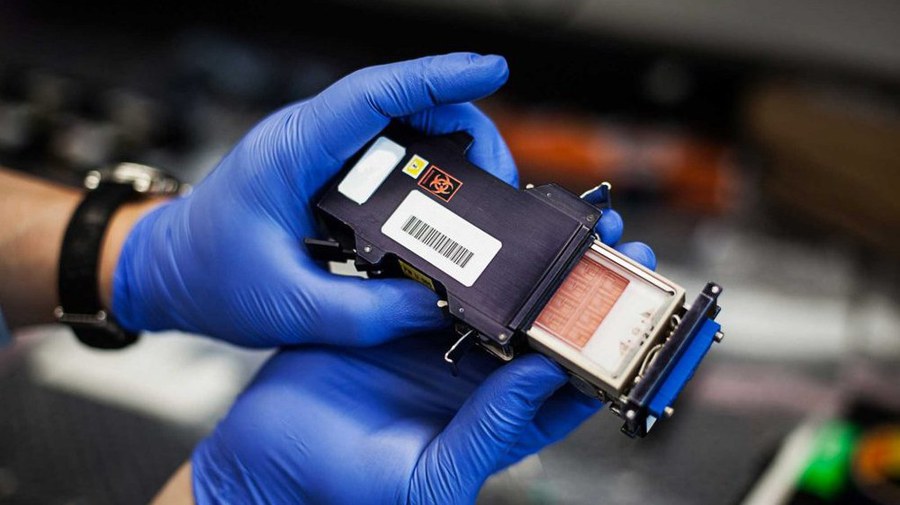
A CellBox experiment. The Cellbox-4 and Cellbox-5 missions are supported by the young biotech company Yuri.
The Cellbox missions were developed to study the impact of space conditions on cells and organoids. These missions involve mini-laboratories the size of a smartphone that orbit Earth in a spacecraft for several weeks and are exposed to weightlessness. Eight teams from German research institutions will conduct biological and biomedical experiments for the Cellbox-4 and Cellbox-5 missions.
Prof. Nils Cordes, head of the Radiation Biology Department at OncoRay, is leading a subproject investigating the effects of real and simulated microgravity on mouse liver organoid functionality. The project will examine changes in the cell environment (extracellular matrix), gene activity, and the structure of genetic information (chromatin structure).
A key innovative component of the project is the first-ever use of ATAC sequencing in space. This method allows researchers to identify the regions of a cell’s genetic material that are currently “active,” making it possible to study them under conditions of microgravity and cosmic radiation. The goal is to understand precisely how quickly tissue changes in space and the underlying biological processes of these adaptations. The resulting data should provide insight into short- and long-term tissue changes in space and contribute to the development of protective strategies for organs during long-term missions.
The project is being carried out in close cooperation with several partner institutions. Prof. Meritxell Huch at the Max Planck Institute of Molecular Cell Biology and Genetics in Dresden is providing the liver organoids. The bioinformatic analyses are supported by the DRESDEN-concept Genome Center at TU Dresden. Experiments under artificial weightlessness are being conducted in collaboration with Dr. Francesco Pampaloni at Goethe University Frankfurt and Dr. Christian Liemersdorf at the Institute of Aerospace Medicine at DLR.
“Space biology research has an enormous transformative character that goes far beyond basic science. For our team, it is truly special that an idea we developed is actually flying into space and contributing to a better understanding of the fundamentals of tissue biology,” says Prof. Cordes.
Through its participation in the ILLUMINATE project and the Cellbox mission, TU Dresden is strengthening its commitment to space biology research. This field is becoming increasingly important, offering novel perspectives on astronaut well-being and providing impetus for medical breakthroughs on Earth. For instance, a better understanding of the effects of mechanical and radiation-induced stresses on tissue could accelerate the discovery of new drugs and enable new biotechnological applications.
"The Cellbox program vividly showcases the interplay between basic research and applied science. The participation of the Dresden University Medicine in this project provides us with a valuable opportunity to better understand the adaptability of the human body and gain new insights for the healthcare sector,” emphasizes Prof. Esther Troost, Dean of the Faculty of Medicine at TU Dresden.
Background
The Cellbox program was launched in 2011 by the German Space Agency at DLR. The October 2011 SIMBOX mission contained the Chinese space capsule Shenzhou-8, which exposed experiments with plants, small organisms, and cancer cells to space conditions for 17 days.
In April 2014, SpaceX-3 delivered Cellbox-1, containing cancer and immune cells, to the International Space Station (ISS). The Cellbox-2 and Cellbox-3 missions, which took place in December 2017 and November 2022, respectively, exposed immune, nerve, cancer, and muscle cells to weightlessness on the ISS.
Research contact:
Prof. Nils Cordes
Chair of Molecular and Cellular Radiation Biology
OncoRay – Center for Radiation Research in Oncology
Carl Gustav Carus Faculty of Medicine of TUD Dresden University of Technology
+49 351 458 7401
Media contact:
Anne-Stephanie Vetter
Public Relations Office
Carl Gustav Carus Faculty of Medicine of TUD Dresden University of Technology
+49 351 458 17903