
Feb 09, 2026
Visionary approach for brain-computer interfaces
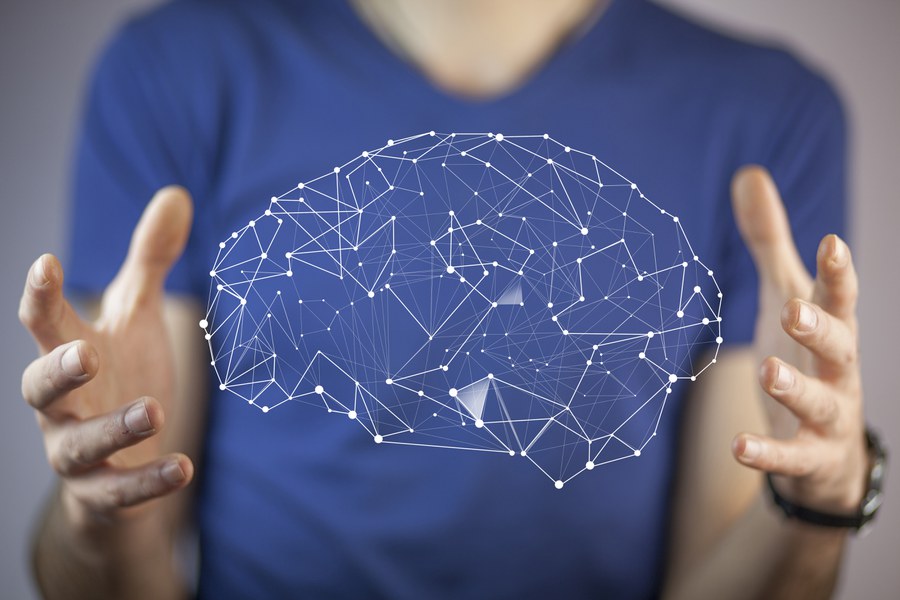
Recognizing intention instead of controlling movement: International team led by TU Dresden and involving researchers from Trier, Amsterdam, Maastricht Nijmegen and Kyoto, are rethinking the interaction between humans and machines.
Current systems connect the areas of the brain responsible for movement control with a machine. The new approach involves allowing computers and machines to recognise human intentions, enabling them to calculate and execute the necessary movements themselves. This would greatly increase self-determination, particularly for people with severe disabilities.
Brain-computer interfaces have made enormous progress in recent years. People with severe paralysis can now use their brain activity to select letters, control robotic arms and operate digital devices, and in some cases even communicate fluently. However, the movements are often jerky. Control requires a high level of concentration.
The human remains the author of the action
"Above all, however, the feeling of being the author of the action is often missing," says psychologist Prof. Christian Frings from Trier University. "This is exactly where we come in. Acting means doing something with an intention. When you enter a room, you don't think about individual steps, but about being in the room. When you pick up a cup, you think about the result and not about the muscle activity of your fingers."
Modern brain research confirms this assumption. Even before a movement begins, areas of the brain are active that have to do with perception, expectation and planning. The brain works with internal predictions about the consequences of an action. Only then are motor programs activated. From this perspective, it is hardly surprising that systems that only read out movement commands are often perceived as unnatural.
Brain-computer interfaces should therefore not attempt to decode individual movements, but rather the intended effects of an action. The decisive factor is not how a movement is executed, but what it is for.
The new approach therefore has several advantages: Movements become more fluid and people would have a greater sense of control. In addition, even in paralyzed people, the brain areas for planning and imagination often remain intact.
Advances in AI make implementation possible
For a long time, the implementation of this so-called ideomotor principle seemed impossible. However, advances in neural imaging and machine learning have made it possible to reconstruct perceptual content and even imagined images from brain activity. Researchers have been able to show that visual or auditory representations in the brain generate surprisingly stable patterns that can be decoded.
If a system knows the destination, it can plan paths independently, take obstacles into account and adapt movements, as modern robots already do. Artificial intelligence could thus help to derive a suitable sequence of actions from an intended effect.
However, there are still some challenges. "We don't want to carry out every action that we imagine. The systems would have to learn the difference carefully," says neuroscientist Prof. Christian Beste from the TU Dresden. In addition, ethical aspects such as the protection of the world of thought or responsibility in the event of misinterpretation must be taken into account.
Nevertheless, the researchers from Dresden, Trier, Amsterdam, Maastricht Nijmegen and Kyoto want to continue their idea in an international collaboration. The University of Trier would provide the theoretical framework and expertise on the cognitive understanding around human action control, while TU Dresden would provide its expertise at the intersection of the neurophysiology of actions and the interface with neuropsychiatric disorders.
Article: Moving intentions from brains to machines
Press release of Trier University: Visionary approach for brain-computer interfaces