
03.09.2026
Millionen-Förderung für die Erforschung neuronaler Schaltkreise bei Tumoren: Prof. Kai Markus Schneider erhält ERC Starting Grant
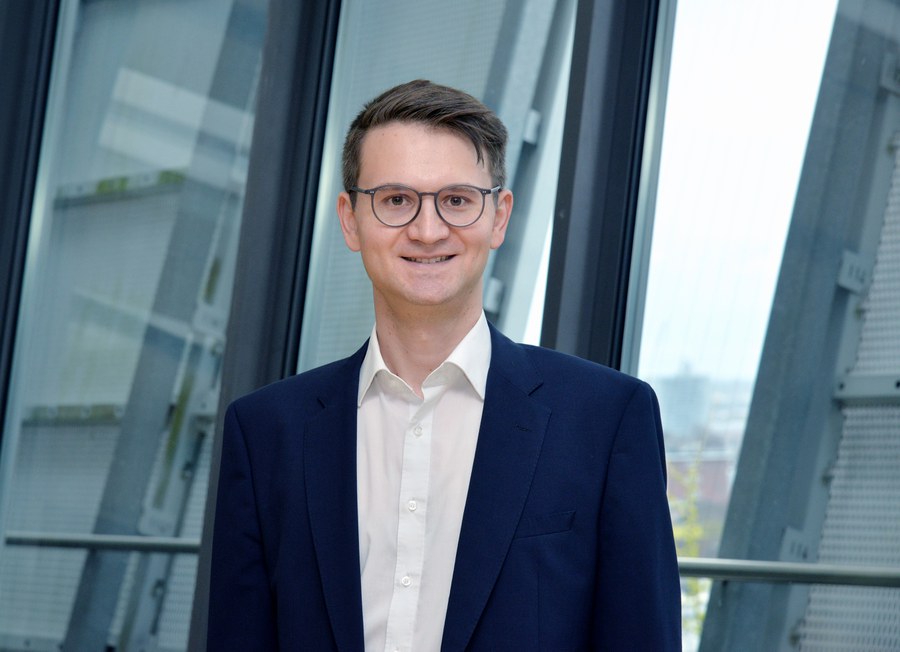
Prof. Kai Markus Schneider.
Der Gallengangskrebs (Cholangiokarzinom) ist eine schwer behandelbare Tumorerkrankung, die oft erst spät entdeckt wird. Um bessere Therapien zu ermöglichen, werden dringend neue molekularbiologische Forschungsansätze benötigt. Forschende der Medizinischen Fakultät Carl Gustav Carus der Technischen Universität Dresden (MF-TUD) wollen nun untersuchen, ob das Nervensystem aktiv mit einem Tumor der Gallenwege kommuniziert und dessen Verhalten beeinflusst. Für das Projekt LIVER-CIRCUITS erhält Prof. Kai Markus Schneider den Starting Grant des Europäischen Forschungsrates (European Research Council, ERC) in Höhe von knapp 1,5 Millionen Euro über fünf Jahre. Der ERC Starting Grant ist eine der höchstdotierten europäischen Förderungen.
Viele menschliche Krankheiten sind das Ergebnis komplexer Wechselwirkungen zwischen verschiedenen Organen und Systemen, dem sogenannten Organ-Crosstalk. Statt isolierter Krankheitsbilder rückt hier das vernetzte Zusammenspiel des gesamten Organismus in den Fokus. Eine zentrale Rolle spielt die Kommunikation zwischen Nerven- und Immunsystem, die Prozesse wie Entzündungen und Tumorentstehung steuert. Die Entschlüsselung dieser Mechanismen könnte die Entwicklung innovativer Therapien begünstigen, unter anderem für schwer behandelbare Erkrankungen wie den Gallengangskrebs.
Mit LIVER-CIRCUITS untersucht das interdisziplinäre Team um Prof. Kai Markus Schneider, wie Nervenfasern mit Tumor- und Immunzellen beim Gallengangskrebs kommunizieren und ob sich diese bislang kaum erforschten neuronalen Schaltkreise für neue diagnostische und therapeutische Ansätze nutzen lassen. Die Forschenden richten ihren Fokus auf die Nervenfasern, die den Tumor und sein unmittelbares Umfeld durchziehen. Ziel ist es, zu verstehen, wie insbesondere das sympathische Nervensystem mit Krebszellen, Immunzellen und anderen Zellen des Tumorgewebes interagiert und dadurch das Tumorwachstum beeinflusst. Dafür verbindet das Forschungsteam um Prof. Schneider modernste räumliche Gewebeanalysen mit experimentellen Modellen, in denen sich neuronale Schaltkreise gezielt verändern lassen. Langfristig sollen daraus neue therapeutische Ansätze identifiziert werden, um die Kommunikation zwischen Nervensystem und Tumor gezielt zu unterbrechen.
„Als Arzt behandle ich selbst Patientinnen und Patienten mit Leber- und Gallenwegserkrankungen und erlebe unmittelbar, wie dringend wir gerade beim Gallengangskrebs neue Behandlungsmöglichkeiten brauchen. Mit LIVER-CIRCUITS können wir eine vollkommen neue Dimension der Tumorbiologie erforschen. Besonders reizvoll ist für mich die enge Verbindung von Grundlagenforschung und klinischer Medizin. Wenn es uns gelingt, diese neuronalen Schaltkreise zu entschlüsseln, könnten daraus langfristig neue Biomarker und völlig neue therapeutische Wege entstehen. Genau diese Brücke vom mechanistischen Verständnis zur besseren Behandlung von Patientinnen und Patienten ist für mich der zentrale Antrieb, sowohl für dieses Projekt als auch für meine tägliche klinische und wissenschaftliche Arbeit“, erläutert Prof. Schneider.
„Die Untersuchung der Nervenfasern im Tumorumfeld setzt an einer Stelle an, die für unsere onkologische Forschung strategisch besonders relevant ist. Die ERC‑Förderung unterstreicht die Bedeutung dieses Ansatzes und stärkt den Wissenschaftsstandort Dresden“, gratuliert Prof. Esther Troost, Dekanin der MF-TUD. „Wir sind froh darüber, dass Prof. Schneider den Weg nach Dresden gefunden hat.“
„LIVER‑CIRCUITS untersucht grundlegende Mechanismen im Tumorgewebe, die therapeutisch bislang ungenutzt sind. Wenn wir diese Prozesse präziser fassen, kann daraus ein realer Fortschritt für die Behandlung von Menschen mit Gallengangskrebs entstehen“, ergänzt Prof. Uwe Platzbecker, Medizinischer Vorstand des Universitätsklinikums Dresden.
Das Projekt LIVER‑CIRCUITS ist an der Medizinischen Fakultät der TUD angesiedelt. Prof. Schneider und sein Team forschen sowohl am Zentrum für Regenerative Therapien Dresden (CRTD) als auch am Else Kröner Fresenius Zentrum (EKFZ) für Digitale Gesundheit und verbinden so die wissenschaftliche Expertise beider Institute mit der klinischen Kompetenz der Medizinischen Klinik und Poliklinik I des Universitätsklinikums.
Über ERC Starting Grants:
Die Starting Grants des Europäischen Forschungsrats (ERC) unterstützen Forscher:innen am Anfang ihrer Karriere dabei, eigene Projekte zu starten, Forschungsteams aufzubauen und so ihre Ideen weiterzuentwickeln. Bewerben können sich Forschende mit bis zu zehn Jahren Erfahrung nach Abschluss der Promotion, einem vielversprechenden wissenschaftlichen Werdegang und einem exzellenten Forschungsprojekt. Der ERC stellt im Jahr 2026 europaweit und fachübergreifend insgesamt 705 Millionen Euro für rund 450 Starting Grants bereit. In der aktuellen Förderrunde wurden insgesamt 4.807 Anträge eingereicht.
Zur Person:
Prof. Kai Markus Schneider ist seit Oktober 2024 Inhaber der Professur für Molekulare Gastroenterologie und Hepatologie an der Medizinischen Fakultät der Technischen Universität Dresden (TUD) und zugleich als Oberarzt an der Medizinischen Klinik und Poliklinik I des Universitätsklinikums Carl Gustav Carus Dresden tätig. Damit verbindet er seine Forschung eng mit der gastroenterologischen und hepatologischen Patientenversorgung. Prof. Schneider studierte Medizin an der RWTH Aachen mit Stationen am Brigham and Women’s Hospital der Harvard Medical School (Boston/USA) sowie MD Anderson Cancer Center (Houston/USA). An der RWTH Aachen schloss er sowohl seine medizinische als auch seine naturwissenschaftliche Promotion ab. Von 2020 bis 2022 forschte er als Postdoktorand mit einem DFG-Forschungsstipendium an der University of Pennsylvania (USA). Ab 2022 leitete er seine eigene Arbeitsgruppe an der Uniklinik der RWTH Aachen und forschte zu den komplexen Kommunikationsprozessen zwischen Organen wie Leber, Darm, Gehirn und dem Immunsystem. Seine aktuelle Forschungsgruppe „Digital Systems Medicine and Organ Crosstalk“ ist am Center for Regenerative Therapies Dresden (CRTD) und dem Else Kröner Fresenius Zentrum (EKFZ) für Digitale Gesundheit angesiedelt. Ein besonderer Schwerpunkt seiner Arbeit liegt dabei auf der Verbindung mechanistischer und datengetriebener Forschung mit klinisch relevanten Fragestellungen. Für seine wissenschaftliche Arbeit wurde Prof. Schneider bereits mit mehreren renommierten Preisen ausgezeichnet, darunter dem Heinz Maier-Leibnitz-Preis der Deutschen Forschungsgemeinschaft (DFG) und dem Theodor-Frerichs-Preis der Deutschen Gesellschaft für Innere Medizin (DGIM).
Wissenschaftlicher Kontakt:
Prof. Kai Markus Schneider
Medizinische Fakultät Carl Gustav Carus
der Technischen Universität Dresden
+49 351 458-82251
Medienkontakt:
Anne-Stephanie Vetter
Stabsstelle Öffentlichkeitsarbeit Medizinische Fakultät Carl Gustav Carus
der Technischen Universität Dresden
+49 (0) 351 458 17903
www.tu-dresden.de/med