
Jun 11, 2026
ZML Seminar Florian Fröhlich
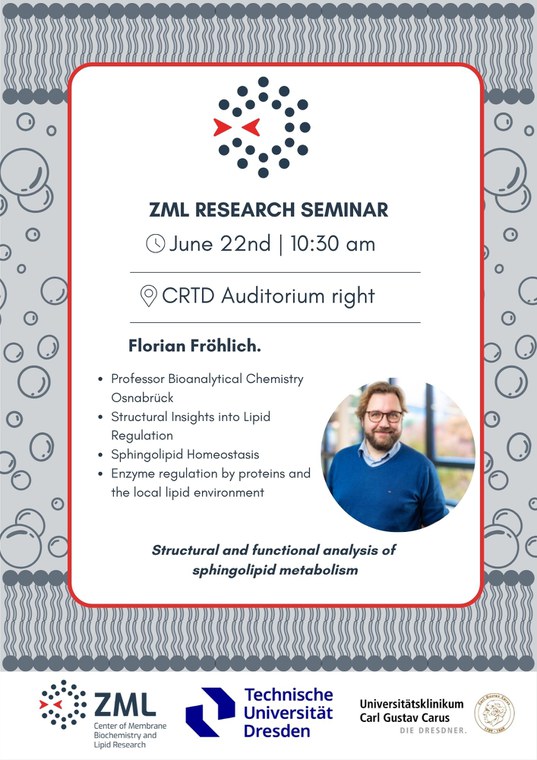
Sphingolipids are one of the three major lipid classes in all eukaryotic cells. They function both as structural components of the plasma membrane and as signaling molecules. While all enzymes responsible for sphingolipid (SL) biosynthesis have been identified, their precise regulation, coordination with other lipid metabolic pathways, transport, and turnover remain largely elusive. By combining classical genetics and biochemical approaches with structural biology and systematic proteomic and lipidomic analysis, we have begun to elucidate these highly coordinated processes. We are gaining a better understanding of how the rate-limiting enzyme, serine palmitoyltransferase, is regulated by both proteins and the local lipid environment. We are now reconstituting sphingolipid metabolism across multiple compartments to understand how it is cross-regulated with sterol metabolism.