
Jul 06, 2026
How tomatoes can withstand climate change in the future
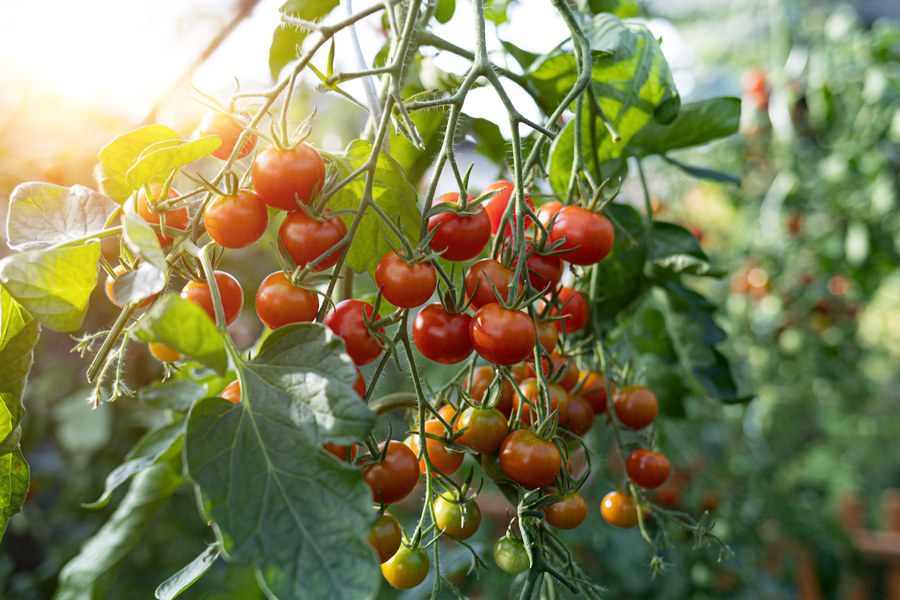
An international research team, including Jutta Ludwig-Müller, Professor of Plant Physiology at TU Dresden, has published a comprehensive study on the hormonal regulation of flower and early fruit development in tomato plants. The study provides, for the first time, a detailed overview of plant hormones, genes and proteins during key developmental stages of flowering and fruit set. The study was published in the journal ‘Plant Communications’ and represents a crucial step towards making plants specifically more resilient to climate change.
Climate change poses major challenges for agriculture worldwide: rising temperatures and more frequent heatwaves are impairing flower formation and function in many crops and, thereby reducing yields. The early phase of fruit development is considered particularly sensitive.
Plant hormones are chemical messengers that regulate growth, ripening and stress responses. Despite decades of research, it has remained unclear until now how different classes of hormones interact in detail, both spatially and temporally, whilst flowers develop and the first fruits form.
An international research team has now, for the first time, compiled a comprehensive overview of the distribution and concentration of various plant hormones in tomato flowers and young fruits. To this end, 58 hormone metabolites from six hormone classes were analyzed in different floral organs and at different stages of development, and these findings were combined with analyses of active genes and the proteins produced.
The results show that the composition of plant hormones varies significantly depending on the floral organ and developmental stage. It was particularly striking that the growth hormone auxin is specifically converted into an inactive form in the stamens shortly before flowering. The researchers identified three genes responsible for this process and were able to demonstrate their function experimentally. Subsequent studies on genetically modified tomato plants showed that pollen lacking this auxin inactivation contains higher levels of the active hormone and remains viable for longer after prolonged exposure to heat. The study thus provides new insights into how plants regulate their reproduction under high temperatures. In the long term, this knowledge can help to develop crop plants that are better adapted to the challenges of climate change and deliver stable yields even under heat stress. Jutta Ludwig-Müller, Professor of Plant Physiology at TU Dresden, explains: “Our findings expand our understanding of plant developmental processes at the molecular level and reveal surprising links between hormonal regulation and stress resilience. Particularly in the context of global climate change, it is important to gain a better understanding of plants in order to ensure their long-term viability and food security.”
Original publication:
Andrii Vainer, Sayantan Panda, Yana Kazachkova, Irina Panizel, Sarah Breitenbach, Jutta Ludwig-Müller, Dhirendra Fartyal, Adi Faigenboim, Efrat Almekias-Siegl, Asaph Aharoni, Hagai Yasuor. Hormone-centric multi-omics atlas of flower and early fruit development in tomato. Plant Communications, Volume 7, Issue 1, 2026, 101674,https://doi.org/10.1016/j.xplc.2025.101674.
Contact:
Prof. Dr. Ludwig Müller
Chair of Plant Physiology
TUD – Dresden University of Technology
E-Mail:
Tel. +49 351 463-33939