
Shubin Li
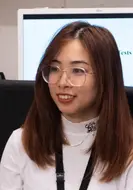 © Shubin Li
Postdoctoral Researcher
NameDr. Shubin Li
Send encrypted email via the SecureMail portal (for TUD external users only).
Chair of Lifespan Developmental Neuroscience
Chair of Lifespan Developmental Neuroscience
Office hours:
By appointment
Shubin studied clinical and cognitive psychology during her bachelor’s and master’s degrees and has long focused on the cognitive neuroscience of human olfaction. She completed her PhD in Medicine at TU Dresden, where she studied the human olfactory system from a clinical perspective. She uses methods including EEG and fMRI to study human olfaction. In October 2026, she will join the Chair of Lifespan Developmental Neuroscience at TU Dresden to investigate how touch and smell interact in human perception.
- Olfactory dysfunction in people with psychiatric disorders
- Neural mechanisms of human odor perception
- Changes in central olfactory processing in people with olfactory disorders
- Multisensory cognitive neuroscience, particularly interactions between smell and touch
Li, S., Kim, K., Joshi, A., & Hummel, T. (2026). Human olfactory bulb morphometry and olfactory sulcus depth measurement in normosmia. Chemical Senses, 51, bjag008. https://doi.org/10.1093/chemse/bjag008
Li, S., Kim, K., Li, Z., Joshi, A., Ajaj, A., Gossrau, G., ... & Hummel, T. (2026). Comprehensive MRI analysis of olfactory bulb morphology and olfactory sulcus depth in chronic rhinosinusitis, migraine, and post-COVID patients. Neuroscience. https://doi.org/10.1016/j.neuroscience.2026.05.020
Li, S., Mignot, C., Weise, S., & Hummel, T. (2026). Gamma and beta oscillatory signatures of the human olfactory bulb encode odor valence and sampling. iScience, 29(4). https://doi.org/10.1016/j.isci.2026.115126
Li, Z.*, Li, S.-B.*, Tan, S., Liu, L.-L., Yan, C., & Zou, L.-Q. (2025). Neural correlates of olfactory working memory in the human brain. NeuroImage, 306, 121005. https://doi.org/10.1016/j.neuroimage.2025.121005
Li, S.-B., Li, Z.-T., Lyu, Z.-H., Zhang, X.-Y., & Zou, L.-Q. (2022). Odour identification impairment is a trait but not a disease-specific marker for bipolar disorders: comparisons of bipolar disorder with different episodes, major depressive disorder and schizophrenia. Australian & New Zealand Journal of Psychiatry, 56(1), 71-80. https://doi.org/10.1177/0004867421998774