
Oct 16, 2026
Bioeconomy in Transition: Insights from the First Bioeconomy Conference in Passau
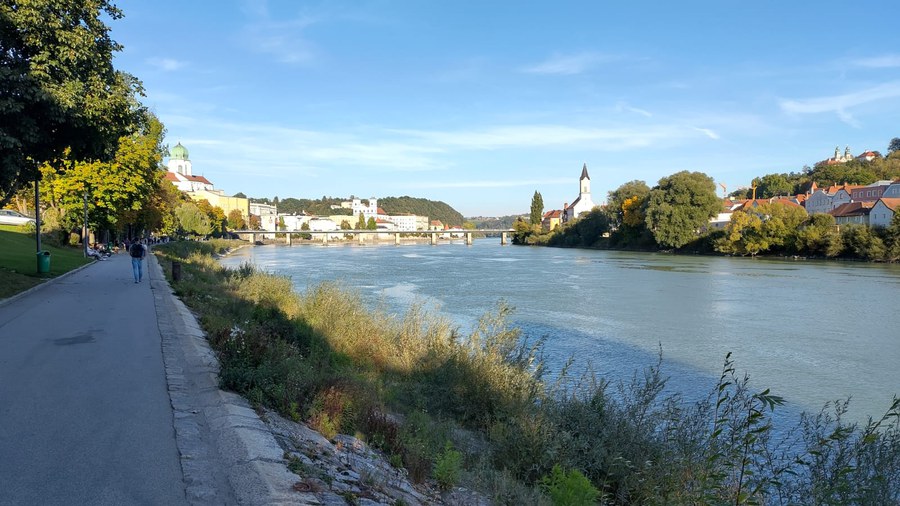
The search for viable alternatives to an economy dependent on fossil fuels, alongside efforts to strengthen energy security, is bringing the bio-based economy increasingly into focus as part of sustainable socioeconomic development. Against this backdrop, the Faculty of Business Administration, Economics, and Business Information Systems at the University of Passau hosted its first Bioeconomy Conference from September 28 to 30, 2026. The conference brought together researchers and experts from 18 countries. Boysen-TUD-RTG doctoral student Varun Gurugubelli, who is leading the subproject on the entrepreneurial impact on sustainability in the hydrogen economy within Cluster F, also gave a presentation at the conference.
Over the course of three days, participants discussed a broad spectrum of current topics. The session series addressed bio-based business models, market innovations, spatial optimization of land use, macro perspectives on sustainable transitions, and the behavioral dimensions that influence the adoption of the bioeconomy. Given the practice-oriented nature of the field, particular attention was paid to stakeholder dynamics, examining local and international interests, benefits, and systemic resistance in contexts ranging from Germany to the Global South. Complementing these sessions, daily keynote addresses provided critical perspectives on political developments, competition for land use with the forestry sector, and the transformation of regional innovation ecosystems. A key highlight of the event was an intergenerational panel discussion featuring key figures from the Bavarian Ministry of Economic Affairs, the Bavarian Bioeconomy Expert Council, the founder of the startup Rottal Hanf, and a member of the EU Bioeconomy Youth Ambassadors.
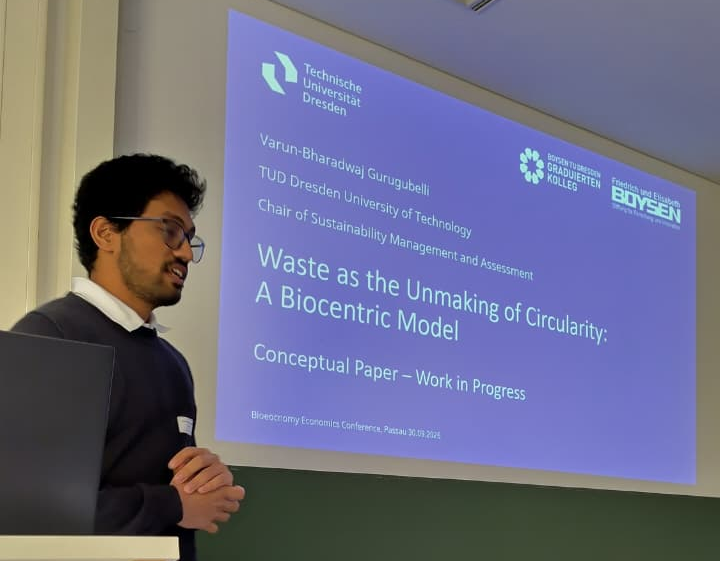
Varun Gurugubelli during his lecture in Passau.
The conference provided a forum for presenting ongoing research and receiving feedback from experts. Varun Gurugubelli presented his conceptual work on a new biocentric circular economy model intended to guide sustainable transitions. Discussions with an audience specializing in bioeconomy research provided valuable input for further developing the conceptual framework and helped identify open questions and potential gaps in the existing literature. Beyond the formal sessions, the conference offered opportunities for scholarly exchange and international networking, providing valuable impulses for further research on the bioeconomy.