
Das erste und zweite Graduiertenkolleg
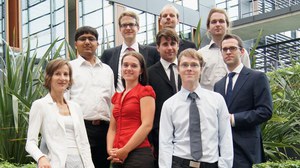
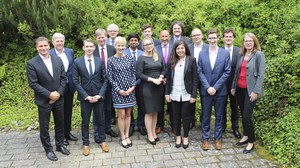
Im Jahr 2012 startete aus einer Kooperation der Technischen Universität Dresden und der Friedrich und Elisabeth Boysen-Stiftung heraus das erste Boysen-TU Dresden-Graduiertenkolleg (Foto links oben). Nach drei Jahren intensiver und erfolgreicher Zusammenarbeit konnte 2015 die zweite Generation des Kollegs ihre Arbeit aufnehmen (Foto links unten).
Hier finden Sie alle Informationen zu den vergangenen Projekten und den ehemaligen Mitarbeiter/innen.
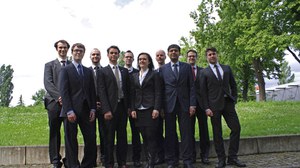
Die Alumni des 1. bis 3. Graduiertenkollegs
Unter dem Titel "Nachhaltige Energiesysteme - Interdependenz von technischer Gestaltung und gesellschaftlicher Akzeptanz" arbeiteten von 2012 bis 2015 Promotionsstudierende in 10 Projekten am ersten Boysen-TU Dresden-Graduiertenkolleg.
Mit einer wachsenden Weltbevölkerung wächst auch der globale Energiebedarf. Um CO2- Emissionen und die Abhängigkeit von fossilen Energieträgern zu vermindern, ist ein Wandel hin zu einem umweltfreundlichen, sicheren und wettbewerbsfähigen Energiesystem notwendig. Im zweiten Boysen-TU Dresden-Graduiertenkolleg von 2015 bis 2018 sollte nicht nur die technische Machbarkeit einer solchen Umgestaltung in den Blick genommen werden, sondern auch ihre wirtschaftlichen, rechtlichen und gesellschaftlichen Effekte und Bedingungen.
Der Mobilitätswandel hat sich in jeder Hinsicht zu einer so vielschichtigen wie herausfordernden Thematik entwickelt. Die damit einhergehenden anstehenden Veränderungen werfen wissenschaftliche Fragen auf, die tief in unser bisheriges Selbstverständnis als Gesellschaft und in den Alltag von uns allen vordringen. Denn so umfassend die Lösungsangebote der neuen Mobilität sind, so radikal werden sie verändern, was uns heute selbstverständlich erscheint.
Das dritte Boysen-TU Dresden-Graduiertenkolleg knüpfte von 2019 bis 2022 unter dem Leitthema „Mobilität im Wandel: Herausforderungen und Lösungen für Technik, Umwelt und Gesellschaft“ an diese Thematik an. Im Rahmen der Promotionsprojekte wurden neue Mobilitätstechnologien und -szenarien, sowie die damit verknüpften Fragestellungen aus verschiedenen wissenschaftlichen Perspektiven heraus betrachtet. Die 19 Promotionsprojekte waren in vier wissenschaftlich abgegrenzte, jedoch thematisch konvergierende Cluster aufgegliedert. Auf diese Weise konnten die Transformationsprozesse in den Bereichen Verkehr, Umwelt und Gesellschaft fachlich angemessen, perspektivisch vielfältig und methodisch facettenreich untersucht und auf breiter interdisziplinärer Basis bereits vorhandene Synergien genutzt werden.