
Teaching
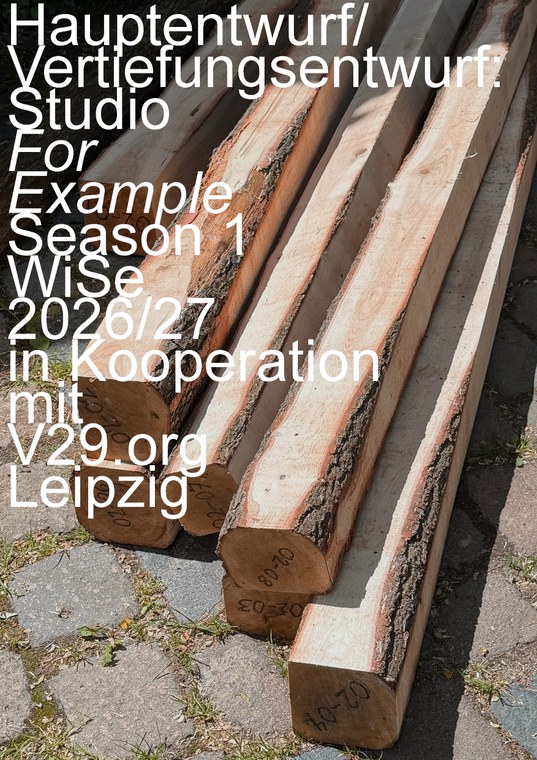
For five years, the “For Example” design studio will actively contribute to the development of the socio-ecological project V29 (www.v29.org) in Leipzig. The studio combines hands-on work, applied design, and design-based research.
In the winter semester of 2026/27 (Season 1), we’ll begin with a week of hands-on construction work with the material before it becomes a building component: We recover masonry bricks from a dilapidated building near Leipzig, saw hardwood from the Sachsenforst state forestry, and expose foundations that are already embedded in the ground on the property. This work also marks the beginning of the design process: What we find, touch, create, and understand finds its way into drawings, large-scale models, and 1:1 experiments—and from there, back to the house. Working in pairs, we explore specific questions with great precision: How might V29 sit on the ground? What kinds of spaces emerge from ceilings built with “crooked” oak trunks? How can straw, clay, lime, and hemp be combined to form a wall? Each of these aspects becomes the starting point for a design in which construction, form, resources, people, costs, and regulations come together. “For Example” is aimed at students who want to explore architecture through hands-on building, design, and critical thinking—and who aren’t afraid to grapple with the challenges of reality.
Modules AD810/ AD911, Start: October 5, 2026, Construction Week in Leipzig: October 5–9, 2026
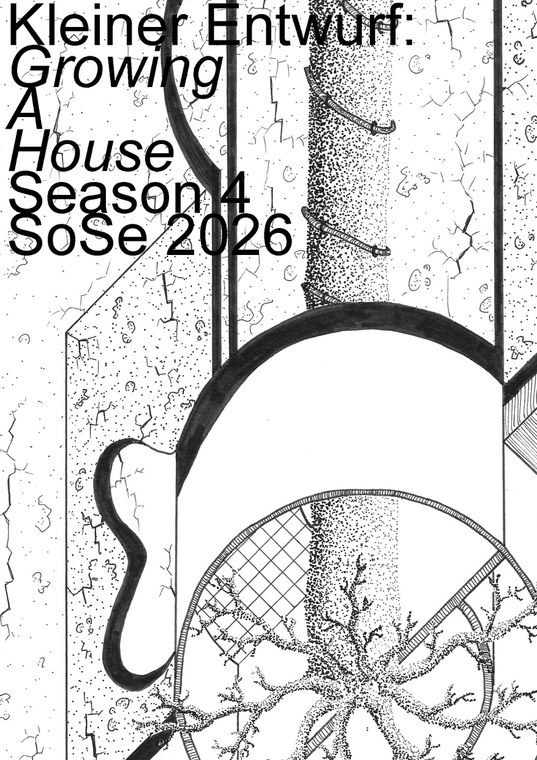
Building on the Foundation of Architectural Design, the project focuses on the practices that bring “Growing a House” to life. Here, dwelling is understood as something that is produced daily: through work and care, through routines, objects, bodies, and their relationships. Through these practices, materials and resources also move through the house and beyond its boundaries. In our models and drawings, we investigate where these practices take place, how they spread spatially, and which social orders and material flows materialize within them. What happens inside the house, what outside, what alone, what together, what is visible, and what remains in the background? Based on these observations, we develop alternative spatial constellations and explore how altered practices can also give rise to different forms of coexistence. The house thus becomes a cross-section of a larger spatial, material, and social fabric.
Module AD210, , Start: July 21, 2026
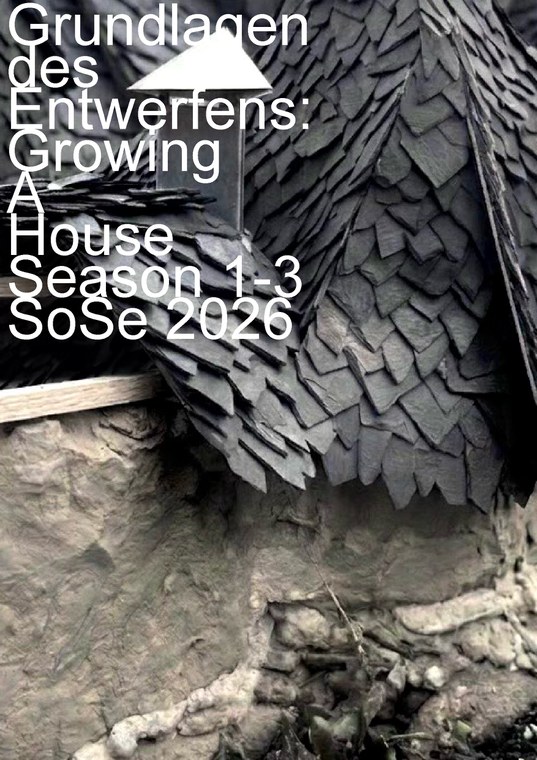
“Growing a House” begins with an attempt to lose our sense of distance during the design process: from materials and their origins, from the soil and climate, from the tools we use to alter our environment, and from changes over time. That is why we start with a piece of reality—in a “bucket”: soil, roots, and a living tree. Over the course of the semester, a fragment of a house—consisting of a foundation, walls, a roof, and a facade—emerges piece by piece. The model is a continuous construction site—a place where decisions take shape, encounter resistance, and are refined. Series of photographs capture individual moments of this ongoing process. Drawings break free from scale and the model’s current state: they can reveal what is hidden and anticipate what might yet come. Between building, photographing, and drawing, a design process emerges that constantly shifts between reality, observation, and imagination.
Module AD110, Fundamentals of Design, Start: April 15, 2026
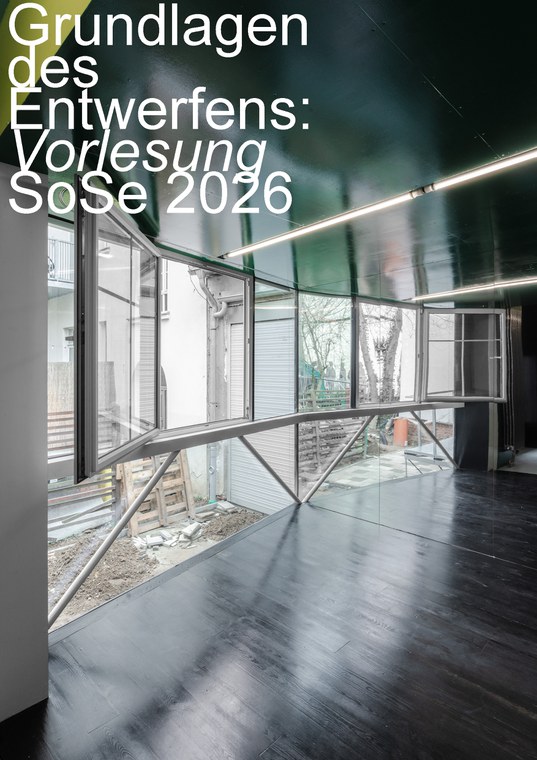
The lecture series “Foundations of Architectural Design” eschews the secure vantage point of the big picture. In a complex world, it deliberately begins with the fragmentary. We interpret specific architectural “individual cases” as traces and linger with them long enough until their apparent unambiguity is lost. Up close, connections emerge that easily vanish when viewed from a distance: between the built environment and the material, ecological, political, and social conditions from which it arises. The individual case thus becomes a place where broad contexts take on concrete material and spatial form—and at the same time can become highly contradictory. These lectures focus on these uncomfortable moments. They challenge familiar explanations and also put our own convictions to the test. This is also the source of their optimism: what becomes visible as conditional and contradictory can be reexamined—and reimagined.
Module AD110, Start Date: April 15, 2026