
ClearSenstech
| Project Title | ClearSensTech |
| Project Subtitle | Advancing Transparent, Tunable Piezoresitive Coatings for Next Generation Smart Buildings |
| Project Leader |
Prof. Dr.-Ing. Michael Engelmann (TU Dresden) |
| Researcher | Dipl.-Ing. Tim Seidel (TU Dresden) |
| Partners |
National Institute for Laser, Plasma and Radiation Physics (Coordinator, INFLPR) |
| Funding | M-ERA.NET (Sächsische Aufbaubank – Förderbank EU-Förderprogramme für Forschung und Innovation (FRL EFRE/JTF Technologieförderung) |
| Time Span | 2025-2028 |
Projektbeschreibung
The trend toward urbanization has accelerated the development of smart building technologies that integrate intelligent systems to create more efficient, sustainable, and safer urban environments. Among the various materials used in construction, glass plays a particularly important role due to its versatility, aesthetics, and recyclability. In the context of smart buildings, glass is not only a structural element but also a dynamic component capable of enhancing energy efficiency, safety, and comfort. As urban centers grow denser and high-rise buildings continue to increase in number and height, the potential of windows and glass façades for monitoring structural integrity becomes increasingly significant.
The core objective of the project is to develop and demonstrate a transparent piezoresistive coating with tunable sensitivities. This innovation aims to enable real-time monitoring of stress and strain in glass structures, paving the way for smart windows, transparent curtain walls, and sensor networks in urban environments. By integrating sensing capabilities directly into glass components, structural weaknesses can be detected at an early stage, thereby reducing maintenance costs and increasing safety, while maintaining transparency and energy performance—particularly through heat gains during cold seasons. A key technological milestone is to achieve the Technology Readiness Level (TRL) from level 2 to level 4 by the end of the project. Furthermore, through the use of recyclable and non-toxic materials, the project consistently supports the objectives of the European Green Deal and the United Nations Sustainable Development Goals for a sustainable circular economy.
The methodological approach is based on a multidisciplinary strategy that links materials science with industrial application. Technologically, the project employs advanced deposition techniques such as Inkjet Technologyand pulsed laser deposition (PLD) to achieve precise functional coatings. This collaborative process ensures the effective transfer of innovation from laboratory research to market-oriented applications, while aligning project outcomes with international standards and industrial needs.
The project is commenced by an international consortium bringing together academic institutions, research centers, and industrial partners. It is coordinated by the National Institute for Laser, Plasma and Radiation Physics (INFLPR) in Romania. Additional partners include the Fraunhofer Institute for Electronic Nano Systems (Fraunhofer ENAS), the Technical University of Dresden (TUD), and C-marx GmbH from Germany; the National Institute for Research and Development in Microtechnology (IMT) and Saint-Gobain Glass (SGG) from Romania; and Attophotonics Biosciences GmbH from Austria.

The project is funded under the European M-ERA.NET programme (Call 2024), which focuses on innovative surfaces, coatings, and interfaces. It is planned to run for 36 months, with national-level funding provided by the respective funding organizations e.g. Sächsische Aufbaubank – Förderbank EU-Förderprogramme für Forschung und Innovation (FRL EFRE/JTF Technologieförderung for the German partners.
Contact Person TU Dresden
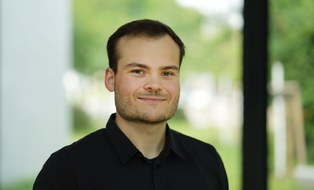 © Franziska Rehde
Research Associate
NameDipl.-Ing. Tim Seidel
Send encrypted email via the SecureMail portal (for TUD external users only).
Institute of Building Construction
Institute of Building Construction
Visiting address:
NÜR, Raum 412B Nürnberger Straße 31A
01187 Dresden
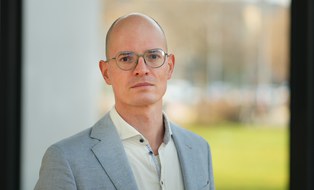 © Franziska Rehde
Research Associate
NameDipl.-Ing. Johannes Giese-Hinz
Group Leader Design & Construction
Send encrypted email via the SecureMail portal (for TUD external users only).
Institute of Building Construction
Institute of Building Construction
Visiting address:
NÜR, Room 06-021 Nürnberger Straße 31A
01187 Dresden
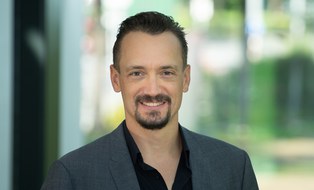 © Franziska Rehde
Professor of Sustainable Building Construction
NameProf. Dr.-Ing. Michael Engelmann
Head of the Institute of Building Construction
Send encrypted email via the SecureMail portal (for TUD external users only).
Institute of Building Construction
Institute of Building Construction
Visiting address:
NÜR, 06-018 Nürnberger Straße 31A
01187 Dresden