
15.02.2026
ITFMW: Interview mit Prof.in Christina Scheffler
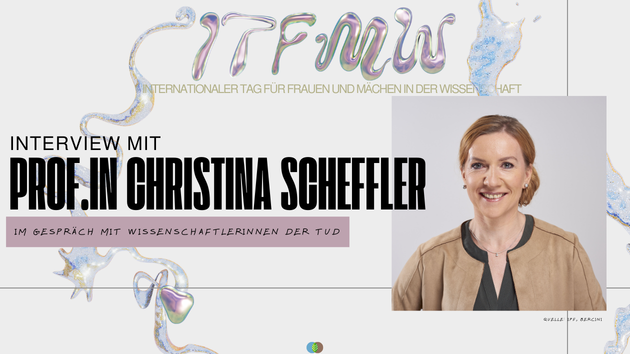
Banner zum Interview
Im Rahmen des Internationales Tags für Frauen und Mädchen in der Wissenschaft (ITFMW) am 11. Februar hat das FUN* 5 Wissenschaftlerinnen des Bereichs BU interviewt.
INTERVIEW MIT PROF.IN CHRISTINA SCHEFFLER
Wer sind Sie?
Mein Name ist Christina Scheffler, ich bin Professorin an der Uni und leite eine Abteilung am Leibniz-Institut für Polymerforschung Dresden. Außerdem bin ich Mama von drei Töchtern und wir leben im schönen Striesen in Dresden. Ursprünglich komme ich aus der Oberlausitz, wo ich auf einem Bauernhof aufgewachsen bin.
Was machen Sie?
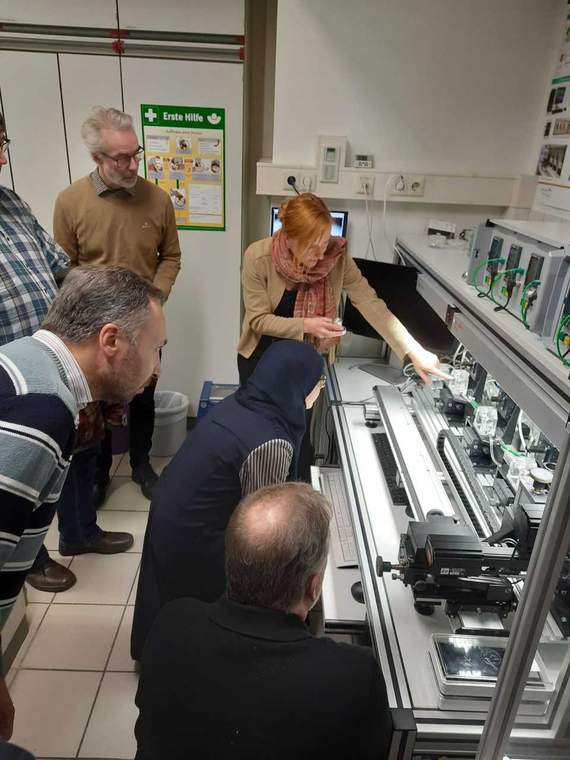
Mein Berufsleben habe ich der Erforschung von Werkstoffen gewidmet, die für ganz unterschiedliche Anwendungen genutzt werden. Ich leite die Abteilung Fiber Engineering mit aktuell 14 Wissenschaftlern, Doktoranden, Technikern und Laboranten am Leibniz-Institut für Polymerforschung Dresden e.V. Gleichzeitig war ich seit 2016 Young Investigator an der Uni und bin nun seit 2024 Professorin für Polymere im Bauwesen an der Fakultät Bauingenieurwesen.
Was haben Sie studiert / gelernt?
Ursprünglich habe ich Maschinenbau im Grundstudium studiert und mit einer Vertiefung in der Richtung Textil- und Bekleidungstechnik abgeschlossen. Seit ich 16 Jahre alt war, habe ich nebenher aber auch versucht, mit verschiedenen Jobs Erfahrungen zu sammeln und etwas dazu zu verdienen. Das hat mir geholfen zu erkennen, was mir Freude macht bzw. was ich lieber nicht tun möchte.
Zu welchem Thema forschen Sie gerade und was sind Ihre Hauptinteressen?
Schon in meiner Diplomarbeit ging es um Glasfasern, die als Bewehrung für Beton eingesetzt werden. Dem Thema Textil bin ich demnach in Bezug auf Fasern treu geblieben und so ist es auch heute noch. In meiner Forschung geht es um die Herstellung und Weiterentwicklung von Fasermaterialien und Grenzschichten für besonders leichte, haltbare, biobasierte und multifunktionale Anwendungen im Leichtbau und Bauwesen, aber auch für den medizinischen Bereich.
Was motiviert Sie besonders, an diesem Thema zu forschen?
Durch meine Forschung kann ich einen Beitrag für zukünftige, nachhaltige Materialien und die Kreislaufführung leisten. Besonders wichtig ist mir die Anwendungsnähe meiner Arbeit und der direkte Kontakt zu Unternehmen, aber auch kleinen, regionalen Firmen. Außerdem mag ich die Interdisziplinarität. In meinem Team arbeiten Doktoranden und Studierende aus den Bereichen Chemie, Werkstoffwissenschaft sowie Kunststoff- und Textiltechnik zusammen mit Wissenschaftlern der Institute für Baustoffe oder Massivbau. Das macht wirklich Spaß und man lernt immer wieder dazu.
Was hätten Sie gern mit 16 Jahren gewusst?
Ich hätte gern schon früh gewusst, wie vielseitig viele Berufe sind und damit eine Menge unterschiedlicher Interessen abdecken. Gerade vielen Mädchen ist das Zwischenmenschliche im Beruf wichtig. Teil eines Teams zu sein oder ein Team zu leiten bedeutet gleichzeitig auch „etwas mit Menschen“ zu machen, egal, welchen Beruf man ausübt. Es braucht Einfühlungsvermögen und Menschenkenntnis, um mit unterschiedlichen Kolleginnen und Kollegen erfolgreich zu arbeiten. Auch gute Schulnoten sind weniger entscheidend als persönliche Motivation, Engagement und Zuverlässigkeit.
Was war Ihr größtes Aha-Erlebnis?
Man wächst mit den Aufgaben – das ist nicht nur eine Phrase, sondern tatsächlich der Fall. Viele neue Aufgaben klingen anfangs unlösbar und viel zu groß, sind aber häufig leichter zu bewältigen als gedacht. Hätte mir am Anfang des Studiums jemand gesagt, dass ich promovieren werde, eine Leitungsfunktion oder gar eine Professur antrete, dann hätte ich mir das damals einfach nicht vorstellen können.
Welchen Tipp würden Sie jungen Studentinnen mitgeben?
Bei der Wahl des Studienfachs mutig zu sein und einfach auszuprobieren. Gerade Praktika und SHK-Stellen sind eine wirklich gute Möglichkeit, mit Leuten in Kontakt zu kommen und sich einen eigenen Eindruck zu machen. Sollte es nicht passen, dann ist ein Wechsel meistens weniger dramatisch als gedacht. Auch Angebote zur persönlichen Weiterentwicklung, wovon die Uni zum Beispiel in der Graduiertenakademie sehr viele anbietet, sind super. Baut Euch ein Netzwerk auf!
Vielen Dank für das Interview, Prof.in Scheffler!