Alumni-Seminar: Klimaanpassung und Resilienz – Kapazitäten für eine klimafreundliche Zukunft aufbauen (AS2026)
Ein zweiwöchiges Online-Seminar für CIPSEM-Absolventen aller Jahrgänge, um anhand eines bewährten Dialogmodells ihre eigenen Herausforderungen im Bereich Klimaanpassung zu analysieren und praktische Aktionspläne für die Zeit nach der Schulung zu entwickeln.
Dieses Seminar hat im Juni 2026 stattgefunden. Ein Bericht über die Ergebnisse finden Sie hier.
| Seminarzeitraum | 08. Juni – 21. Juni 2026 (2 Wochen) plus Vorbereitungsphase |
|
Dauer |
2 Wochen, Teilzeit mit synchronen und asynchronen Elementen |
| Zeitaufwand |
~3 Stunden/Tag während des Seminarzeitraums; ~2 Stunden synchrone Videokonferenzen an Werktagen (in der Regel ab ca. 13:00 Uhr MESZ, um allen Zeitzonen gerecht zu werden) |
| Format | Online |
| Teilnehmer |
21 Absolventen des UNEP/UNESCO/BMUKN-Kurses |
| Sprache |
Englisch |
| Bewerbungszeitraum |
16. Februar bis 24. März 2026 |
Ein zweiwöchiges Online-Alumni-Seminar für Absolventen von UNEP/UNESCO/BMUKN aller Jahrgänge, bei dem sie sich anhand von Erfahrungsaustausch unter Gleichgesinnten, strukturiertem Dialog und praktischer Aktionsplanung mit konkreten Herausforderungen der Klimaanpassung aus ihrem beruflichen Umfeld auseinandersetzen.
Motivation
In einem sich rasch wandelnden Klima sind Anpassung und Resilienz unverzichtbar geworden, um gefährdete Gemeinschaften und Ökosysteme zu schützen. Diese Realität erfordert Umweltfachkräfte, die nicht nur über technisches Wissen verfügen, sondern auch anpassungsfähig und integrativ denken – Fachleute, die sektorübergreifende Zusammenarbeit ermöglichen, gemeinschaftsorientierte Ansätze fördern und sich in komplexen sozioökologischen Systemen zurechtfinden.
CIPSEM-Alumni sind in Ministerien, Kommunalverwaltungen, NGOs, Forschungseinrichtungen und internationalen Organisationen strategisch positioniert, um solche transformativen Maßnahmen voranzutreiben. Die sich rasch wandelnde Anpassungslandschaft erfordert jedoch eine kontinuierliche Kompetenzsteigerung, den Austausch unter Fachkollegen und die gemeinsame Entwicklung innovativer Ansätze. Das Alumni-Seminar zu Klimaanpassung und Resilienz (AS2026) ist als Antwort auf diesen Bedarf konzipiert.
So funktioniert das Seminar
AS2026 verbindet eine Vorbereitungsphase mit einem Teilzeit-Online-Seminar, das sich an den beruflichen Herausforderungen der Teilnehmenden im Bereich der Klimaanpassung orientiert. Während des gesamten Prozesses nehmen die Teilnehmenden an einem Austausch unter Gleichgesinnten, moderierten Reflexionsrunden, internationalen Beiträgen und der angeleiteten Entwicklung praktischer Aktionspläne für die Zeit nach der Schulung teil.
In der Vorbereitungsphase stellen ausgewählte Teilnehmer*innen in einem kurzen Video eine Herausforderung aus ihrer beruflichen Praxis vor. Die Teilnehmer*innen sehen sich diese Videos an und stimmen über die Fälle ab, die während des Seminars behandelt werden sollen, um sicherzustellen, dass der Prozess auf den Themen basiert, die die Gruppe als besonders relevant erachtet.
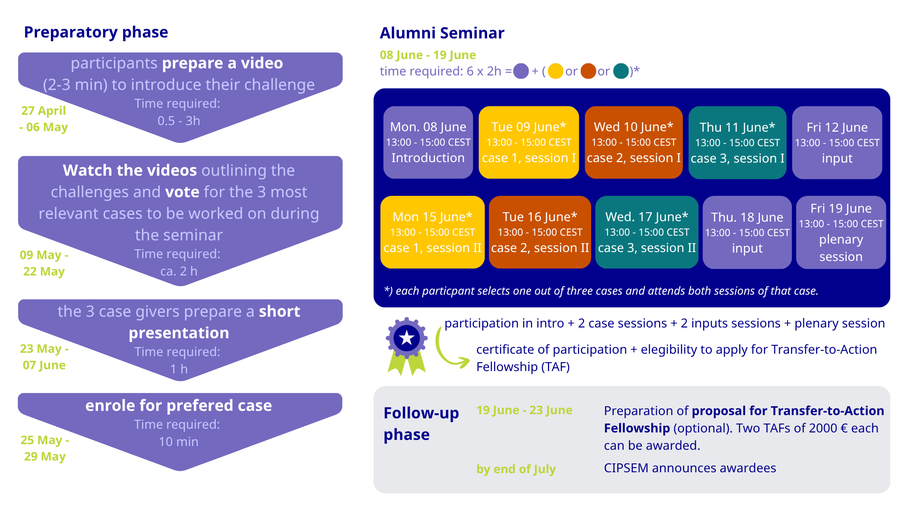
Der detaillierte Ablauf der Vorbereitung, der Live-Sitzungen, der Fallarbeit und der optionalen Nachbereitung „Transfer-to-Action“ ist in der folgenden Zeitleiste dargestellt.
Die Methode hinter dem Seminar
Ein Kernelement des Seminars ist das Dialogmodell „Navigating Uncertainty“, das gemeinsam von CIPSEM, dem Umweltbundesamt (UBA), dem Global Diplomacy Lab (GDL) und einer ersten Gruppe von CIPSEM-Alumni entwickelt wurde. Das Modell wurde bereits in Online- und Präsenzveranstaltungen für Alumni angewendet und weiterentwickelt und hat sich als nützlich erwiesen, um komplexe Nachhaltigkeitsherausforderungen zu analysieren, Konsultationen unter Gleichgesinnten zu strukturieren und kontextsensitive Lösungen zu entwickeln.
Das Dialogmodell verbindet systemisches Denken mit praktischer Zusammenarbeit. Es hilft den Teilnehmenden, vom Verständnis einer Herausforderung und ihres breiteren Stakeholder-Kontexts dazu überzugehen, Ansatzpunkte zu identifizieren, neue Allianzen zu bilden und realistische erste Handlungsschritte zu definieren.
Seine Leitprinzipien sind Zusammenarbeit, Inklusion, Agilität, Vielfalt, Ganzheitlichkeit und Handlungsorientierung. In der Praxis arbeiten die Teilnehmer mit Instrumenten wie dem Double-Diamond-Framework, der Case Clinic, dem Eisberg-Modell, der Einfluss-Interessen-Perspektive und der Aktionsplanung nach der Konsultation, um von der Reflexion zur Umsetzung zu gelangen.
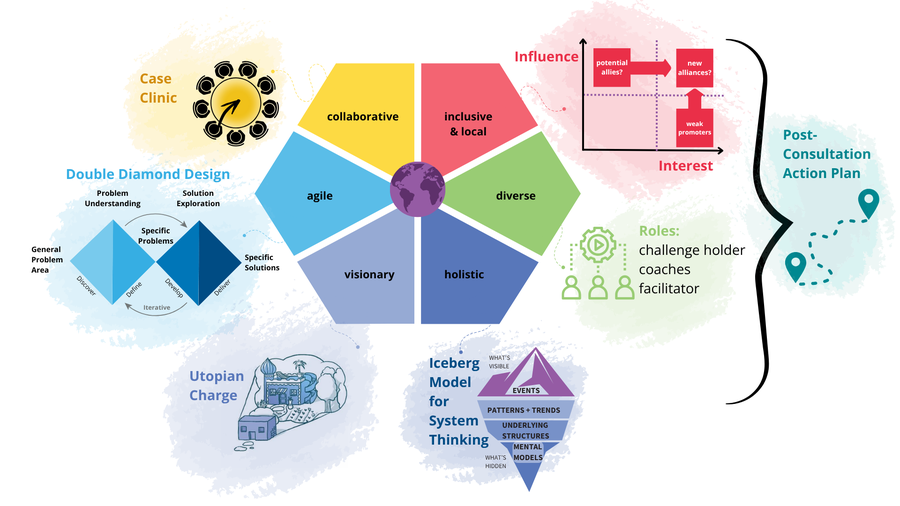
Das Dialogmodell „Navigating Uncertainty“ und ausgewählte Instrumente, die eingesetzt werden, um vom Systemverständnis zum gemeinsamen Handeln zu gelangen.
Was die Teilnehmenden gewinnen
Das Seminar bietet eine ganzheitliche Lernerfahrung, die sowohl die individuelle Praxis als auch den Austausch unter den Absolventen stärkt. Die Teilnehmenden vertiefen ihr adaptives Denken, erlernen strukturierte Ansätze zur gemeinsamen Problemlösung und stärken ihre Fähigkeit, in ihren Institutionen und Netzwerken als Change Agents zu agieren.
Die Teilnehmer sammeln zudem praktische Erfahrungen mit Co-Creation, Moderation und strukturierter Peer-Beratung anhand des Modells „Navigating Uncertainty“. Der Prozess ist darauf ausgelegt, neue Perspektiven auf die eigenen klimabezogenen Herausforderungen der Teilnehmer zu eröffnen und gleichzeitig den Süd-Süd-Nord-Wissensaustausch sowie die nachhaltige Vernetzung zwischen den CIPSEM-Jahrgängen zu stärken.
Absolventen des Seminars können sich zudem für „Transfer-to-Action“-Stipendien in Höhe von jeweils 2.000 € bewerben, um die Umsetzung in ihrer Heimat zu unterstützen.
Bisherige Erfahrungen
Das AS2026 zugrunde liegende Dialogmodell entstand nicht als rein theoretisches Konzept. Es ging aus einem internationalen Kooperationsprozess zu Herausforderungen der Nachhaltigkeit hervor, an dem 20 Expert*innen aus 16 Ländern Afrikas, Asiens und Lateinamerikas teilnahmen, und wurde seitdem durch weitere Aktivitäten der Absolvent*innen weiterentwickelt.
Diese Erfahrung zeigte den Wert der Arbeit mit konkreten Fällen, die von den Teilnehmern selbst vorgeschlagen wurden. Die Alumni stellten fest, dass der Prozess dazu beiträgt, kollektive Intelligenz freizusetzen, neue Akteure und Möglichkeiten der Zusammenarbeit aufzudecken, Netzwerke zu stärken und die Fähigkeit der Teilnehmer zu fördern, mit Unsicherheiten in ihrem eigenen Kontext umzugehen.
Die bereits mit diesem Ansatz untersuchten Fälle decken ein breites Spektrum an Themen und Regionen ab, darunter kommunale Wasserprojekte, Klimafinanzierung, Wald- und Landschaftsrenaturierung, Agroforstwirtschaft, Biodiversitätskorridore, Ernährungssicherheit und lokale Nachhaltigkeitspolitik.
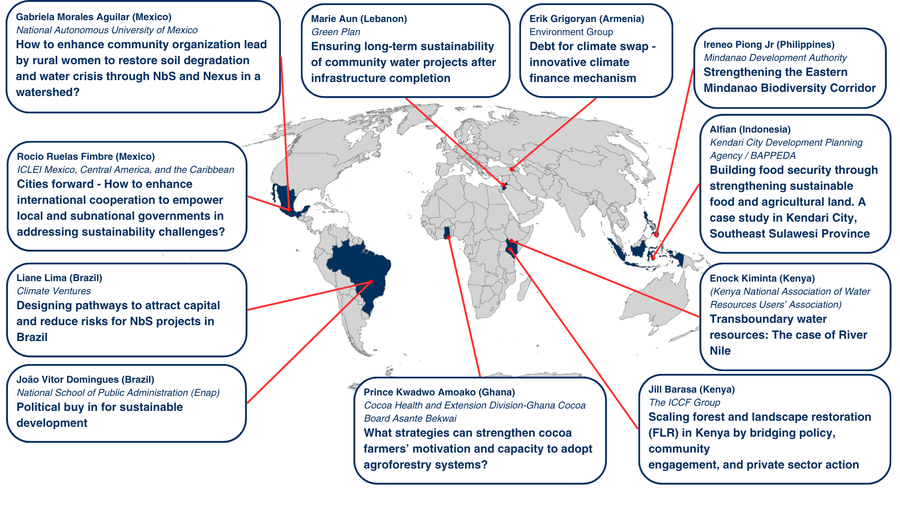
Beispiele für Herausforderungen im Bereich der Nachhaltigkeit, die bereits im Rahmen des Dialogmodells regionen- und themenübergreifend untersucht wurden.
Ein Teilnehmer des ersten Prozesses beschrieb Vertrauensbildung und Zusammenarbeit als zentrale Motivationen für das Engagement und merkte an, dass sich viele Initiativen zum Aufbau von Allianzen in erster Linie auf technische Ergebnisse konzentrieren. Diese Betonung von Vertrauen, Vielfalt und gemeinsamem Lernen steht weiterhin im Mittelpunkt der Seminargestaltung.
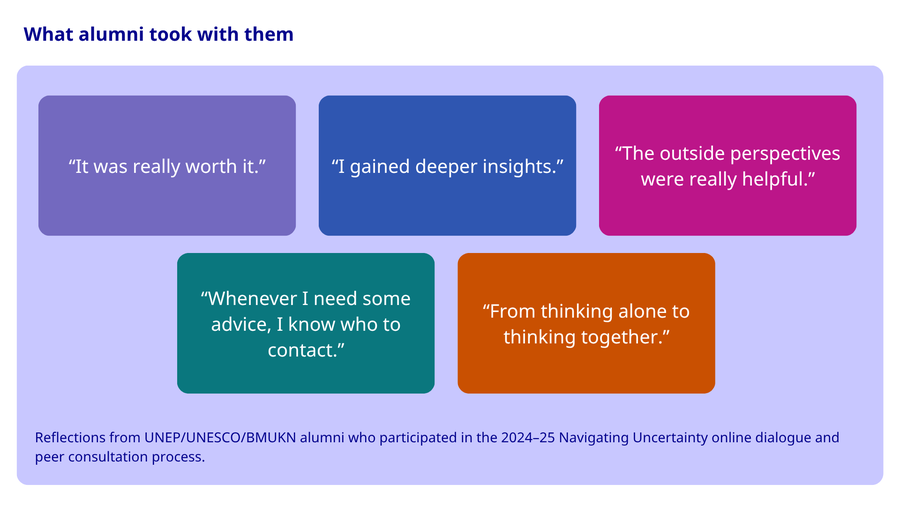
Eindrücke von Alumni des UNEP/UNESCO/BMUKN-Programms, die am Online-Dialog und Peer-Konsultationsprozess „Navigating Uncertainty“ 2024–25 teilgenommen haben.
Zielgruppen
Dieses Seminar richtet sich an Absolventen des von CIPSEM durchgeführten UNEP/UNESCO/BMUKN-Kursprogramms, die aktiv in den Bereichen Klimaanpassung, Nachhaltigkeit und Resilienz tätig sind. Die Bewerber müssen in einem DAC-Land wohnen und arbeiten und zum Zeitpunkt der Bewerbung höchstens 55 Jahre alt sein.
Das Seminar richtet sich an Fachleute, die interdisziplinären Wissensaustausch betreiben, über konkrete berufliche Herausforderungen reflektieren und gemeinsame Erkenntnisse in praktische nächste Schritte umsetzen möchten.
Wie kann man sich bewerben?
Qualifizierte Absolventen sind herzlich eingeladen, sich für diese Fortbildung zu bewerben. Falls Sie sich noch nicht über das CIPSEM-Bewerbungsportal (das inzwischen geschlossen ist) beworben haben, senden Sie bitte bis zum 17. April 2026 eine E-Mail an mit dem Betreff „Bewerbung für AS2026“. Geben Sie in Ihrer E-Mail Folgendes an:
- Vorname, Nachname
- Your country of residence
- Ihre derzeitige berufliche Position und Ihren Arbeitgeber
- Der UNEP/UNESCO/BMUKN-Kurs, an dem Sie teilgenommen haben
- Eine Herausforderung im Bereich der Klimaanpassung, mit der Sie in Ihrer beruflichen Tätigkeit konfrontiert sind.
Dabei sollte es sich um ein reales Problem handeln, das mit der Anpassung an den Klimawandel, Nachhaltigkeit oder nachhaltiger Entwicklung zusammenhängt und von einer strukturierten Beratung durch Gleichgesinnte während des Seminars profitieren würde.
In der Bewerbung sollten Sie die Herausforderung klar darlegen, warum sie von Bedeutung ist und wie der Austausch mit anderen Alumni dazu beitragen könnte, mögliche Lösungswege zu finden.
Erfolgreiche Teilnehmer erhalten ein digitales Teilnahmezertifikat.
► Bei Fragen zu diesem Seminar wenden Sie sich bitte an unep@mailbox.tu-dresden.de.