
Jun 15, 2026
Focus on Streams: Fieldwork with Students as Part of the FLOW Project
On May 26 and 28, 2026, students enrolled in the "Applied Landscape Ecology" course studied two small watercourses in Dresden – the Kaitzbach and the Roitzscher Bach. The goal of the fieldwork was to comprehensively assess the ecological condition of the streams while gaining practical experience in the field.
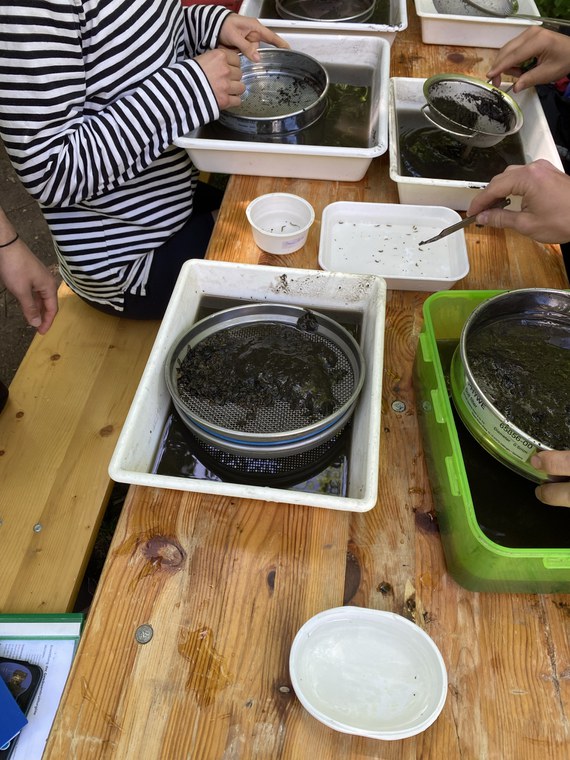
Filtern von Makrozoobenthos aus dem Sohlsubstrat der Untersuchungsgewässer
The students did a river habitat survey, analyzed the chemical condition of the water, and assessed biological water quality based on macrozoobenthos. These include aquatic invertebrates such as caddisfly, mayfly and dragonfly larvae, as well as freshwater shrimp and snails. Their species diversity and abundance provide important insights into the ecological condition of a watercourse and potential sources of pollution, such as pesticides or nutrient inputs from agriculture.
The analysis of the macrozoobenthos was particularly labor-intensive: using the kick-sampling method, samples of the bottom substrate were collected at several points along a 100-meter-long section of the watercourses. The aquatic organisms contained in these samples then had to be sorted through several filtration stages and identified under a microscope.
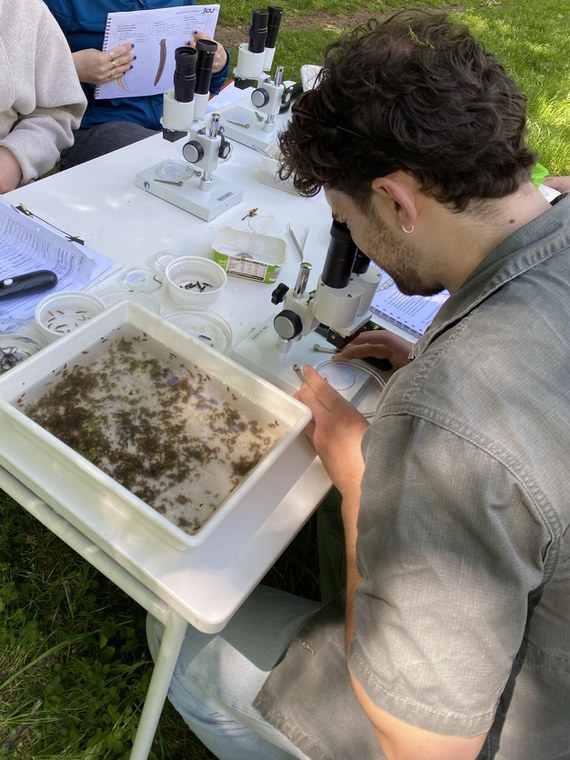
Bestimmung der aquatischen Wirbellosen unter dem Mikroskop
The collected data is incorporated into the FLOW project – a citizen science initiative for monitoring small watercourses. Small streams and ditches make up about 65 percent of Germany’s watercourse network and fulfill important ecosystem functions. They provide habitats for numerous animal and plant species, contribute to the self-purification of water, store water in the landscape, and serve as local recreational areas. Despite the monitoring of watercourse pollution under the European Water Framework Directive, a large portion of our watercourses is in poor condition. Furthermore, small watercourses (catchment area < 10 km²) are not adequately covered by the European Water Framework Directive.
FLOW therefore aims to collect nationwide data on the condition of small watercourses and to supplement existing water monitoring. To this end, local groups are being established, supported through training, educational materials, and the provision of equipment for fieldwork.
The local FLOW group of Dresden was revived under the leadership of Viktor Geißler (BUND Dresden Regional Group) and Lisa Lang from our Chair. In addition to the two of them, about 15 to 20 volunteers are currently active in the group. As early as May 10, 2026, the local group conducted a survey of the Gorbitzbach in Dresden. In the current summer semester of 2026, our Chair is also offering field exkursions as part of the FLOW project in the modules "Applied Landscape Ecology" and "Research Practice in Geography."
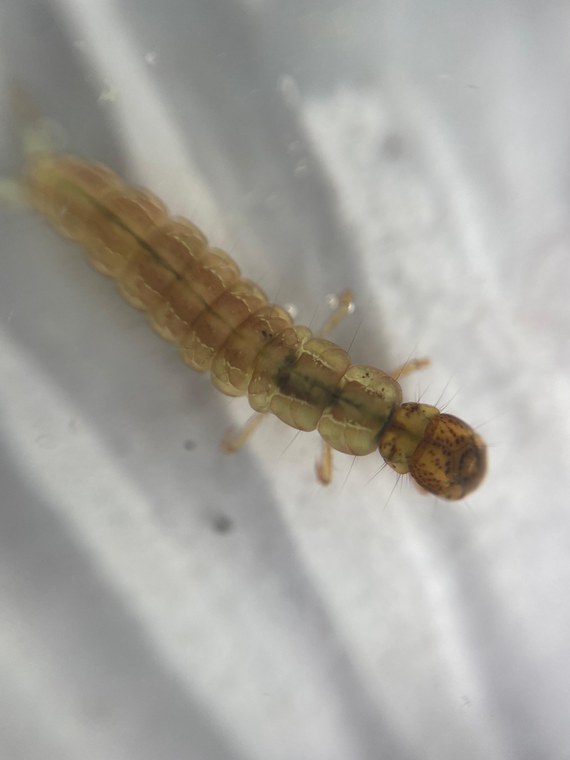
Neben anderen Arten wurden Köcherfliegenlarven der Gattung Polycentropus an beiden Untersuchungsgewässern gefunden