
Apr 10, 2026
How (spatially) equitable are superblocks? New paper published
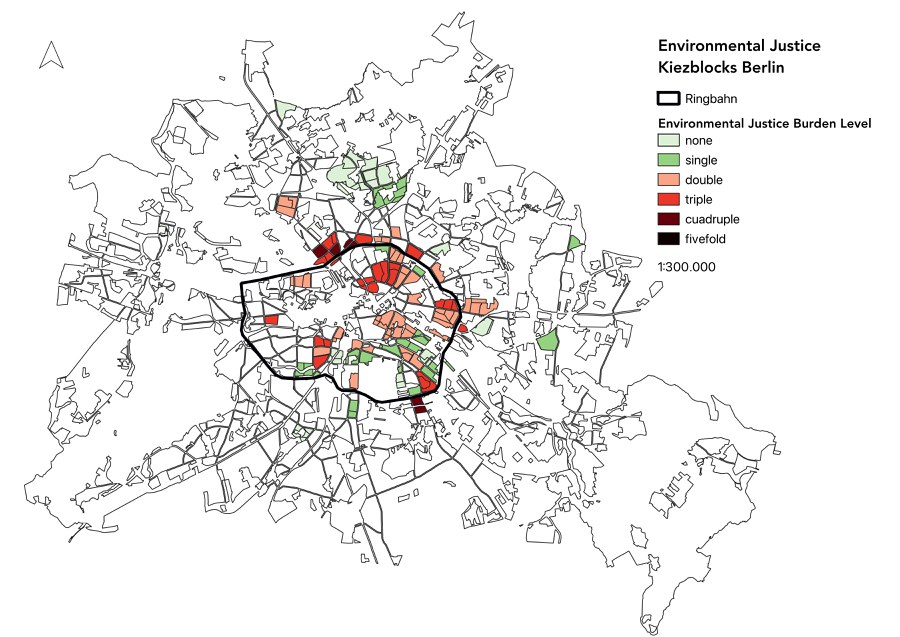
Superblocks in Berlin (called Kiezblocks) and their environmental justice burden levels
On April 10, 2026, the new paper"Environmental Justice through Superblocks? A Geospatial Analysis of Berlin's Kiezblock Initiatives" has been published.
The term superblocks covers numerous measures. The concept might imply traffic calming in inner-city neighborhoods, accompanied by greening, novel forms of use and a concept for public transport.
The urban planning concept from Barcelona has a polarizing impact. While supporters emphasize the newly gained quality of life and positive health aspects, critics fear that motorized private transport will be pushed out of city centres. Meanwhile, the number of cities around the world implementing superblocks increases steadily.
But how spatially equitable are such concepts? Are they located where they are "most" needed within an urban area, for example where traffic congestion or the lack of green spaces are biggest?
The study examines this very question and applies spatial justice as a research perspective. The paper was published in the Swedish journal "Geografiska Annaler Series B: Human Geography" and is listed in the Web of Science with an impact factor of 2.2.