
Sustainable Suburbia (SuSi)
Comparative analysis of the socio-spatial development of suburban areas – Germany and Poland in the context of polycrises (SuSi)
Topic
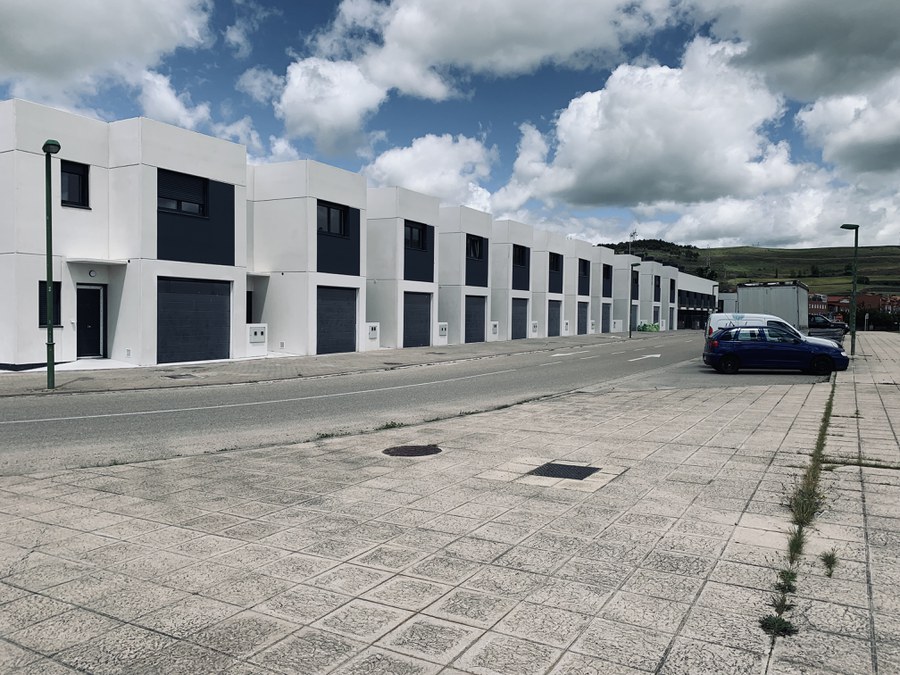
Suburban areas are an essential component in the relationship between urbanity and rurality and have become an important place to work and live in the 20th and 21st centuries. Nevertheless, suburban areas are often considered as unsustainable in terms of social or ecological aspects and are associated with problems such as urban sprawl, increased traffic, environmental pollution, high infrastructure costs, social isolation, but also segregation and intercultural conflicts.
Against this background, the project aims to explore current suburbanization processes in Poland and Germany. The aim is to compare the spatial and social factors, stakeholders and perspectives of suburban governance in Polish and German suburban communities. We want to identify common as well as locally specific political, market and socio-economic factors and understand how they shape the conditions of suburbanization in Polish and German metropolitan regions in the context of the polycrisis. Conflicting goals of the sustainability transformation will also be considered.
Duration
01.01.2026 - 30.06.2028
Funding
This third-party funded project is funded by the German-Polish Science Foundation.
Project partner
Prof. Dr. Katarzyna Kajdanek, Institute of Sociology, University of Wroclaw // Principal Investigator (PI)
Dr. Dawid Krysiński, Institute of Sociology, University of Wroclaw
JProf. Dr.-Ing. Marcus Hübscher, Institute of Geography, Dresden University of Technology