
Nov 06, 2026
Rethinking Mobility: The Faculty of Transport and Traffic Sciences facilitates dialogue at the 2026 UN Day in Dresden
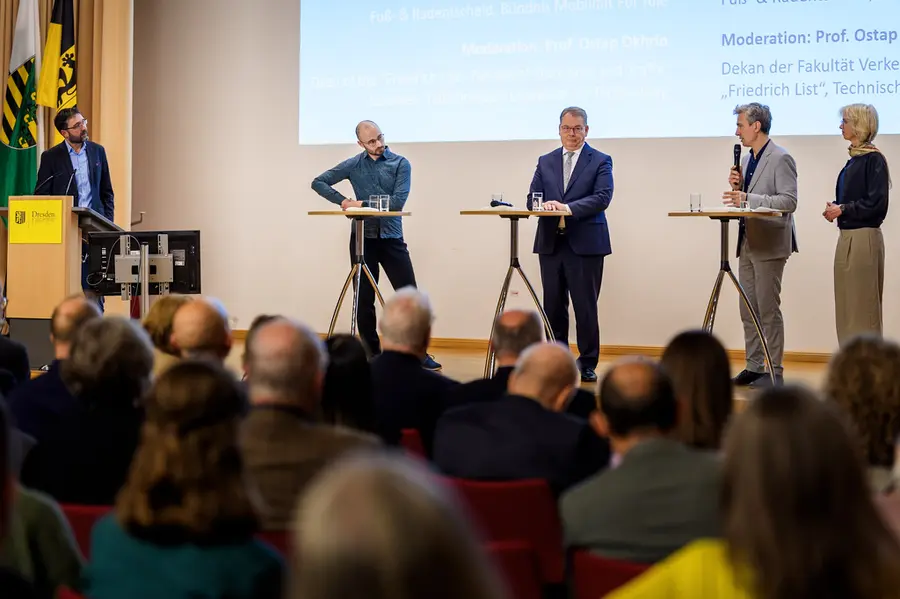
How can mobility be made more sustainable, safer, and more equitable? And how can scientific findings, political framework conditions, and societal needs be brought together to shape the mobility of the future? This year’s UN Day in Dresden on November 5, 2026, addressed these questions under the theme “Rethinking Mobility.” The "Friedrich List" Faculty of Transport and Traffic Sciences was prominently represented: Vice-Dean Prof. Dr. Regine Gerike contributed the scientific perspective to the panel discussion, Dean Prof. Dr. Ostap Okhrin moderated the discussion.
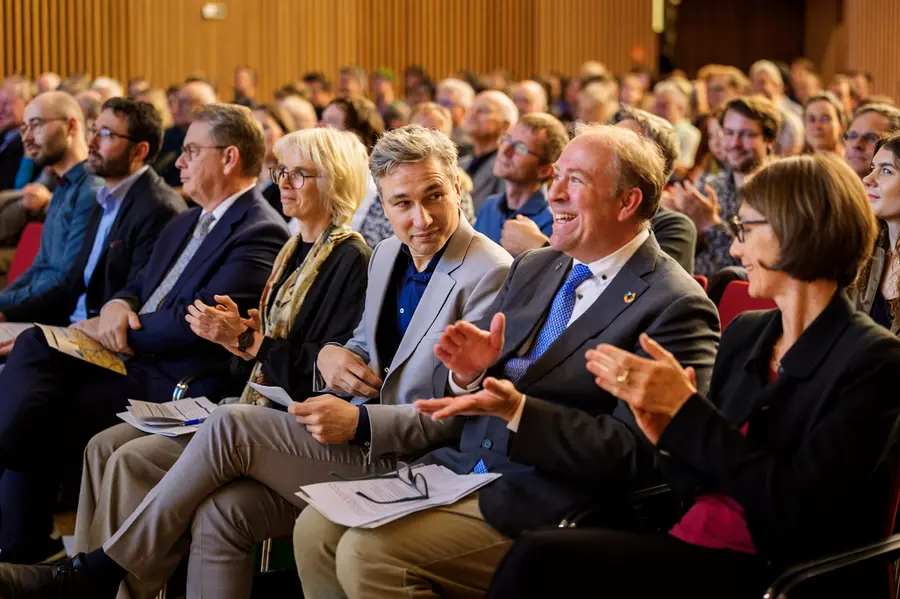
Representatives from academia, industry and politics were guests at UN Day 2026.
The ceremony marking United Nations Day 2026 in the plenary hall of the New City Hall brought together representatives from academia, politics, Transport Economics, and civil society. The focus was on how mobility systems can better meet people’s needs – in light of growing traffic congestion, rising emissions, limited resources, and the global challenges of climate change.
Alongside Prof. Regine Gerike, Stephan Kühn, Deputy Mayor for Urban Development, Construction, Transportation, and Real Estate for the State Capital of Dresden; Burkhard Ehlen, Managing Director of the Upper Elbe Transportation Association (ZVVO) and Upper Elbe Transportation Association GmbH (VVO), and Tobias Spens, from Fuß- und Radentscheid and "Bündnis Mobilität für alle", discussed challenges and potential solutions for sustainable mobility. The diverse perspectives made it clear that the transportation transition goes far beyond technical innovations: it also requires new forms of planning, political decisions, and a shift in societal thinking.
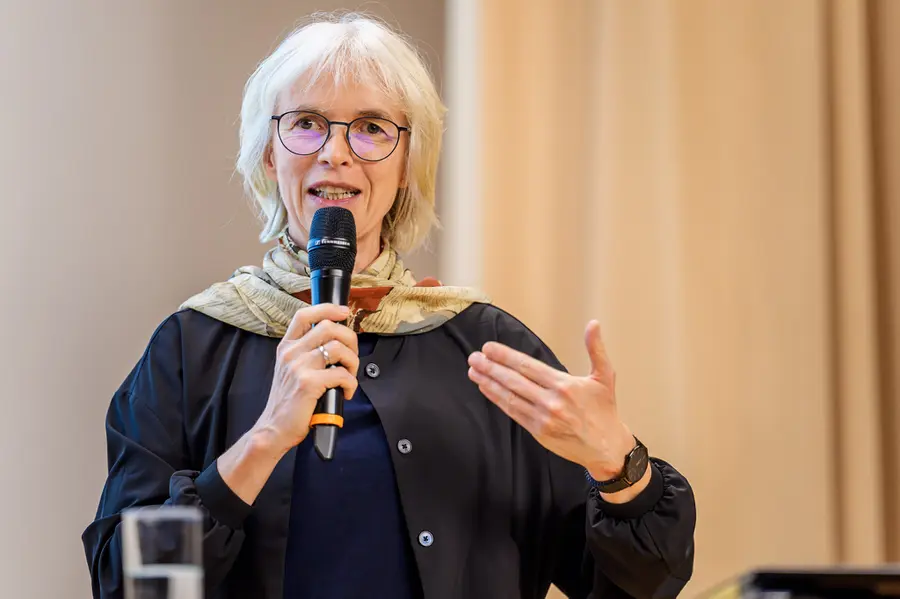
Prof. Dr. Regine Gerike during the panel discussion at the UN Day event “Rethinking Mobility” in Dresden.
As Vice-Dean of the faculty and spokesperson for the AgiMo Collaborative Research Center “Data-driven agile planning for responsible mobility, ” Professor Gerike represented, in particular, the scientific perspective of mobility planning. The focus here is on data-driven insights, agile planning approaches, and taking diverse mobility needs into account. These are essential prerequisites for responsibly advancing transportation systems and better aligning mobility services with people’s needs.
“Humans should always be at the heart of our considerations: the aim must be to enable mobility for everyone. Our mobility surveys provide valuable insights into the needs and requirements of transport users and form an important basis for future mobility planning. My wish is that evidence-based findings will play an even greater role in political decision-making processes in the future.”
Background: UN Day 2026
UN Day 2026, featuring the presentation of the 27th Local Agenda Dresden Award, was organized by the United Nations University UNU-FLORES, the TUD Dresden University of Technology, the City of Dresden, and the Local Agenda for Dresden.
In the spirit of the UN Decade of Sustainable Transport (2026–2035), the event focused in particular on United Nations Sustainable Development Goal 11: “Sustainable Cities and Communities.” The “Rethinking Mobility” Audience Award also highlighted local initiatives that are already implementing innovative solutions for sustainable urban development today.
The faculty’s participation underscores its commitment not only to providing scientific support for the transformation of mobility but also to actively shaping the international and local dialogue between research, practice, politics, and society.