Oct 21, 2026
Reflections on the Passau Bio-Economy Economics Conference 2026
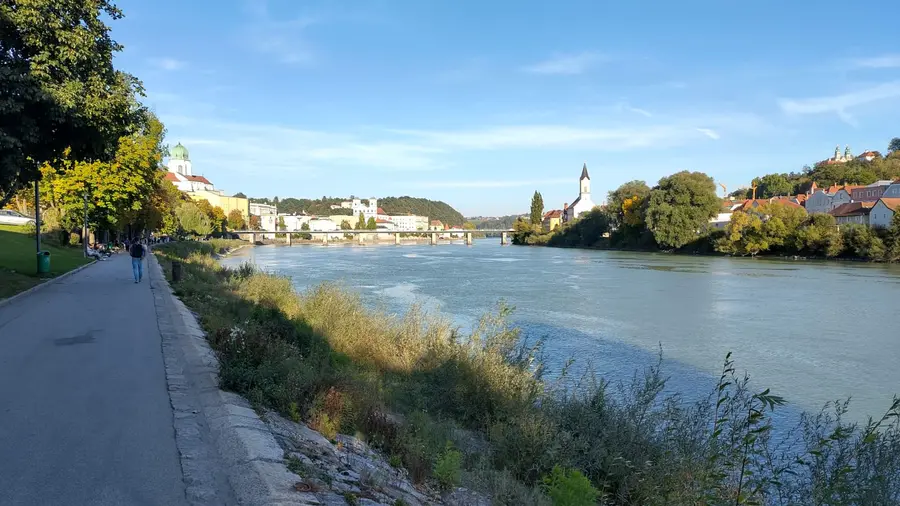
As regions explore alternatives to fossil-fuel-dependent economies and aim to support energy resilience, the bio-based economy continues to gain attention as an important pathway for sustainable socio-economic development. Moving toward models where resource needs are met through renewable materials often relies on collaboration across academia, industry, and policy sectors. Within this broader context, the School of Business, Economics and Information Systems at the University of Passau hosted its inaugural Bio-Economy Economics Conference from September 28 to 30, 2026. Bringing together researchers and specialists from 18 countries, the event reflected Bavaria’s growing involvement in international bioeconomy research, particularly across the regional academic and economic network connecting Munich, Straubing, and Passau.
Over three days, participants discussed a wide range of contemporary themes. Parallel sessions covered topics such as bio-based business models, market innovations, spatial land-use planning, macro-perspectives on sustainability transitions, and behavioral factors influencing the adoption of bio-based practices. Reflecting the practical dimensions of the field, several discussions examined stakeholder dynamics, considering how local and international interests, benefits, and systemic challenges play out across different regions, from Germany to the Global South. Keynote presentations addressed policy developments, land-use considerations in forestry, and the evolution of regional innovation ecosystems. Additionally, an intergenerational panel brought together perspectives from the Bavarian Ministry of Economic Affairs, the Bavarian Bioeconomy Council of Experts, early-stage enterprise leadership, and youth advocacy within the EU bioeconomy network.
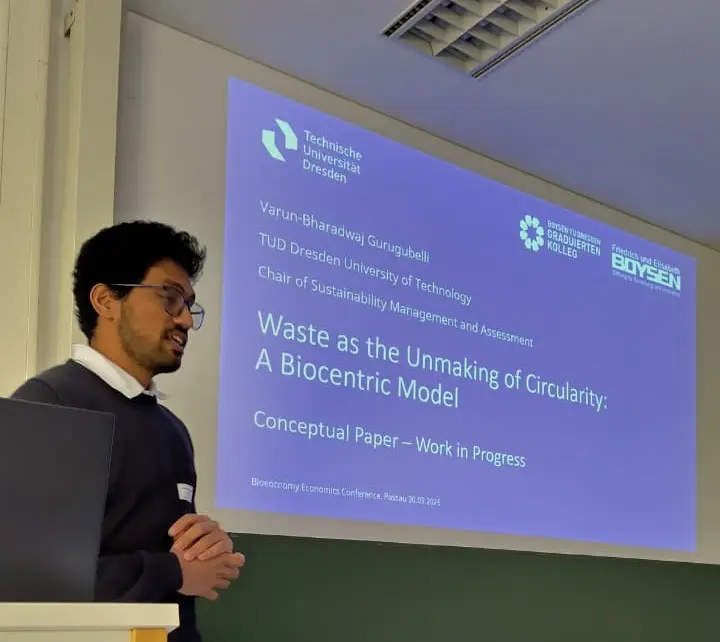
The conference offered an engaging setting for presenting ongoing research and gathering constructive feedback. Varun Bharadwaj Gurugubelli presented his work on a conceptual Bio-Centric Circular Economy Model designed to support sustainable transition strategies. Sharing this research with a specialized audience provided helpful insights for refining the framework while highlighting relevant gaps in the existing literature. Beyond the formal program, the University of Passau provided an inviting backdrop for informal discussions, including exchanges along the River Inn and a networking dinner at Veste Oberhaus. Overall, the event fostered constructive academic dialogue and connections across the field, offering a positive foundation for ongoing research in the bioeconomy.