
Jun 29, 2026
GeneNovate 2026: TU Dresden’s MaculaPatch Team Honored for Cell Therapy to Treat Vision Loss
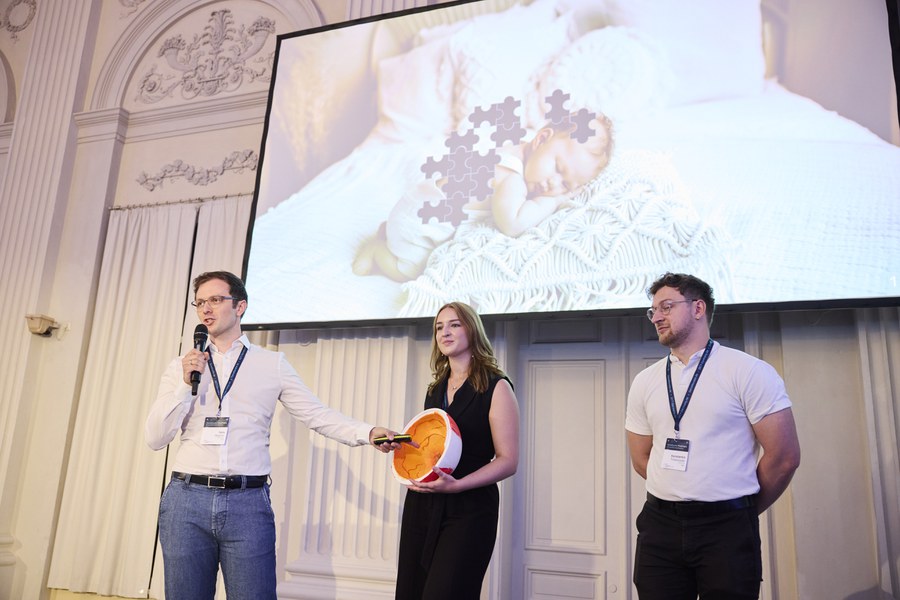
The MaculaPatch team from TU Dresden is presenting its approach to a personalised cell therapy for vision loss.
The SaxoCell® Future Cluster supported innovative biotech teams from the Eastern Region all the way to the national finals
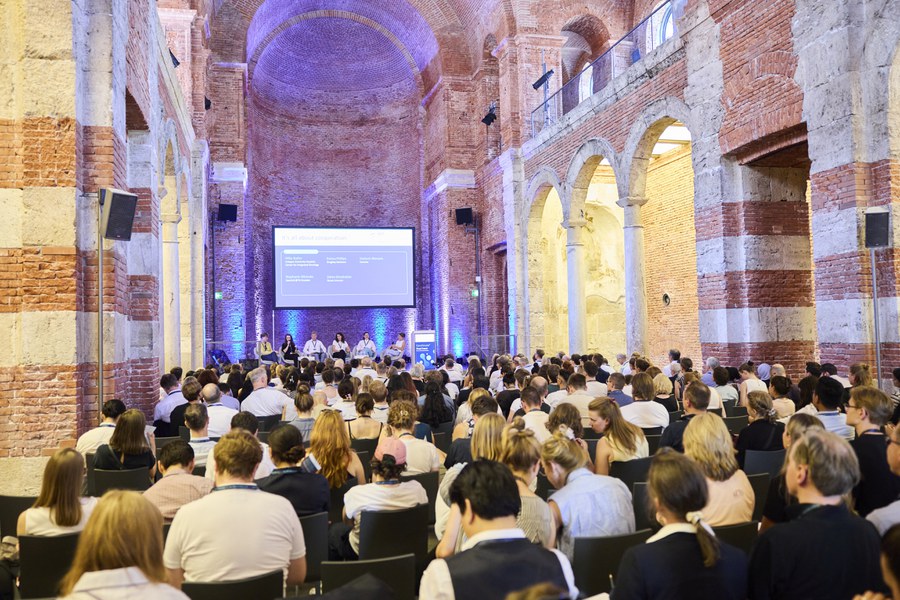
At the GeneNovate® Final Event 2026, held in the Allerheiligen Hofkirche at the Munich Residenz, scientific teams presented their business ideas and technologies to an audience of experts from the worlds of science, business and finance.
The GeneNovate® Final Event, held at the Munich Residenz on June 25, 2026, marked the culmination of the nationwide GeneNovate® entrepreneurship program. After six months of intensive workshops, mentoring sessions, and teamwork, selected project teams presented their business ideas and technologies in the fields of gene and cell therapies, biotechnology, and medicine to an audience of experts. MaculaPatch, a team of researchers from TU Dresden, emerged as the winner from the Eastern Region. The team impressed the judges with its approach to a personalized photoreceptor cell therapy for treating vision loss.
GeneNovate® is aimed at teams working in the fields of gene and cell therapies, biotechnology, and medicine. The program’s goal is to combine scientific innovation with entrepreneurial thinking at an early stage and to support researchers in transforming their ideas into marketable products, therapies, or spin-offs. GeneNovate® is organized by the GCT Germany network office at the Berlin Institute of Health at Charité. For the Eastern Region, the Saxon cell and gene therapy cluster SaxoCell® supported the participating teams from Dresden and Leipzig.
The current GeneNovate® round began in December 2025 with a kick-off event, where 20 participants from the fields of science and medicine came together to form project teams. Over the course of six months, they worked on their innovation projects through workshops, mentoring sessions, and online formats. Topics included clinical and societal needs, value propositions, business models, intellectual property, regulatory requirements, financing options, and the preparation of professional investor pitches.
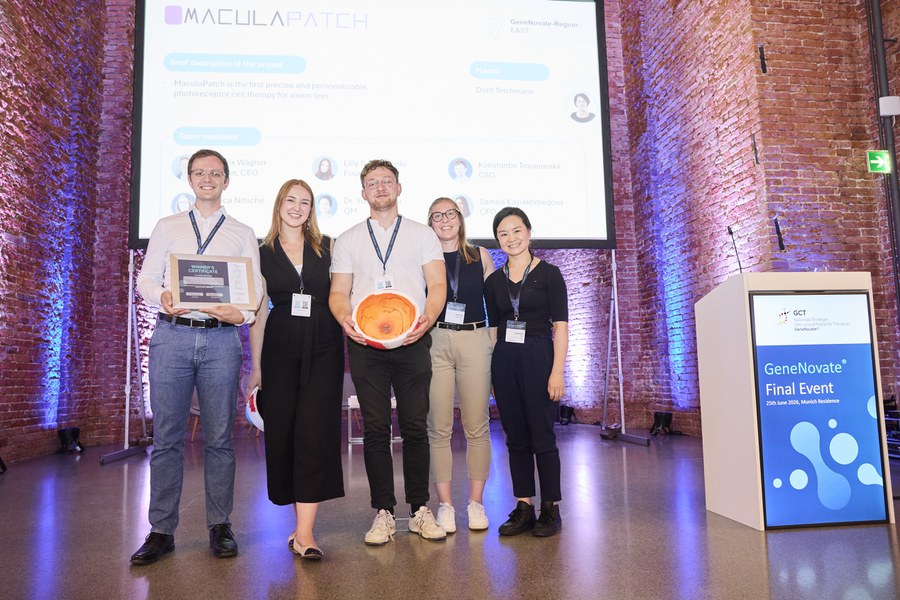
The award-winning MaculaPatch team at the GeneNovate® Final Event 2026 in Munich
At the final event in Munich, the teams presented their business ideas and technologies to a jury of experts and investors. In addition to the pitch presentations, the program included discussion and networking sessions on the future of gene and cell therapies and their translation into patient care.
“GeneNovate impressively demonstrates the innovation potential that lies within our scientific institutions. For SaxoCell®, the program is a key building block for bringing research results to market more quickly and strengthening the transfer of cell and gene therapies into patient care,” explains Stephanie Wieneke, Innovation Manager for SaxoCell® at TUD|excite.
In addition to MaculaPatch, three other teams from other GeneNovate® regions were honored at the GeneNovate® Final Event 2026. SaxoCell® congratulates all winning teams and will continue to support promising projects from the region even beyond the scope of the program.
About SaxoCell®
SaxoCell® is Saxony’s cluster for cell and gene therapies and connects stakeholders from science, medicine, and industry across the entire value chain of innovative therapies. At TU Dresden, SaxoCell® is based at the Center of Excellence for Innovation, Transfer, and Entrepreneurship (TUD|excite) and is thus closely linked to the university’s technology transfer and innovation ecosystem. The cluster is funded as part of the Clusters4Future initiative of the Federal Ministry of Research, Technology and Space (BMFTR). The cluster’s goal is to promote the translation of scientific findings into clinical applications and economic innovations and to further strengthen Saxony as a hub for cell and gene therapies.
Contact for press inquiries
Dr. Stefanie Binder @ Institute for Clinical Immunology, University of Leipzig