
Jul 02, 2026
Saxony Retains Top Computational Biologist: Prof. Ágnes Tóth-Petróczy joins BIOTEC and CASUS
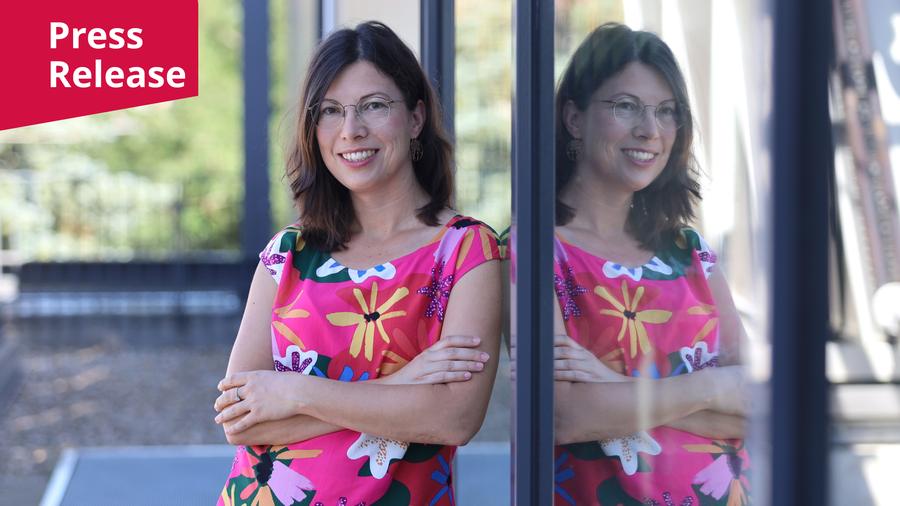
Prof. Ágnes Tóth-Petróczy
Prof. Ágnes Tóth-Petróczy has joined the Center for Advanced Systems Understanding (CASUS) at HZDR as a research group leader in June 2026. With that, she has been appointed as Professor of Systems Biology of Protein Evolution at TUD Dresden University of Technology. The professorship is based at the Biotechnology Center (BIOTEC), which is part of the Center for Molecular and Cellular Bioengineering (CMCB) at TUD. Tóth-Petróczy is jointly appointed by TUD and Helmholtz-Zentrum Dresden-Rossendorf (HZDR). The Hungarian-born scientist focuses on the functions and evolution of disordered proteins. Her accolades include a Starting Grant by the European Research Council, which she received in 2023.
“Ágnes Tóth-Petróczy made a great impression when she introduced herself at CASUS a year ago,” says CASUS Director Prof. Thomas D. Kühne. “I am very happy that we were able to make her an attractive offer and that she is now joining CASUS. With her expertise, CASUS is now broader in scope than ever, and we hope that her computational biology perspective will enrich the discourse at the center in a lasting way.”
Tóth-Petróczy’s research is focused on a group of molecules which are central for life: proteins. In particular, she is interested in intrinsically disordered proteins. These proteins lack a fixed structure and therefore are difficult to analyze conventionally. There are many open questions regarding the functions and evolution of disordered proteins. One important function is that they help orchestrating the assembly of biomolecular condensates, little droplets within the cell which concentrate proteins and other molecules. This is a new way how proteins are organized in cells without a lipid membrane.
Interdisciplinary Mind at Interdisciplinary Center
“CASUS’ strong focus on interdisciplinary systems research is very promising and compelling. It closely aligns with the approach I have pursued in my own lab over the past years. My work has centered on bringing together biologists, chemists, physicists, and computer scientists to tackle complex research problems from multiple angles,” says Tóth-Petróczy. “I am thrilled to continue my research at CASUS and I look forward to exchange methodologies and develop ideas with the scientists at the center.”
“With the appointment of another department head, CASUS is reaching a new level,” notes Prof. Sebastian M. Schmidt, Scientific Director of the HZDR. “In my view, Ágnes Tóth-Petróczy is an excellent choice. The number and quality of her scholarly works, as well as the research funding she has secured, speak for themselves. I am particularly pleased that CASUS now has its first female department head. I am confident that Prof. Tóth-Petróczy will enrich the HZDR with her expertise. I wish her and her team a successful start and scientific success.”
A Computational Perspective
Joining BIOTEC, Prof. Tóth-Petróczy positions the institution at a unique intersection of computational and biochemical approaches in condensate research. BIOTEC is one of the leading research centers in the field of biochemistry of biomolecular condensates. Tóth-Petróczy now brings a powerful complementary perspective: her group has spent years building machine learning-based models, tools and databases that open up entirely new ways of analyzing disordered proteins and condensates.
Tóth-Petróczy points out that there is plenty of ground to cover: “I have always been fascinated by how evolution explores the enormous space of possible proteins and gives rise to robust cellular systems. This curiosity has shaped my research – to connect protein sequence to function, particularly of disordered proteins.”
What evolutionary benefits arise from structural disorder and biomolecular condensate formation? What are the molecular mechanisms that determine the composition and specific assembly of condensates?
Tóth-Petróczy believes that answers can be found by describing the collective behavior of proteins as a whole: “Modeling the dynamic and responsive entirety of proteins may ultimately allow us to predict protein function as a function of cellular state, from normal physiology to disease.”
Many diseases are linked to genetic mutations that alter the protein’s sequence. Her team not only studies genetic but also phenotypic mutations, which occur during protein production. Tóth-Petróczy continues: “We investigate how they contribute to evolution and disease such as neurodegeneration and cancer. To answer these questions, our interdisciplinary team integrates evolutionary and physical principles with machine learning and artificial intelligence models.”
Prof. Henrik Bringmann, Director of the BIOTEC, welcomes the appointment: “Ágnes Tóth-Petróczy is an outstanding scientist whose work brings together molecular genetics, evolutionary biology, and machine learning in a highly innovative way. Her computational approach to biomolecular condensates is an excellent fit for the BIOTEC – and a natural extension to our biochemical perspective on the topic. With her, BIOTEC further cements its position as one of the key destinations on a global biomolecular condensate research map.”
Career in the US and Germany
Tóth-Petróczy developed a special interest in intrinsically disordered proteins when studying chemistry at Eötvös Loránd University in Budapest (Hungary). She completed her PhD in the lab of Prof. Dan Tawfik at the Weizmann Institute in Rehovot (Israel), where she studied protein evolution. She then joined the lab of Debora Marks at Harvard Medical School (USA) with an EMBO postdoctoral research fellowship. After working as a case analyst in a clinical genetics team at the Division of Genetics of the Brigham and Women’s Hospital and Harvard Medical School in Boston (USA) she moved to Germany. From 2018, she led a Max Planck Research Group located at the Max Planck Institute of Molecular Cell Biology and Genetics as well as the Center for Systems Biology Dresden. Tóth-Petróczy is a member of the German Research Foundation-funded “Physics of Life” Cluster of Excellence at TU Dresden, and a recipient of a Starting Grant of the European Research Council.
Additional information:
Prof. Ágnes Tóth-Petróczy
Research Team Leader
Center for Advanced Systems Understanding (CASUS) at HZDR
Biotechnology Center (BIOTEC) of TU Dresden
Email:
Media contact:
Dr. Martin Laqua
Officer Communications, Press and Public Relations
Center for Advanced Systems Understanding (CASUS) at HZDR
Cell phone: +49 1512 807 6932
Email:
Dr. Magdalena Gonciarz
PR Officer
Center for Molecular and Cellular Bioengineering (CMCB)
Email:
About the Center for Advanced Systems Understanding
CASUS was founded 2019 in Görlitz/Germany and pursues data-intensive interdisciplinary systems research in such diverse disciplines as earth systems research, systems biology or materials research. The goal of CASUS is to create digital images of complex systems of unprecedented fidelity to reality with innovative methods from mathematics, theoretical systems research, simulations as well as data and computer science to give answers to urgent societal questions. The founding partners of CASUS are the Helmholtz-Zentrum Dresden-Rossendorf (HZDR), the Helmholtz Centre for Environmental Research in Leipzig (UFZ), the Max Planck Institute of Molecular Cell Biology and Genetics in Dresden (MPI-CBG), the Technical University of Dresden (TUD) and the University of Wrocław (UWr). CASUS, managed as an institute of the HZDR, is funded by the German Federal Ministry of Research, Technology and Space (BMFTR) and the Saxon State Ministry for Science, Culture and Tourism (SMWK). www.casus.science
About the Helmholtz-Zentrum Dresden-Rossendorf
The Helmholtz-Zentrum Dresden-Rossendorf (HZDR) performs – as an independent German research center – research in the fields of energy, health, and matter. We focus on answering the following questions:
- How can energy and resources be utilized in an efficient, safe, and sustainable way
- How can malignant tumors be more precisely visualized, characterized, and more effectively treated?
- How do matter and materials behave under the influence of strong fields and in smallest dimensions?
To help answer these research questions, HZDR operates large-scale facilities, which are also used by visiting researchers: the Ion Beam Center, the Dresden High Magnetic Field Laboratory and the ELBE Center for High-Power Radiation Sources.
HZDR is a member of the Helmholtz Association and has seven sites (Dresden, Freiberg, Görlitz, Grenoble, Leipzig, Rostock, Schenefeld near Hamburg) with almost 1,500 members of staff, of whom about 700 are scientists, including 200 Ph.D. candidates.
About the Biotechnology Center
The Biotechnology Center (BIOTEC) was founded in 2000 as a central scientific unit of the TU Dresden with the aim of combining cutting-edge molecular and cell biology with Dresden’s strong engineering traditions. Since 2016, the BIOTEC has been part of the central scientific unit “Center for Molecular and Cellular Bioengineering” (CMCB) at TU Dresden. BIOTEC fosters research and teaching in Molecular Bioengineering by integrating approaches from cell biology, biophysics, and bioinformatics, thereby contributing to TU Dresden’s strategic research area “Principles of Life. Transforming Health Care”.
www.tu-dresden.de/cmcb/biotec
www.tu-dresden.de/cmcb