
Nov 24, 2026
Friday the 13th: How five research teams found success on their journey to launching their own startups on this day…
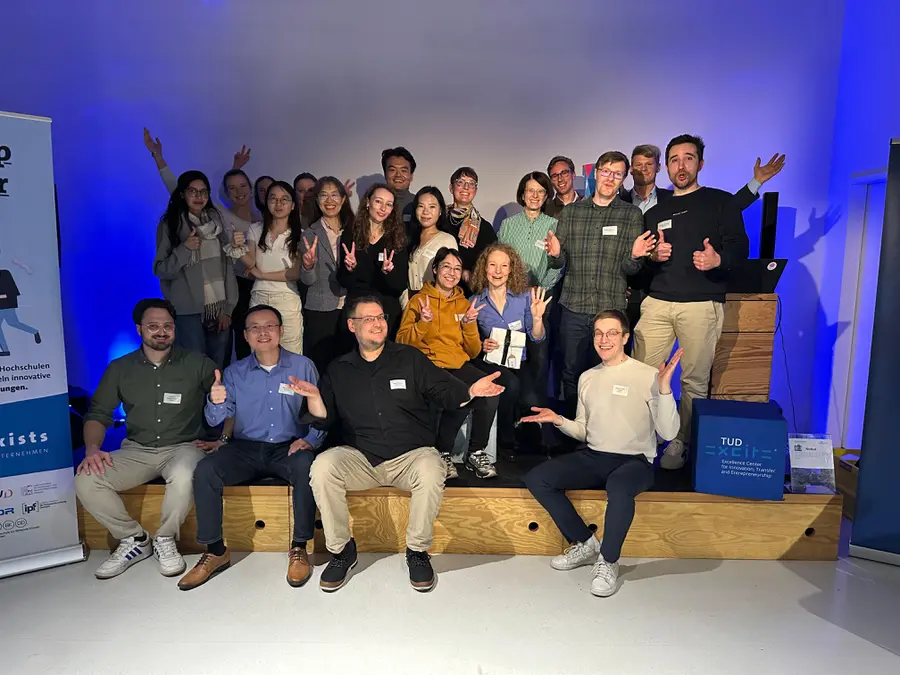
That's a wrap. That was the second round of LifeTechLab 2026.
LifeTechLab Final Pitch Day at Impact Hub Dresden
What if stem cells in the lab could test drugs for safety before they reach a patient? What if an app could prevent sudden heart failure? What if your research didn’t just turn into a publication, but into a company?
On Friday, November 13, five teams took the stage at Impact Hub Dresden and showed how it can be done. A bad omen? Quite the opposite. Two months earlier, they were just researchers with an idea. Now they were pitching to a jury of real founders and experts, and their ideas were quite convincing.
From Lab to Market: How does an idea become a company?
LifeTechLab is the incubation program of TUD|excite for researchers in life sciences and medicine. You don’t need a business plan to join, just an idea. Many participants have never heard of business models, USPs, IP, or product-market fit before. That’s exactly where the program comes in.
For two months, the teams worked with our startup coaches on the questions that decide whether an idea can become a business:
- Problem and market: What problem are we solving, and who really needs it?
- Business model: How do I develop an business model based on research findings?
- IP and regulation: How do I protect my intellectual property (IP), and what requirements lie ahead?
- Pitch: How can I present my idea concisely, clearly, and understandably to potential customers, investors, or other decision-makers?
- Next steps: What kind of funding is available, and what comes thereafter?
Starting a business in the healthcare sector is no picnic: regulatory hurdles, complex product development, clinical trials. Hardly any team can do it alone. At LifeTechLab, our teams are provided with essential know-how, targeted coaching, and valuable contacts for their journey.
Five Teams, Five Visions
The ideas were as diverse as the disciplines the teams come from:
- iCardiaX Bio reprograms human cells in the lab so that they can mimic heart functions. This is meant to help develop drugs for cardiovascular diseases.
- Yanantin builds digital twins, so-called Virtual Instruments, that replicate light-based measuring instruments such as microscopes.
- MeNuGuide creates personalized meal plans for patients with metabolic diseases.
- Komvital is developing a self-screening tool that lets patients prevent conditions such as acute heart failure.
- Second Chance develops a drug that helps patients with a weakened immune system to rebuild the cells that fight infection
The shared goal: Improving the lives of patients and speeding up scientific discovery. What stood out most to us in this round: The diversity of the topics and the strong commitment of the teams.
Feedback from people who have already walked the path
The interesting part of this evening: three of the five feedback givers were LifeTechLab alumni and alumna themselves. They went through the program a few years ago and know exactly how the teams are feeling right now and what matters.
We talked with Dr. Eva-Maria Stegemann about the event: “Overall, I was very impressed by the variety of ideas and the composition of the teams. I actually see a great deal of potential for further development in all of the teams.”
A heartfelt thank you to our jury:
- Stephanie Wieneke, Innovation Manager, SaxoCell Cluster
- Dr. Eva-Maria Stegemann, Founder and Startup Advisor
- Dr. Paul Schumann, Former CEO and Co-Founder of PectusFix
- Dr. Stefanie Hartmann, CEO and Co-Founder of Sonojet
- Johannes Paul, CEO and Co-Founder of Diamics
“I was skeptical. Today, I see things differently.”
Josh from the MeNuGuide team sums it up: “To be honest, I was very skeptical at first and really wondered how useful a program like this could be. Today, after Pitch Day, I really see it in a different light. We’ve gained an incredible amount of business know-how. We’ve taken our project not just one step, but several steps forward.”
But the program doesn’t just provide expertise. It gives researchers—who are otherwise deeply immersed in their day-to-day work—the space and time to work on their own ideas and set the right priorities. On top of that, this evening offered something scientists often lack: connections outside their usual circles that truly make a difference.
Founding is also about networking
The evening ended with drinks, snacks, and lively conversations. Teams and experts took the time to clear up open questions and keep discussing. This is often where connections are made that later make the difference.
Have an idea of your own?
Then you don’t have to wait any longer. For your application, you don’t need a finished business plan—just an idea from the fields of medicine or life sciences that you believe can solve a problem. Whether you are an undergraduate, a Ph.D. student, or a researcher, our team will help you figure out if your idea has potential and what it will take to bring it to market.
The next round of LifeTechLab starts in March, 2027. Apply by February, 28. More information here.