
Nov 25, 2026
Dresden is one of Germany's most important hubs for DeepTech start-ups, and TUD plays a major part
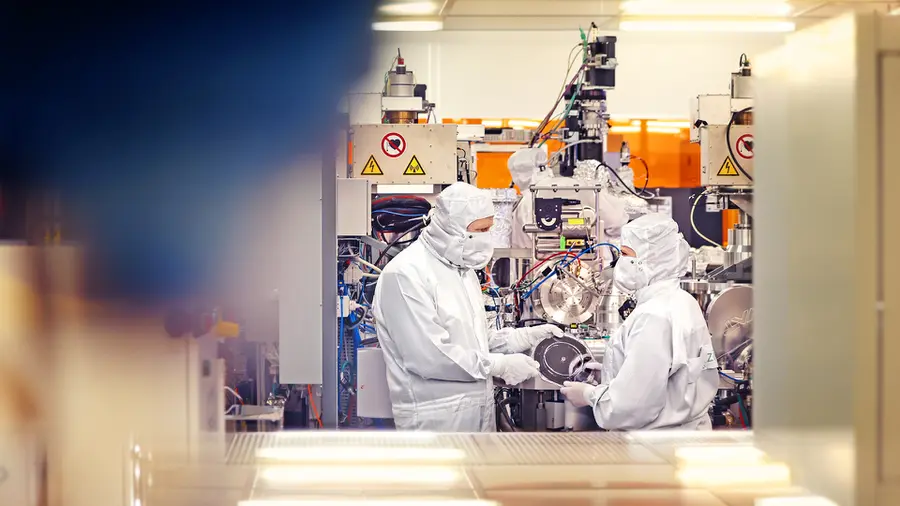
Researchers in the microchip development laboratory at the Nanoelectronics Material Laboratory (NaMLab). NaMLab gGmbH was founded in July 2006 as the first scientific joint venture between TUD and an industrial company. Since 2009, the research institution has been a wholly owned subsidiary of the Technical University of Dresden (TUD).
According to the "2026 Deep Tech Start-up Monitor" from the Joachim Herz Foundation and the German Startups Association, Dresden is among the ten German cities with the most DeepTech start-ups. With 54 technology start-ups at present, the Saxon capital ranks fourth, behind Hamburg (97), Munich (190) and Berlin (240). Dresden also makes the top ten for patent filings, placing eighth with 9.4 patent-holding start-ups per 100,000 residents. The startup monitor underlines the close link between innovative start-ups and universities. With around 20 spin-offs and 100 patent applications a year, TUD is strong for start-ups and the university with the most patents in Germany.
TUD actively helps its researchers bring their own findings to market. They receive support and guidance for their ventures through the TUD|Excellence Center for Innovation, Transfer and Entrepreneurship (TUD|excite) and the start-up service dresden exists. The university's strong network with local non-university research institutions, including the DRESDEN-concept Science and Innovation Campus research alliance, and its close cooperation with Europe's largest semiconductor cluster right on its doorstep, also feed Dresden's entrepreneurial spirit.
Prof. Angela Rösen-Wolff, TUD's Vice-Rector Research and Technology Transfer, commented on Dresden's start-up ecosystem: "Dresden's fourth place nationwide in the 2026 DeepTech Start-up Monitor is an outstanding achievement. These results showcase our region’s drive for innovation and what happens when top-level research and industry work hand in hand. As a University of Excellence, TUD plays a major role in advancing this momentum. Through TUD | excite and the boOst start-up factory, we actively propel deep tech spin-offs forward. Right at the heart of Dresden sits Europe’s largest semiconductor cluster—a major advantage of our location. Here, global microelectronics leaders join forces with research and agile start-ups to build a one-of-a-kind technology ecosystem. TUD contributes its strengths here, from cutting-edge research on novel materials and devices to chip design and energy-efficient electronics, as well as the training of highly qualified talent. Working closely together, we are strengthening Europe's technological sovereignty and international competitiveness."
Circuit Boards from Leaves, and Supercomputers
Numerous fruitful TUD spin-offs demonstrate the successful transfer from research into practice, for example:
Incirqel: The start-up develops sustainable, bio-based, and recyclable materials for electronics manufacturing. The company combines research on flexible and stretchable electronics with the development of bio-based printed circuit board substrates. This work is based, in part, on research conducted by Prof. Karl Leo and Dr. Hans Kleemann as part of the Leaftronics project.
Sparxity: Under the aegis of Prof. Christian Georg Mayr, the Sparxity team developed the SpiNNcloud supercomputer. This neuromorphic computing system takes its cue from nature's most powerful computer: the human brain.
Seamless Therapeutics: Building on the research of Prof. Dr. Frank Buchholz at TUD, Seamless Therapeutics is developing an innovative technology for precise genome editing. Using programmable recombinases, specific DNA segments can be modified to treat genetic diseases directly at their root cause.
Morpheus Space: The Dresden-based company develops miniaturized ion thrusters that enable satellites to precisely control their position in space. The technology helps prevent collisions and space debris and ensures the sustainable operation of large satellite constellations.
From Invention to Business Model: The International TUD | excite Summer School
The International TUD | excite Summer School demonstrates, among other things, that TUD does not merely study innovation potential but actively unlocks it. This year it was held in cooperation with the boOst start-up factory and the European university alliance EUTOPIA. Around 30 early-career researchers worked in international, interdisciplinary teams on selected TUD patents. Designed to turn real technologies and intellectual property into fresh product ideas and viable business models, the program builds toward a final start-up pitch.
About TUD|excite
The TUD | Excellence Center for Innovation, Transfer and Entrepreneurship (TUD | excite) brings TU Dresden's core activities in knowledge and technology transfer, patent management and spin-offs together under one roof. Its work ranges from securing and commercializing intellectual property (excite|PATENTS) and moving research results into practice (excite|INNOVATE) to supporting founders (excite|STARTUP). Further information: https://tu-dresden.de/...tud-excite
Contact
Press Office at TU Dresden
+49 351 463-32398