

Lehre
Angesiedelt an der Fakultät für Elektrotechnik und Informationstechnik und eng mit dem Lehrstuhl für Akustik und Haptik verbunden, bieten unsere Lehrangebote Studierenden der Fakultät eine Einführung in die psychologischen und kognitiven Neurowissenschaften im Zusammenhang mit multisensorischer Verarbeitung. Angesichts der wichtigen Rolle der virtuellen Realität im CeTI-Cluster und der Tatsache, dass viele der technischen Innovationen im Bereich der affektiven Haptik in der virtuellen Realität optimal eingesetzt werden können, konzentriert sich unser weiterer Seminarkurs auf die Chancen, aber auch die Fallstricke des Einsatzes von virtueller Realität in der Forschung.



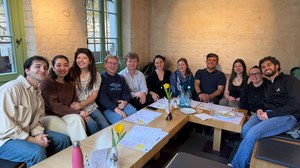 © Copyright
Ein interaktiver Lernansatz
Die Lehrphilosophie von Prof. Fairhurst, geprägt durch ihre Ausbildung an der Universität Oxford, basiert auf drei Kernprinzipien: der kritischen Auseinandersetzung mit Primärliteratur, der Identifizierung zugrundeliegender Mechanismen vor der Beschreibung von Phänomenen und der Förderung des interaktiven Dialogs.
Seit über zwei Jahrzehnten prägen diese Prinzipien einen Ansatz, der die Tiefe vor die Breite stellt und Studierende dazu anregt, Originalforschung kritisch zu analysieren, die Wissenschaftsgeschichte – einschließlich der Beiträge unterrepräsentierter Wissenschaftlerinnen – wertzuschätzen und Selbstvertrauen in gemeinsamen Diskussionen zu entwickeln. Indem sie sich auf das „Warum“ hinter experimentellen Befunden konzentriert, lernen Studierende, psychologische Phänomene mit ihren zugrundeliegenden Mechanismen zu verknüpfen, insbesondere mithilfe von Methoden der Neurobildgebung und der kognitiven Neurowissenschaften.
Prof. Fairhurst legt zudem Wert auf den Dialog zwischen Studierenden und Lehrenden als einen wechselseitigen, emotional fundierten Austausch, der auf Vertrauen und Respekt beruht. Sie konzentriert sich darauf, intellektuelle Neugier und Mentoring zu fördern und zu unterstützen, insbesondere bei Studentinnen. In einem von KI geprägten Zeitalter zielt dieser Ansatz – verankert in mechanismenorientierter Forschung, Engagement und interaktiven Inhalten sowie offener Kommunikation – darauf ab, dass Studierende motiviert, kritisch und kreativ denken und die Fragen von morgen mitgestalten können.