Satellite Systems and Space Science

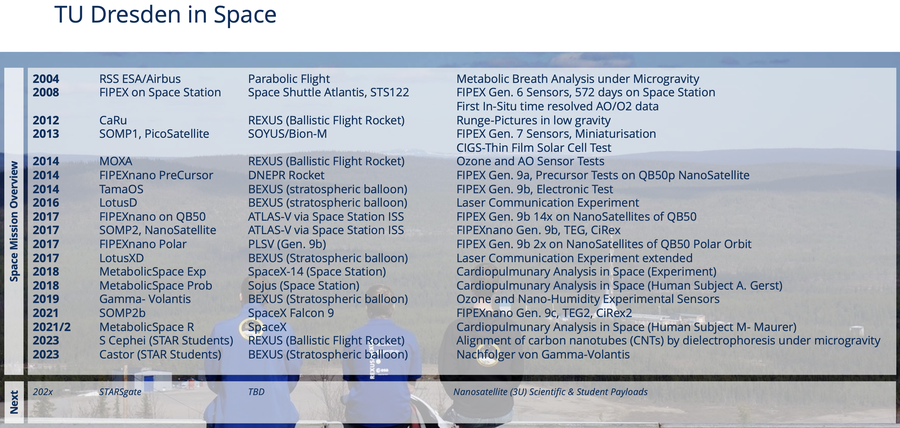
TU Dresden in Space
Satellite Systems & Space Science
Wir entwickeln Nanosatellitensysteme der nächsten Generation für wissenschaftliche, kommerzielle und NewSpace-Anwendungen und bieten dabei eine hohe Nutzlastkapazität sowie flexible Integrationsmöglichkeiten für komplexe Experimente im Orbit.
Aufbauend auf nachgewiesener Flugerfahrung durch mehrere erfolgreiche Satelliten- und Astronautenmissionen konzentrieren wir uns auf hochintegrierte Plattformen, fortschrittliche Kommunikationstechnologien sowie den Betrieb in sehr niedrigen Erdorbits (VLEO) und im Deep Space.
Research Areas
-
Small Satellite Platforms
Highly integrated 2U–8U nanosatellite platforms with optimized payload capacity, alongside modular FlatSat architectures enabling flexible and scalable payload integration.
-
Very Low Earth Orbit (VLEO)
Technologies for operation, control, and sensing in altitudes of 200–300 km
-
Space Communication Systems for Nanosatellites
High-data-rate, low-power communication technologies for small satellites, with a strong focus on optical communication using modulating retroreflectors (MRR), significantly reducing mass, power consumption, and system complexity of NanoSatellites
-
In-Orbit Demonstration & Experiments
In-orbit demonstration for space qualification, TRL advancement, and flight heritage.
Contact:
Dr.-Ing. Tino Schmiel Head of Research Field Satellite Systems and Space Science
Tel. 0351 – 463 38287
Selected Projects
VLOG – Very Low Orbital Glider
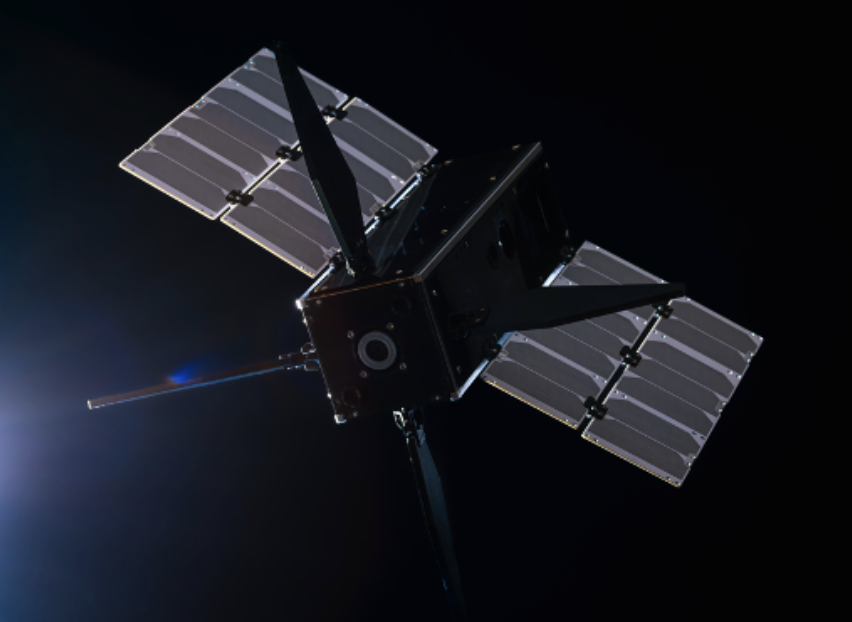
Innovative nanosatellite platform for operation in Very Low Earth Orbit (200–300 km).
- Uses novel CAPTIS flap-based control surfaces for aerodynamic attitude and orbit control, enabling VLEO missions with nanosatellites.
- Enables high-resolution Earth observation and improved communication performance.
- Includes in-situ measurements of thermospheric conditions and RF background noise.
- Demonstrates scalable, modular FlatSat architectures for future satellite constellations.
HiLoCom – High Data Rate Low Power Communication
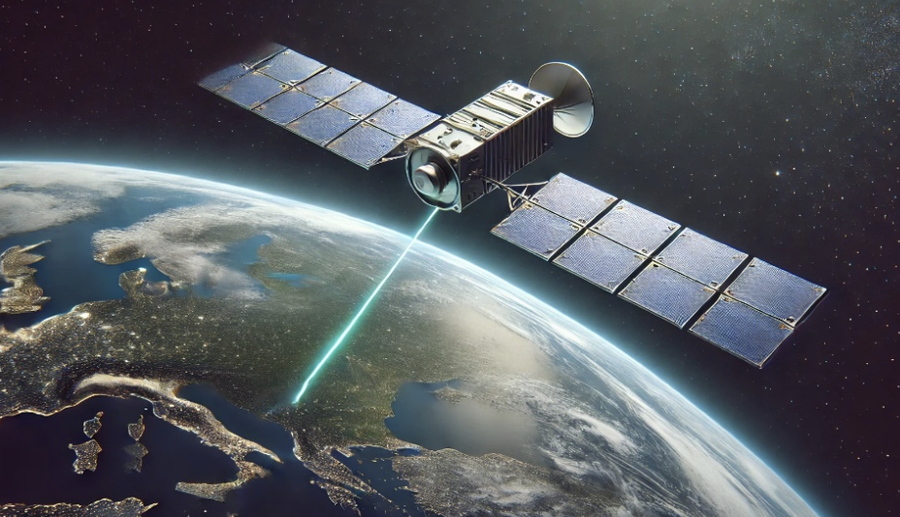
Development of a laser communication terminal for nanosatellites based on modulating retroreflectors.
- Eliminates onboard laser sources, reducing mass, power consumption, and complexity.
- Enables secure, high-speed data transmission (10–100× RF systems) and precise tracking.
- Includes experimental validation and thermal control of nano-scale quantum structures.
- Supports technology transfer, patents, and potential spin-off applications.
Cislunar Mobility & Surveillance
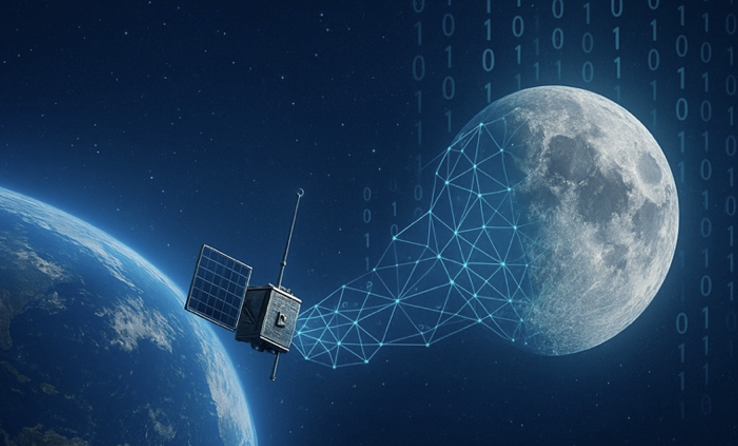
Foundational technologies for monitoring and maneuvering beyond Earth orbit and in Cis-lunar space
- Focus on space object detection, anomaly recognition, and traffic awareness.
- Supports emerging Earth–Moon economy and space traffic management infrastructure.
MetabolicSpace:
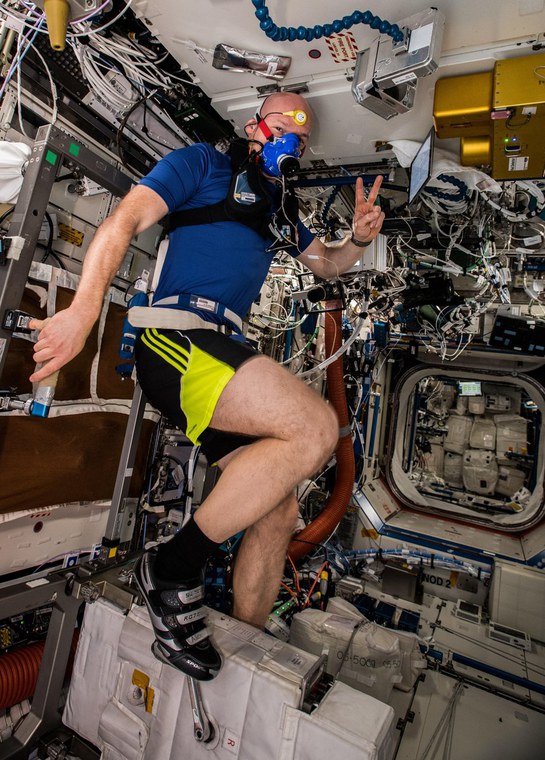
MetabolicSpace: Astronaut Alexander Gerst während der Experimentdurchführung
MetabolicSpace: Metabolic Diagnostic in Space by full wearable Respiratory Analysis
Astronauts: Alexander Gerst (2018), Matthias Maurer (2021/22)
- Cardio-pulmonary diagnosis in space during physical activities of Astronauts undisturbed due to wearable measurement system (mobile).
- Validation of the functionality of MetaSpace under a microgravity environment under astronaut handling.
- Gain experience for the enhancement of the MetaSpace system for personal / medical monitoring of space tourists
- Space Adaption, Qualification and Demonstration on Space Station ISS.
1st Mission launched 2018/2019 via Space-X to space station (cunducted by Astronaut Alexander Gerst)
2nd Mission launched 2021 via Space-X to space station (current in operation on ISS with Astronaut Matthias Maurer)
Related projects are supported by DLR, ESA, NASA

SOMP2 Flight Model during test campaign
SOMP2: Development of a Nano Satellite to operate scientific payloads in space
Nanosatellite SOMP2 - Student OnOrbit Measurement Project - is clompletely developed, built and tested, has a volume of only 20x10x10 cm3, at a mass of 2 kg, and is carrying 3 main payloads:
- FIPEXnano - small sensor system to investigate residual gas particles in space
- TEG - thermo electric generator to demonstrate energy harvesting in space
- CiREX - material experiment to investigate the influence of space environment on nano materials
SOMP2a launched in 2017 via ATLAS-V rocket to space station
SOMP2b launched 01/2021 via SpaceX Falcon-9 Transporter-1 (in operation)
Related projects are funded by DLR, BMBF, EU

Electromagnetic radiation test of Carbon Nanotube Layers
CNT-EMI / CiREX: Investigation and Tests of Carbon Nano Materials in Space and Research on orientation behaviors of CNTs in electromagnetic fields.
The research focuses on the investigation of carbon nanotubes under harsh space condition (e.g. proton and electron radiation, visible light, atomic oxygen). We test these materials on ground and in space (CiREX on SOMP2 Nanosatellite). Applicaiton in space could be e.g. carbon nanotubes based electromagnetic interference (EMI) films. So we investigate the production and handling of carbon nanotube based composite and their alignment in electromagnetic fields in consideration of the environmental influence.
Current activities concetrate on the development of a multifunctional foil for protection against electromagnetic interference and simultaneous transmission of adjustable frequencies for communication tasks.
Related projects are funded by DLR
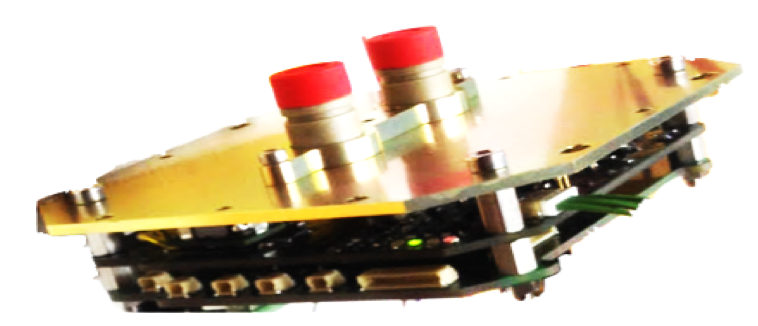
FIPEXnano Flight Model
FIPEXonQB50: Development and operation of a small measurement system to measure the residual atomic oxygen on multiple points in space
Very small electrochemical sensors have been developed, space qualified and integrated into a small housing including miniaturized eletronics and standard interfaces for easy integration on satellites; QB50 is an international network of small satellites for multi-point, in-situ exploration of the thermosphere. SOMP2 is part of it.
FIPEXnano is ready for flight on 14 Nanosatellites - launch is spread on two launch systems: ATLAS-V via space station and indian PLSV rocket.
Launched 2017 via ATLAS-V rocket and via Indian PSLV rocket
Related projects are funded by BMBF, EU, ESA, Industry
MOTAR: Development of a scalable and modular thermal analysis model for Pico and NanoSatellites, Investigation of new small componentes for thermal control
For Pico- and Nanosatellites we develop a user friendly tool that allows reseachers to analyse and control the thermal relations between various satellite components right from the beginning of the complex development process. We also develop and test new and small thermal control technologies applicable for these small satellites.
Related projects are funded by DLR

First test results of electrochromic layers
ELCH: Development of an electrochromatic space radiator with adoptable thermal emissivity and thermal absorbtivity
The temperature of a spacecraft is mainly influenced by the balance between absorption of solar flux and the emission of its own heat to the cold cosmic background. We develop adaptable surfaces to influence and control both: emissivity and absorptivity of the satellites surface, so heating and cooling of the spacecraft can be controlled at a time without folding radiators. This will lead to significant benefits in the electrical power subsystem and a lower overall mass of the spacecraft.
Related projects are funded by DLR and in house
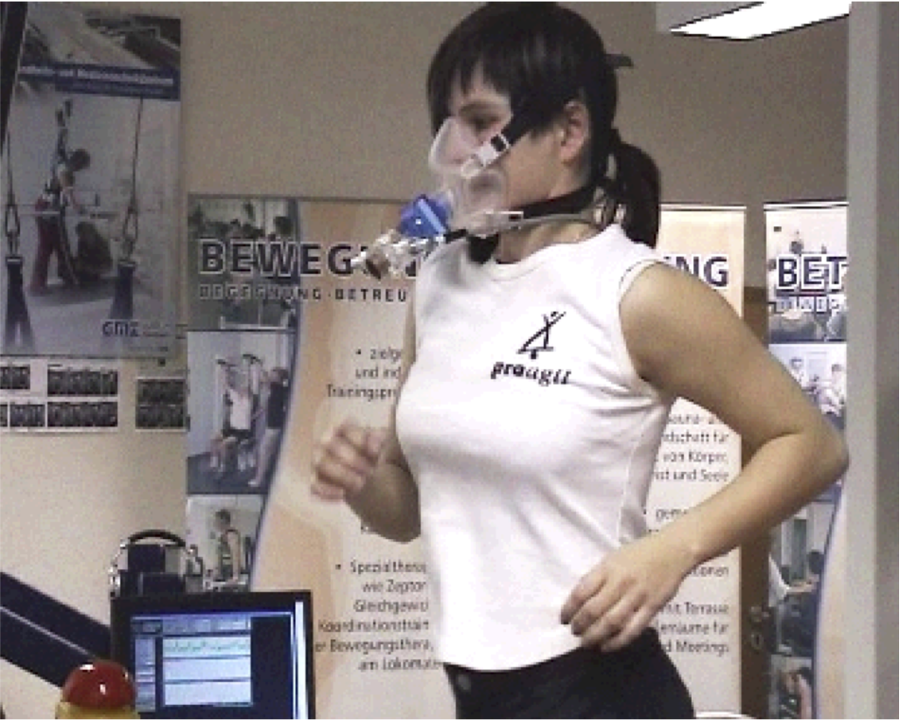
Space sensors applied for breathing analysis
Small Gas Sensors: Development of miniaturized electrochemical sensors and its overall system (sensor, housing, electronics, contacts) for extreme applications/ environments
- AO: Atomic Oxygen in space
- O2, CO2: Oxygen and Carbon Dioxide sensors for medical in-situ applications
- O3: Ozone measurement with small and mobile sensors
- NOx: Nitrogen Oxide Sensors for combustion
- H2/O2: Hydrogen Measurement of residual Hydrogen in Oxygen (and vice versa) and automotive applications
Related projects are funded by BMBF, AIF, BMWi, Industry
FlexTEG: Development, Characterisation and Demonstration of Thermoelectric Systems for Power Harvesting in Space
External and internal thermal loads on satellites induce high heat flows that are emitted to space. Thermoelectric generators (TEG) can convert these heat flows into electrical power - even during shadow phases. We analyse and test TEGs for autonomous supply of low-power-demands, although the efficiency of TEGs is expected to be low. Flexible TEGs can be attached to any curved surface, which makes them predestined for many space and terrestrial applications. With special consideration of the harsh space environment, we develop flexible thermoelectric layers which are printed on polymer substrates in thick film technology .
Related projects are funded by DLR, EU, SAB