
CFD-driven robust active sloshing stabilization in microgravity for precise attitude control of satellites
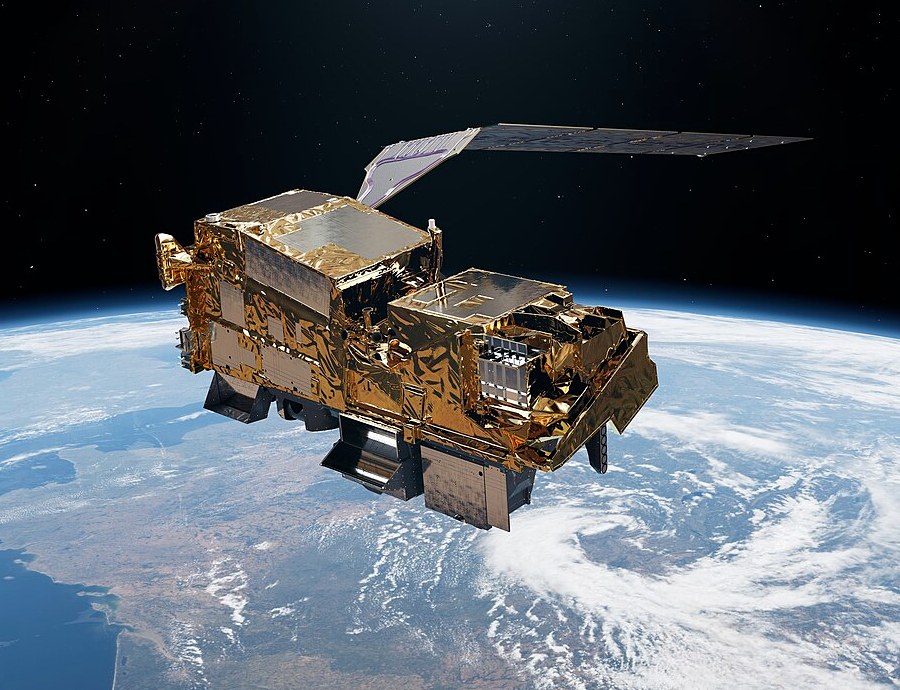
Second Generation ESA MetOp satellite
Precise attitude control plays a major role in the success of modern space missions. At the same time, cost-efficient and sustainable satellite designs demand large fuel tanks where liquid sloshing of the propellant affects the center of gravity and moments of inertia of the satellite. Conventional attitude control algorithms do not account for sloshing dynamics, leading to reduced accuracy and increased fuel consumption.
The joint project COSMIC between the Chair of Flight Mechanics and Control and the Chair of Fluid Mechanics at TU Dresden aims to develop active control algorithms based on phase-resolved numerical simulations of the sloshing process in realistic tank geometries.
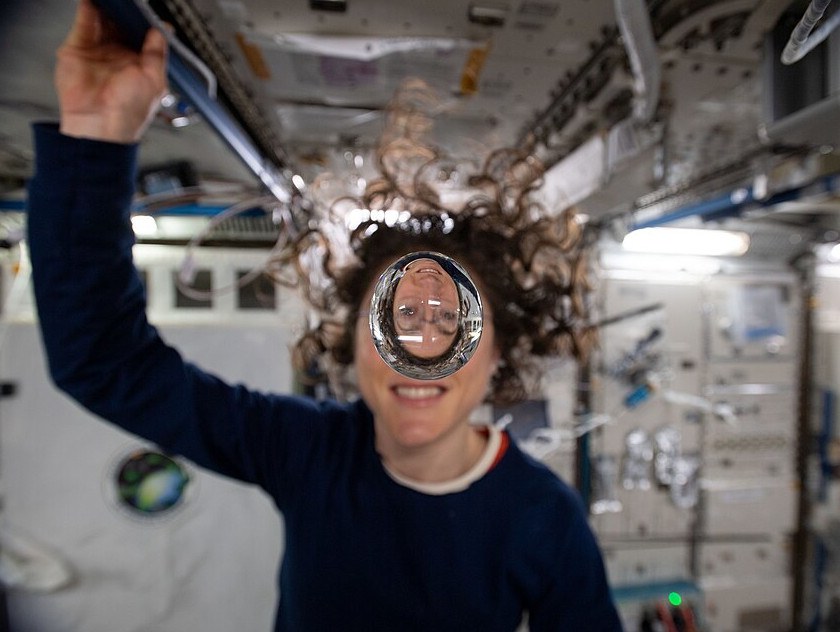
Surface tension is relevant at larger length scales in microgravity
In the absence of gravity, sloshing takes on a different form than typically encountered on Earth, e.g., in tanks on ships or trains. In particular, the dimensionless Eötvös number, which relates volume force to surface tension, is much lower under microgravity conditions. As a result, the effect of surface tension has to be considered even for large tank geometries.
Massively parallelized direct numerical simulations conducted at the Chair of Fluid Mechanics can resolve the sloshing dynamics with surface tension using high-performance computing clusters (ZIH TU Dresden). Unlike costly experiments in microgravity environments such as the ISS, such simulations can be employed to study a large variety of maneuvers and realistic tank geometries. The resulting data will be used to generate reduced-order models, then employed by the active control algorithm.
