
Oct 20, 2026
Remembering for the Future: International Conference Presents Development Prospects for Terezín/Theresienstadt
For many Germans, “Theresienstadt” likely evokes a clear association with the crimes of the Nazi era. Yet even most Dresden residents are probably unaware that “Terezín” is also a former Baroque garrison town in the Czech Republic, just an hour away from Dresden and Prague. The small town bears the heavy burden of its past and is additionally confronted with the challenges of rural border regions that are also felt elsewhere: an aging population, population decline, and strained public finances.
An international project group consisting of researchers and students from TU Dresden, TU Liberec, TU Prague, the Technion in Haifa, and MIT in Boston has set itself the task of developing a vision for the future based on this situation. On October 12 and 13, 2026, a conference was held in Terezín, where the results of several workshops, lab, and research projects were presented and discussed.
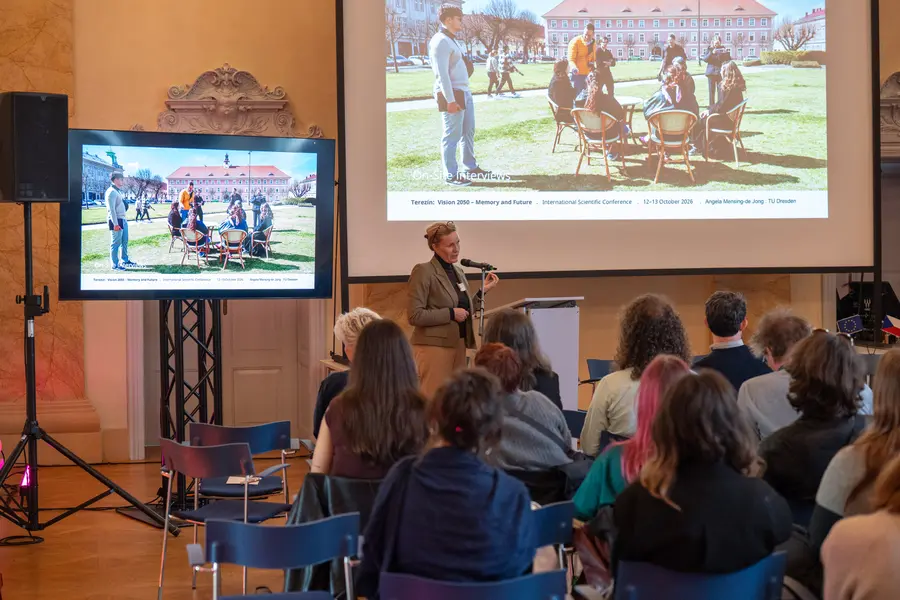
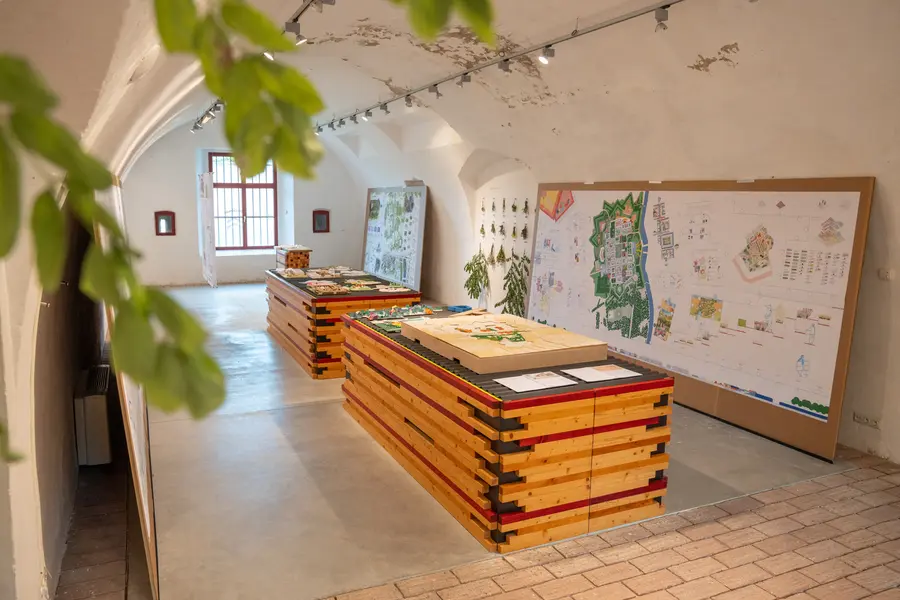
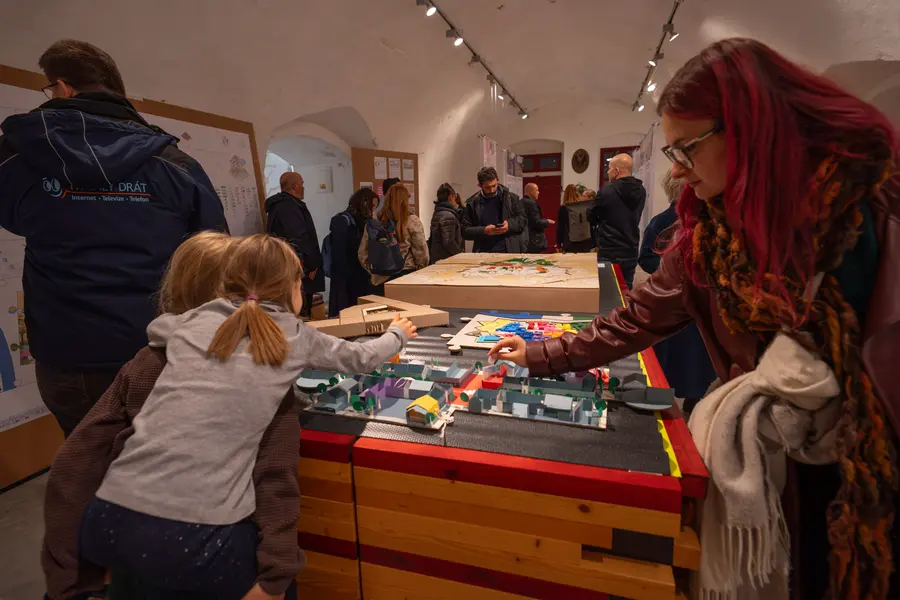
The students’ work is on display at the Terezín City Museum as part of an exhibition that was officially opened on the evening of October 12. Since various departments—including urban design, spatial planning, landscape architecture, and art in public spaces—were involved, the designs take on a wide variety of forms. Architect and lecturer Rafi Segal from MIT Boston raised several key questions in his opening keynote address: How can elements of a place, its past, and the memories associated with it be incorporated and conveyed in architecture and spatial planning?
How can the perceptions and needs of the affected community be gathered and taken into account?
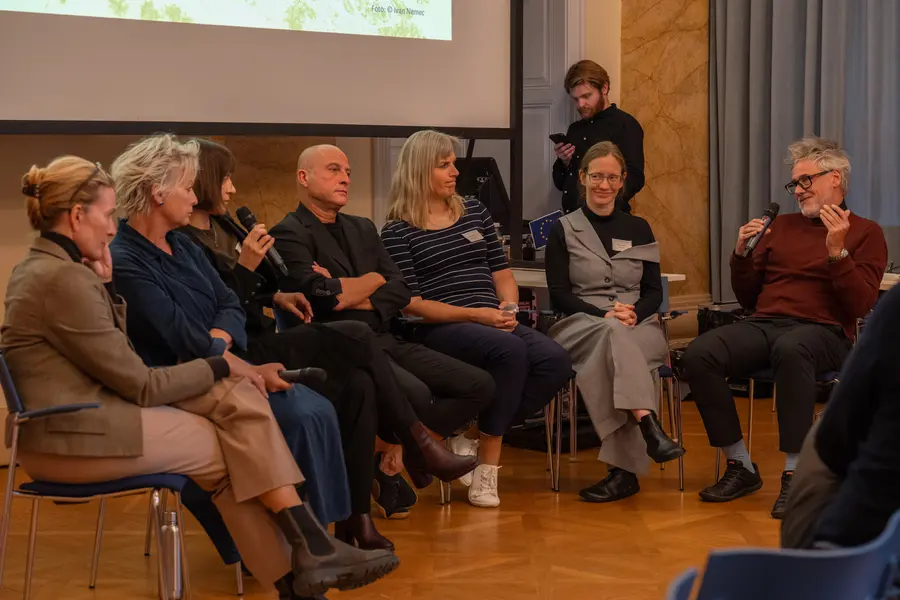
These aspects were revisited directly or indirectly in the subsequent project presentation and discussion, and attempts were made to answer them in the context of Terezín: Through the collaboration of mixed student groups from Germany and the Czech Republic, which took place in the spring of 2026, and which was expanded to include Israeli representatives in the run-up to the conference, it became clear what different narratives and “frames of reference” each individual brings to the site and how these influence their perspective on it. The panel on the second day of the conference revisited these particular circumstances of remembrance in border regions. Differences in associations and perceptions were also evident across generations. Teachers, particularly on the Czech side, are still strongly shaped by the rigorous form of remembrance culture from the socialist era, which severely limits the imagination of a place worth living in beyond the context of remembrance. Some student designs, on the other hand, broke completely free from the Nazi past and explicitly sought to focus on other traditions, such as horse breeding and training.

The keynote address by Dr. Eliyahu Keller from the Technion in Haifa on the second day of the conference broadened the perspective on the conditions for remembrance, focusing on the aspects of collectivity and the experience of trauma. Finally, a panel discussion addressed concrete prospects for the future—of memorial sites in general and Terezín in particular. There was also broad agreement that engaging with the residents of Terezín is no easy task and that creative approaches are needed to foster interaction. Art in public spaces can play just as important a role in this as it can in the overall reorientation of the site. To counteract the perceived emptiness and gloom of the site, various proposals were developed as part of the project—ranging from cultural festivals and regular academic forums to the long-term goal of becoming a European Capital of Culture. The designs and considerations also included a focus on the city’s past, in which new forms of remembrance are created and integrated into various public spaces.
Miroslav Daněk, the representative of the Czech Ministry of Regional Development who was present, ultimately put forward concrete proposals for implementation: a draft master plan for the city and region that incorporates some of the project’s findings and ideas and can serve as a basis for recruiting partners and securing funding. In any case, the project participants are continuing their work and planning further study projects as well as a workshop at MIT in Boston in the spring of 2027.
The project was supported by the DAAD’s Eastern Partnerships program, and the conference was made possible by funding from the Euroregion Elbe/Labe Small Projects Fund.
Representatives of the Czech Ministry of Regional Policy: Miroslav Daněk, Head of Unit, Regional Development Strategy Implementation, Section of Regional Development, Tourism, Public Investment, Housing, and Cohesion.