
Dec 05, 2025
Somnolink project: data-based, patient-centered and future-oriented sleep medicine
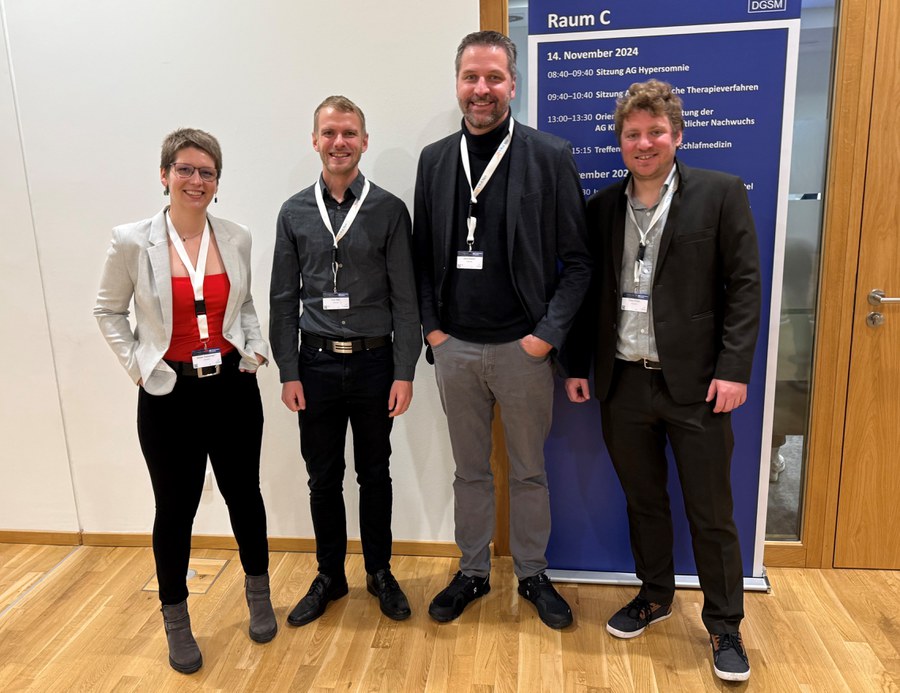
The Somnolink team at the Dresden site.
The 33rd annual conference of the German Society for Sleep Research and Sleep Medicine (DGSM) took place in Hanover from November 27 to 29 under the motto "Small perceptions - big waves". The interdisciplinary project Somnolink took part with the symposium "Digital health: Explainable AI in research and application" as well as several specialist presentations.
Somnolink brings together sleep physicians, medical IT specialists and patients with the aim of optimizing the diagnosis and treatment of obstructive sleep apnea (OSA) through better availability of health data and AI-based analyses. These recurring breathing interruptions during sleep can cause daytime sleepiness, concentration problems and headaches as well as significantly increase the risk of cardiovascular diseases. Since 2024, the university hospitals and partner institutions in Göttingen, Dresden, Essen, Regensburg, Mannheim and Berlin have been creating a joint data set from clinical data, questionnaires and sleep laboratory measurements. Based on this, the team is developing AI models to support screening, personalized therapy decisions and long-term adherence to therapy goals.
Dresden University Medicine is represented in the project by scientists from the sleep laboratory at the Clinic and Polyclinic for Neurology and the Center for Medical Informatics (ZMI). The Dresden-based sub-project "Development of a screening and prediction model for far-reaching identification" is dedicated in particular to the early detection of OSA. Using available clinical data from inpatients, a screening and prediction model can be developed that enables far-reaching identification of previously undiagnosed OSA.
Somnolink is part of the Medical Informatics Initiative (MII), which has been funded by the Federal Ministry of Research, Technology and Space with more than 480 million euros since 2016. Within this framework, IT solutions are being developed for specific applications in research and healthcare that make the added value of medical informatics visible for patients.
Further information on the project
Latest publication in the journal GMS Medizinische Informatik, Biometrie und Epidemiologie