
May 15, 2026
How the immune system detects foreign genetic material: DFG funds research in Dresden, Munich, and Bonn with €14.6 Million
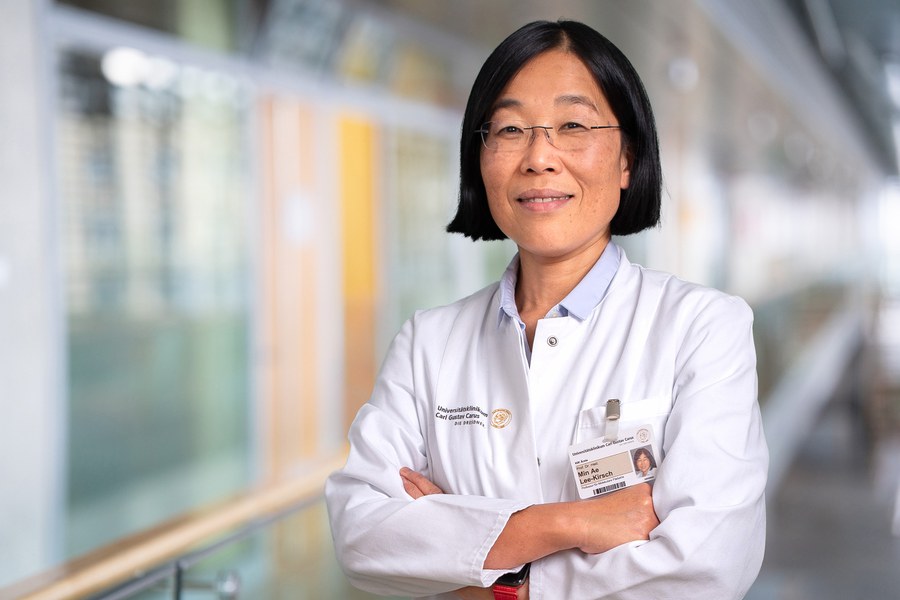
Prof. Min Ae Lee-Kirsch.
The immune system is constantly exposed to foreign genetic material. Bacteria, viruses, and other pathogens introduce their nucleic acids, DNA and RNA, into the body. Specialized immune receptors can distinguish between the body’s own genetic material and foreign genetic material. Once an intruder is detected, a targeted immune response is triggered. Maintaining this balance is essential because it protects against infections while preventing the immune system from attacking the body’s own genetic material by mistake. However, when this mechanism becomes dysregulated and treats endogenous DNA or RNA as foreign, it can lead to severe infections, chronic inflammation, autoimmune diseases, or tumor development.
The central question of the Collaborative Research Center/Transregio 237 (CRC/TRR 237), "Nucleic Acid Immunity," is how the immune system makes this crucial distinction. The German Research Foundation (DFG) has now extended its funding for a third funding period. Since its establishment in 2018, TRR 237 has uniquely integrated basic and clinical research. Researchers from immunology, molecular biology, genetics, and clinical medicine collaborate across sites to understand immune recognition processes at the molecular level and translate these insights into new diagnostic and therapeutic approaches. The internationally leading research network coordinated by the Faculty of Medicine at TUD Dresden University of Technology, Ludwig-Maximilians-Universität München (LMU Munich) and the Rheinische Friedrich-Wilhelms-Universität Bonn will receive approximately EUR 14.6 million in additional funding from 2026 onward for another four years. Approximately EUR 4.1 million of this amount will be allocated to the Dresden site.
Min Ae Lee‑Kirsch, Professor of Molecular Pediatrics and Group Leader of Molecular Pediatrics Research at the TUD Faculty of Medicine and University Hospital Dresden, states: “Renewed funding highlights the international visibility and scientific excellence of our consortium. In this third phase, our goal is to deepen mechanistic insights and translate them into innovative therapeutic approaches.” Prof. Lee‑Kirsch is the designated spokesperson for the third funding period and will shape the consortium’s scientific strategy and close collaboration across sites together with the site speakers Veit Hornung in Munich and Gunther Hartmann in Bonn.
"TRR 237 has established a research network that sets international standards. The success of the consortium demonstrates the importance of long-term collaboration across institutions and disciplines for achieving excellence in medical research,” emphasizes Prof. Esther Troost, Dean of the TUD Faculty of Medicine. "At the same time, DFG funding underscores Dresden University Medicine's strong position in advancing nucleic acid immunity research, a dynamic field with significant future relevance."
Prof. Uwe Platzbecker, Medical Director of the University Hospital Dresden, highlights the clinical importance: "The insights gained from TRR 237 will have a lasting impact on clinical care. By understanding how differences in immune recognition arise, we can detect diseases earlier, diagnose them more precisely, and tailor treatments more individually. For us as a university hospital, this represents a crucial step toward providing healthcare that consistently aligns with our patients' needs."
The consortium comprises 25 projects in the new funding period, including several cross-site collaborative projects and a total of 33 principal investigators. With 39% of project leaders being female, CRC/TRR 237 sets an important benchmark for gender representation in the field.
In addition to Dresden, Munich, and Bonn sites, partners in Heidelberg, Marburg, and Tübingen contribute to the network, strengthening nucleic acid immunity as a key research area in German and international immunology.
There is also a strong focus on international networking: CRC/TRR 237 has organized major international conferences and played a pivotal role in establishing the International Society of Nucleic Acid Immunity (NAIS), thereby helping to shape and connect the field on a global scale.
Research Contact
Prof. Min Ae Lee-Kirsch
Molecular Pediatrics
Department of Pediatrics
University Hospital Carl Gustav Carus and
Faculty of Medicine of TUD Dresden University of Technology
Tel.: +49 (0)351 458-12530
Email:
Media contact:
Anne-Stephanie Vetter
Public Relations Office
Carl Gustav Carus Faculty of Medicine of TUD Dresden University of Technology
Tel.: +49 351 458 17903
Email: