Project A08
Crossroads of stress response: epigenetic and epitranscriptomic changes as cause and effect of cortisol secretion and their therapeutic potential
Stress response mediated by the hypothalamus-pituitary-adrenal axis is one of the most important hormonal systems with a wide range of physiological and metabolic effects and even small disruptions can cause major problems. Epigenetic modifications and tissue specific alterations in RNA and protein expression as well as disturbances in other hormones and metabolites are involved in fine-tuning the stress response. Endogenous hypercortisolism (Cushing’s syndrome/CS) as caused by adrenocortical diseases like cortisol-producing adenomas (CPA), primary bilateral macronodular (PBMAH) and highly malignant adrenocortical carcinomas (ACC), or induced by autonomous ACTH secretion (e.g. pituitary adenoma) is an ideal model for studying the stress response. In the first funding period we focused on the role of non-coding RNAs (ncRNAs) and found miRNAs related to inflammation and anti-apoptosis like miR-146b-5p, miR-185-5p, and miR-96-5p significantly differently expressed in different adrenal tissues and miRNAs like miR-483-5p in serum as circulating biomarkers for disease outcome. These studies underline the role played by ncRNA in adrenal physiology and their therapeutic potential to be exploited.
In the next funding period we will make use of new technologies to better understand the complex system of epigenetic regulations of stress response. Regulation of histone binding through post-transcriptional modifications by histone deacetylases like HDAC2 or of RNA by M6A methyltransferases have been already shown as crucial regulators controlling cellular proliferation, differentiation, plasticity, and malignancy processes in other tumors. We intend to study their potential in controlling the stress response mechanism in the adrenals and to analyze the therapeutic efficacy of specific inhibitors of these pathways that have been shown to be effective in other types of cancer. We will also perform qualitative and quantitative steroidobolome analyses using mass spectrometry analyses in plasma and urine of CS patients under several conditions simulating different stress levels such as dexamethasone suppression test or ACTH stimulation. Furthermore, we plan to analyse changes in the metabolome in situ using MALDI mass spectrometry. This will allow us to not only asses the general changes leading to cortisol overproduction but also changes leading to localized cell proliferation, vascularization, immune response and tumorigenesis. Finally, in vitro testing of inhibitors and validation of miRNA and epigenetic induced effects will be performed in both 2D (monolayer) and 3D (spheroids) cell culture models. This diversity in material and methods will allow us to mimic the diversity encountered in a human population. Understanding the regulation of stress response on (epi)genetic, RNA and biochemical in adrenocortical tissues more in detail may pave the way for novel treatment possibilities.
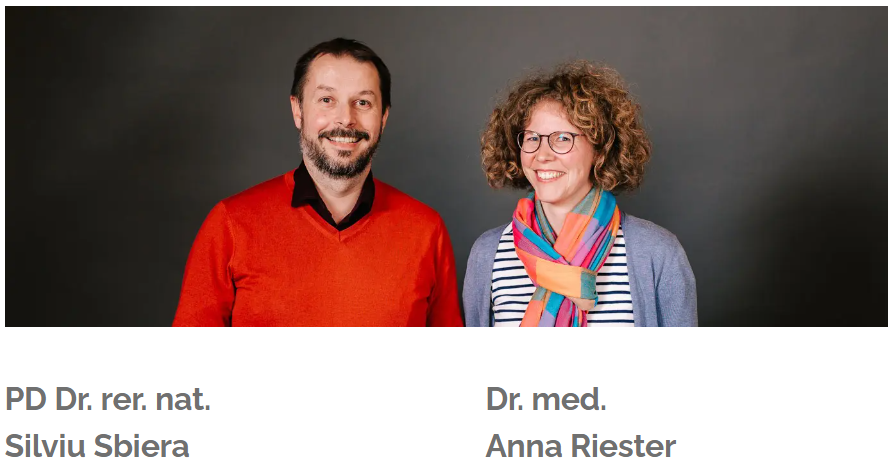
| Principal Investigators | Institution |
| Dr. med. Anna Riester | LMU |
| PD Dr. rer. nat. Silviu Sbiera | JMU |