
Sustainable Chemistry and Phosphorus Recycling
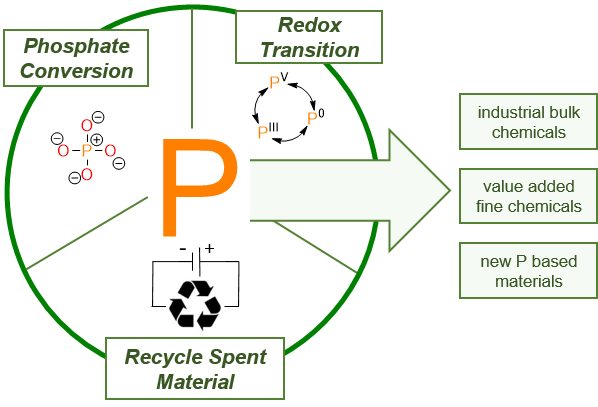
Recently, the team led by chemist Prof. Jan J. Weigand announced a significant breakthrough in phosphorus chemistry. In a publication in "Nature Synthesis," they introduced an innovative and simple method for producing phosphorus-based chemicals without the use of hazardous intermediates such as white phosphorus.
In the next step, the team aims to expand the range of phosphorus-based chemicals that can be produced using this novel method, thereby enabling a direct and more sustainable access to a variety of platform chemicals. Phosphorus and its compounds are indispensable in our daily lives – their application in fertilizers alone is crucial and contributes significantly to feeding the world's population. Out of the globally mined 190 million tons of raw phosphorus per year, 80 percent is processed into fertilizers. However, the current wasteful handling of this essential elements leads to the depletion of natural and available phosphorus reserves on Earth. As a result, phosphate rock and elemental phosphorus have been included in the list of critical raw materials. Projections suggest that global reserves could be depleted within 100 years. "For these reasons, the development of new and innovative chemical methods in the phosphorus value chain is urgently needed. The issue of phosphorus recovery through truly suitable large-scale recycling processes for valuable phosphorus compounds will become significantly more challenging in the future," explains Dr. Kai Schwedtmann, a key member of Jan J. Weigand's team and co-inventor of the patents underlying this project.
In a highly exploratory project, Prof. Weigand's team aims to explore electrochemical methods for recycling phosphorus-based chemicals in an efficient circular process. "In our blueprint for a modern sustainable phosphorus chemistry, we are investigating systematic and progressively atom- and energy-efficient pathways for the deoxygenation of phosphoric acid and recycled phosphorus resources such as phosphoric acid and struvite from sewage sludge treatment or lithium iron phosphate from battery recycling. An extension of this approach is the synthesis of various hexafluorophosphate (PF6) salts, starting from highly problematic substances like uranium hexafluoride (UF6), which contains one of the key anions, PF6-, for battery electrolytes," explains Prof. Weigand, Chair of Inorganic Molecular Chemistry at TUD.
Reinhart Koselleck Award
