
Smart Mobility Lab – a worldwide unique Research Infrastructure
The Smart Mobility Lab (SML) is being established at the Hoyerswerda Research Center, with the goal of advancing the mobility of the future by 2026 through research in the fields of automated road and air traffic as well as robotics. The lab will develop new technologies such as networked drones and robots to make traffic flows more efficient and resource-friendly, but also to repair the damage caused to the soil by mining in the Lausitz region. The use of robot swarms in disaster areas will also be investigated.
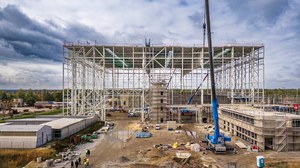
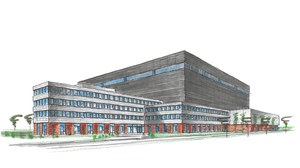
The Smart Mobility Lab has a 𝗰𝗼𝗺𝗽𝗿𝗲𝗵𝗲𝗻𝘀𝗶𝘃𝗲 𝘁𝗲𝘀𝘁 𝗮𝗿𝗲𝗮 with indoor and outdoor areas. It enables realistic vehicle tests for automated driving functions, driver assistance systems and sensor technology under reproducible conditions. This includes intersection and pedestrian scenarios, overtaking maneuvers, traffic circle situations, lane change tests or highly dynamic tests at speeds of up to 100 km/h in the hall. Mobile backdrops, flexible markings and modern high-speed camera and projection technology create a versatile and 𝘄𝗲𝗮𝘁𝗵𝗲𝗿-𝗶𝗻𝗱𝗲𝗽𝗲𝗻𝗱𝗲𝗻𝘁 𝘁𝗲𝘀𝘁 𝗲𝗻𝘃𝗶𝗿𝗼𝗻𝗺𝗲𝗻𝘁. The entire test procedure is monitored and controlled centrally in the control center.
𝗪𝗼𝗿𝗸𝘀𝗵𝗼𝗽𝘀 𝘄𝗶𝘁𝗵 𝗹𝗶𝗳𝘁𝗶𝗻𝗴 𝗽𝗹𝗮𝘁𝗳𝗼𝗿𝗺𝘀, extensive storage rooms for measurement technology, targets and backdrops as well as modern office and meeting rooms are available for preparing and carrying out the tests. Here, employees develop test procedures, configure measurement technology, evaluate data and plan new scenarios. Test subject and visitor areas allow regulated access and convenient supervision during the studies.
 © André Wirsig
Our Vision
We are shaping the mobility of the future—emission-free, intelligent, safe, and multimodal. With the Hoyerswerda Research Center, we are establishing Lusatia as a driver of innovation, research, and development. We are achieving this by:
- the merging of automated and cooperative driving, flying, and robotics as a technological super accelerator for tomorrow's mobility on the road, in the field, and in the air
- the establishment of a state-of-the-art research infrastructure:
- development, approval, and technical monitoring of automated and connected driving
- testing and certification of drones and recultivation robotics
- establishment of a software ecosystem for an active start-up scene
- the creation of a living lab for digital-based mobility technologies
- the concentration and combination of globally unique research infrastructure and equipment such as highly immersive driving simulators, drone and robotics technologies, and national and international expertise
- the creation of sustainable and lasting structures