
Test Center for Automated Flying and Autonomous Systems (TAFAS)
Overview
The Test Center for Automated Flying and Autonomous Systems (TAFAS) at TU Dresden’s Smart Mobility Lab combines research, development, and experimental testing of automated and autonomous aviation systems. The focus is not only on the aircraft themselves, but on the entire system comprising the aircraft, infrastructure, environmental conditions, communication, operations, and airspace integration.
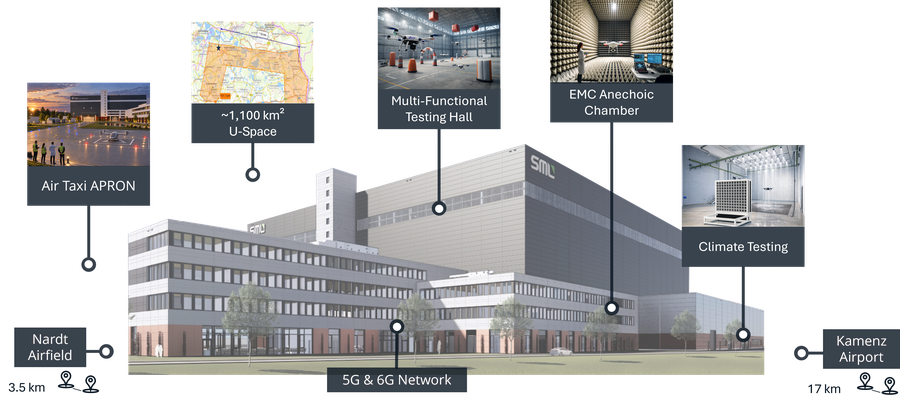
TAFAS combines research, development and testing of automated aerial systems with large-scale experimental infrastructure.
Testing capabilities range from model-based design and simulation to controlled indoor flight tests, as well as wind, weather, and EMC studies, all the way to outdoor and BVLOS operations. This allows new technologies and operating procedures to be investigated step by step under reproducible conditions, validated in realistic scenarios, and scientifically evaluated for safety and certification purposes.
Research Areas
Aviation Infrastructure and Vertiports
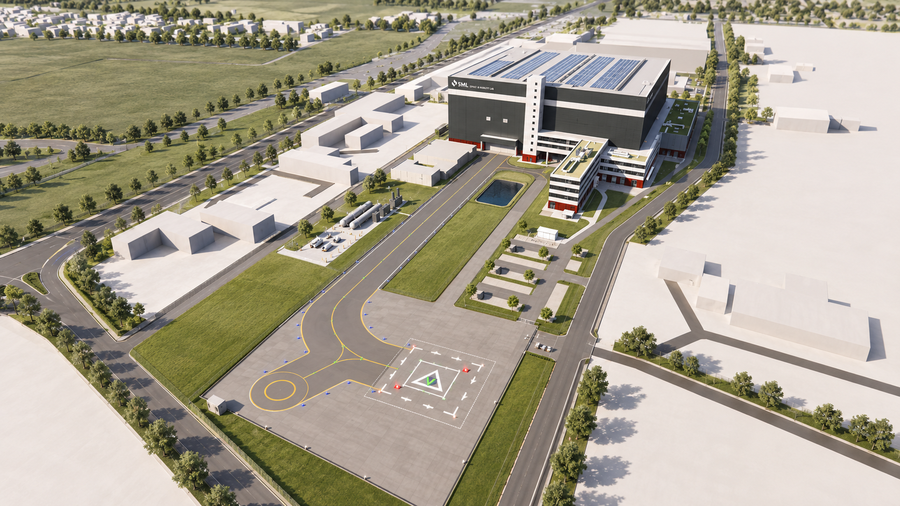
The SML research vertiport provides a real-world infrastructure for take-off and landing tests, infrastructure studies and investigations of local wind conditions. Note: AI-generated visualisation based on the SML planning documents.
Vertiports and other aviation infrastructures form the interface between aircraft, ground operations, the built environment, and airspace. TAFAS investigates how such infrastructures can be designed to be safe, with adequate capabilities, and site-appropriate, and how they can be integrated into existing transportation and settlement structures. A particular focus is on the interaction between infrastructure and flight operations. This includes the evaluation of potential sites, the design of takeoff and landing areas, obstacle and safety assessments, approach and departure geometries, as well as the influence of buildings, terrain, and local wind patterns. The research vertiport currently under construction at the SML is designed for a reference D value of 14 m and serves as a real-world reference infrastructure for this purpose. The geometric design and the outdoor test site can be linked with studies in the wind and weather laboratory as well as with digital models.
- Site Assessment and Placement of Vertiports and UAS Infrastructure
- Design of takeoff and landing areas, safety zones, and operational areas
- Obstacle assessment and analysis of approach and departure areas
- Wind and turbulence effects near the ground and in built-up areas
- Evaluation of different infrastructure and layout options
- Ground operations, traffic management, and multimodal integration
- Experimental validation of infrastructure and regulatory requirements
Aircraft development and flight testing
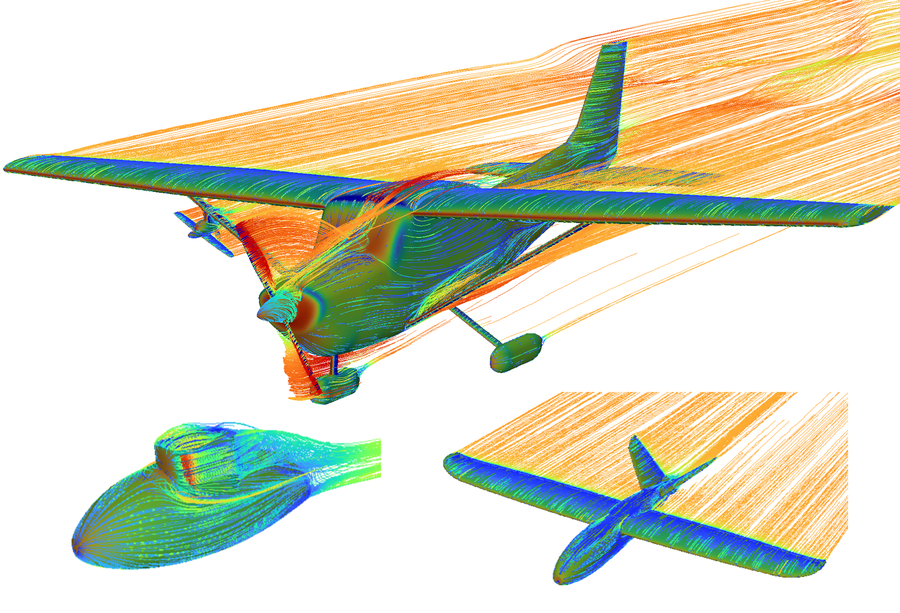
Instrumented flight tests enable the investigation of performance, controllability and system behaviour under defined boundary conditions.
TAFAS supports the development and scientific evaluation of UAV and eVTOL systems from early design through experimental flight testing. Reproducible test conditions make it possible to investigate aerodynamic, flight dynamics, and system-level characteristics in a targeted manner and to validate simulation and design models against measured data.
Key areas of focus include flight performance, stability and controllability, flight control, propulsion and energy systems, payload integration, and behavior under variable wind and environmental conditions. By combining indoor and outdoor testing, test campaigns can be gradually expanded from controlled boundary conditions to realistic operational scenarios.
Autonomous Flight, Perception, and Detect-and-Avoid
Autonomous aerial systems must reliably sense their environment, detect relevant objects and hazards, and make robust decisions based on this information. To this end, TAFAS investigates methods of environmental perception, sensor fusion, navigation, path planning, as well as detect-and-avoid and conflict detection & resolution.
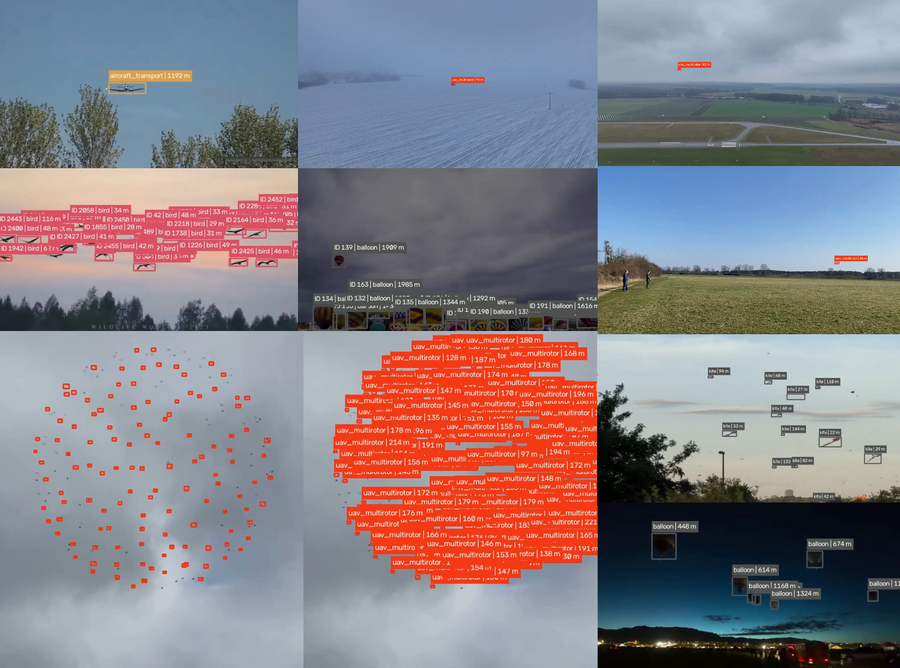
TAFAS researches perception, navigation and Detect-and-Avoid functions for safe autonomous flight operations.
The large-scale test facility enables reproducible encounter and obstacle scenarios with precise reference positioning. In addition, real outdoor flights and airspace data can be used to evaluate procedures under increasing operational complexity. A key aspect of the research is the quantification of uncertainties and their impact on safety-critical decision-making functions.
- Computer Vision and Airborne Object Detection
- Detection, classification, and tracking of manned and unmanned aircraft
- Sensor fusion and state estimation
- Detect-and-Avoid as well as Conflict Detection & Resolution
- Autonomous navigation, path planning, and obstacle avoidance
- GNSS-compromised or GNSS-free navigation
- Multi-UAV and cooperative operation concepts
- Validation of AI-based and data-driven functions
BVLOS, U-Space, and Airspace Integration / BVLOS, U-Space, and Airspace Integration
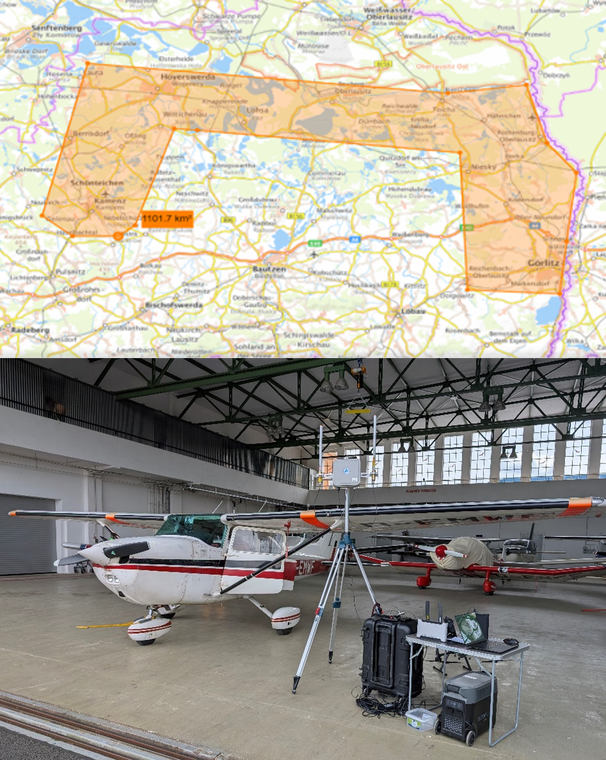
Combining flight testing, communications and airspace data enables the investigation of complex BVLOS and U-space scenarios.
The safe operation of unmanned aircraft systems beyond visual line of sight requires the coordinated interaction of the aircraft, command-and-control links, navigation systems, traffic and airspace information, as well as appropriate operational and emergency procedures. TAFAS addresses these interrelationships as an integrated research topic. The SML’s outdoor infrastructure and regional airspace connectivity enable research into BVLOS operations, U-Space/UTM services, and the integration of manned and unmanned aviation. This research takes into account both cooperative air traffic participants and aircraft that are not electronically visible or only partially so. The goal is to develop and validate robust operational and safety concepts for increasingly automated missions.
Safety, Validation, and Certification Support
- BVLOS Operations and Mission Planning
- U-Space/UTM and Digital Traffic Management Services
- Integration of Manned and Unmanned Aviation
- Cooperative and Non-Cooperative Air Traffic Participants
- Command & Control, Mobile Communications, and Data Link Concepts
- Remote ID, ADS-B, FLARM, and other surveillance sources
- Contingency and emergency procedures
- Advanced Air Mobility operational concepts
Safe new aviation systems and operating procedures require robust evidence, traceable test methods, and a systematic assessment of risks and uncertainties. TAFAS therefore combines experimental research with safety engineering, verification, and validation, as well as the development of appropriate validation strategies.
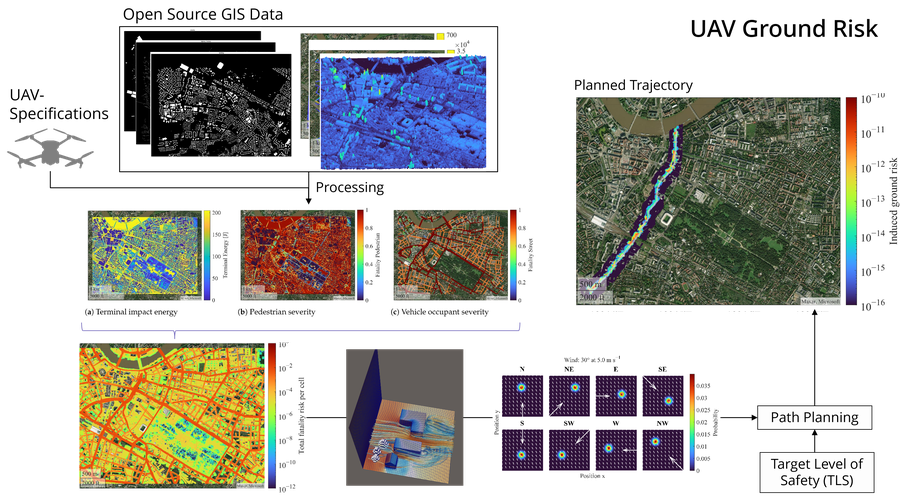
Reproducible experiments and robust measurement data support safety assessment, validation and certification evidence.
The infrastructure enables testing under controlled normal, limit, and fault conditions, thereby supporting the scientific preparation of documentation for certification and approval. This includes, for example, flight performance and controllability studies, environmental and EMC tests, fault scenarios, and the evaluation of autonomous functions. TAFAS itself is not a certification body; its goal is to conduct research on methods, data, and test procedures that support certification and approval processes.
- Safety Assessment and Quantitative Risk Assessment
- SORA and Operational Authorization Issues
- Verification and Validation of Safety-Critical Functions
- Development of test and verification strategies
- Environmental, wind, weather, and EMC qualification
- Failure Cases, Robustness, and Recovery Tests
- Experimental studies in the context of SC-VTOL and UAS regulations
- Reproducible test procedures and benchmarking
From Simulation to Flight Operations
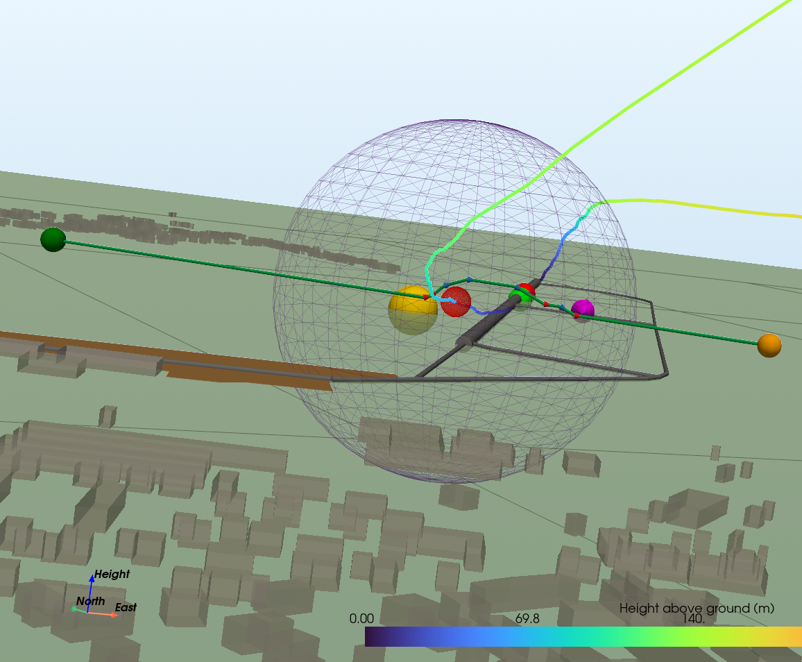
TAFAS enables stepwise validation from modelling to realistic flight operations.
A key feature of TAFAS is its end-to-end experimental chain. New systems, procedures, or infrastructure concepts can first be digitally modeled and then tested under controlled conditions. As the level of maturity increases, wind, weather, electromagnetic interference, real-world infrastructure, and ultimately complex outdoor and BVLOS scenarios can be incorporated. This phased approach reduces testing risk, improves reproducibility, and enables a systematic comparison between simulation, laboratory testing, and real-world operations.
- Modeling and Design
- Controlled Indoor Flight Tests
- Wind, Weather, and EMC Testing
- Outdoor and vertiport testing
- BVLOS and airspace integration
- Validation and scientific verification
Research infrastructure
Multifunctional Flight Test Facility
The multifunctional flight test facility, with a flight volume of approximately 100 × 100 × 35 m, enables flight tests with UAVs and larger aircraft. A high-precision indoor positioning system supports three-dimensional flight path reconstruction and provides reference data for control, navigation, and perception algorithms. Modular and virtual obstacles, digital models, and variable wind fields enable reproducible scenarios for flight mechanics, autonomous navigation, conflict detection and resolution, and system validation
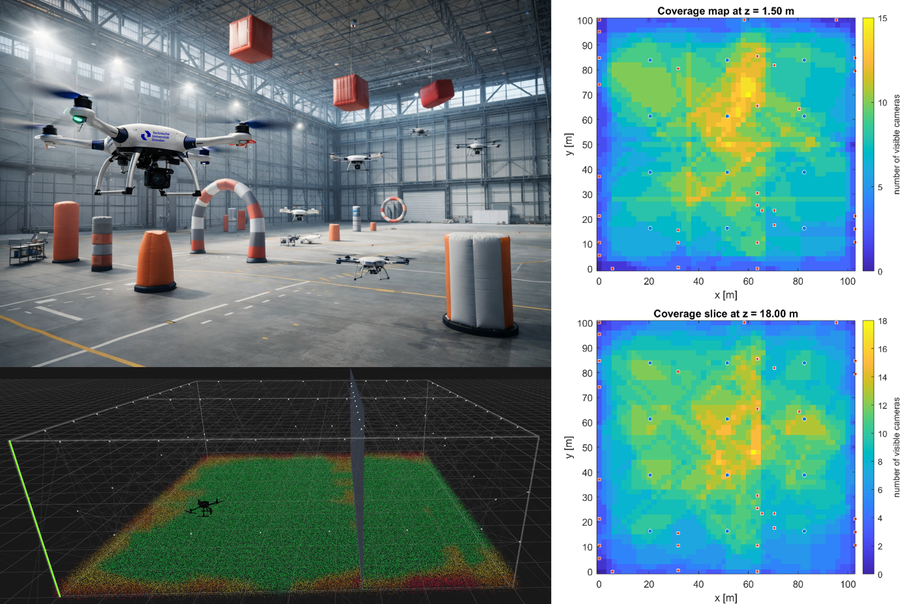
The large-scale flight test hall with high-precision reference positioning provides controlled conditions for reproducible flight, navigation and system testing. Top-left panel: AI-assisted visualisation of the experimental setup.
Wind and Weather Laboratory
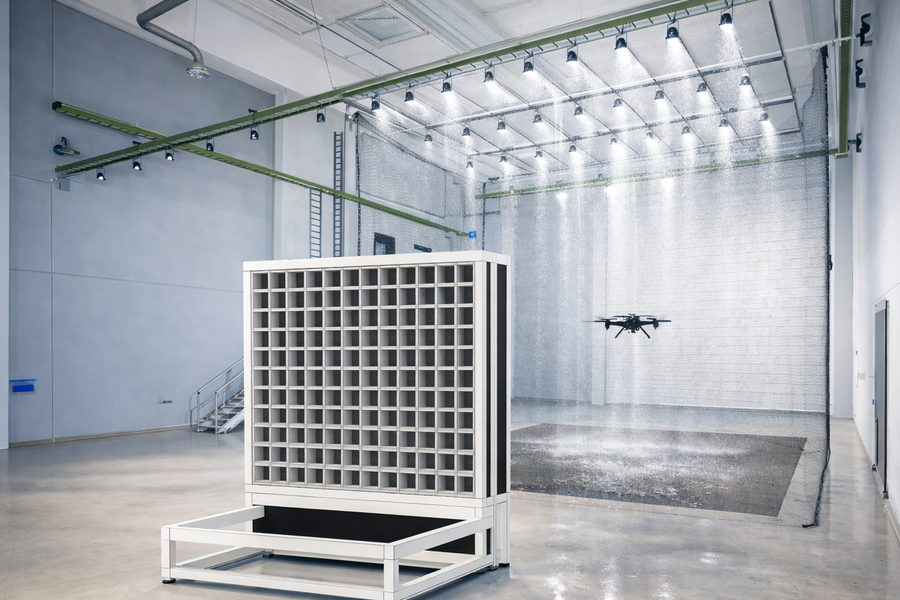
The 3 × 3 m wind shaper with 144 fans generates up to 24 m/s in open-flow operation. AI-assisted visualisation of the test scenario.
The weather and climate chamber (approx. 20 × 20 × 10 m) enables research under controlled environmental conditions. The 3 × 3 m wind shaper consists of 144 fans and achieves flow velocities of up to 24 m/s in open-air operation. Different wind and turbulence profiles enable investigations into flight mechanics, flight control, and sensor robustness. A test setup for models also allows for the analysis of the interaction between airflow, built-up areas, terrain, and vertiport infrastructure. Additional facilities for precipitation, fog, and variable visibility conditions are also available. This enables the investigation of aircraft and sensor systems as well as infrastructure-related issues under reproducible boundary conditions.
EMC Anechoic Chamber
The EMC anechoic chamber (approx. 20 × 20 × 8 m) provides a shielded environment for investigating electromagnetic compatibility and immunity. Communication and navigation systems can be evaluated under defined radio conditions, and interference scenarios—such as jamming, spoofing, or the loss of individual communication paths—can be investigated in a targeted manner. This makes the infrastructure particularly suitable for C2 systems, recovery functions, and robust autonomous procedures.
Outdoor Test Site and Research Vertiport
The outdoor test site, measuring approximately 400 × 200 m, complements the indoor infrastructure by providing real-world meteorological and operational conditions. The research vertiport is designed for a reference D of 14 m and includes a defined takeoff and landing area with adjacent apron and movement areas. This allows for the investigation of takeoff and landing tests, infrastructure and procedure studies, as well as the interaction between the aircraft and ground operations. Mobile measurement, communication, and safety systems enable the gradual transition of previously tested functions into real flight operations.

Research vertiport for D = 14 m for testing take-off, landing, infrastructure and operational procedures under real environmental conditions. Note: AI-assisted visualization.
BVLOS Test Environment
The regional test environment extends TAFAS beyond the immediate SML site. It provides a framework for investigating longer BVLOS missions, digital traffic management services, communication coverage, and interaction with existing air traffic. The specific approved operational area and its expansion phase will be determined based on the project and regulatory approvals.
Digital Research and Control Center Infrastructure
The digital research infrastructure integrates simulation, experiment execution, and data analysis. The control center is located directly above the hangar door and offers a direct line of sight to both the multifunctional flight test hangar and the outdoor test site and research vertiport. Workstations for video, position, sensor, and system data enable real-time monitoring and documentation of test campaigns. Digital twins and computing systems with high capabilities complement visual observation and allow real-world measurement data to be directly linked to models and algorithms.
Workshops and System Integration
Mechanical, electrical, and prototyping workshop capabilities support the preparation and customization of test platforms. Components, sensors, communication systems, and measurement setups can be integrated, modified, and instrumented for test campaigns. This closes the development chain between concept, construction, and experimental testing directly at the SML
Research Equipment and Flight Platforms
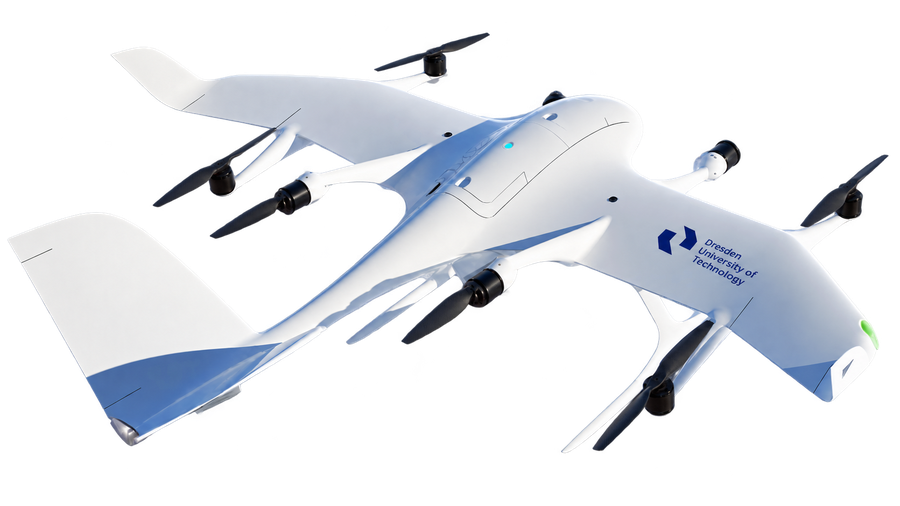
Modular aircraft platforms, sensors and computing systems support adaptable experimental scenarios.
TAFAS has modular research equipment, flight platforms, and measurement systems that can be combined depending on the research question. The website should deliberately avoid providing a complete inventory list; instead, a clear structure organized by functional categories with selected examples is more useful.
- Flight platforms: Multicopters, fixed-wing, and VTOL systems of various size classes, including the Wingcopter UAV
- Environmental perception: RGB, event, thermal, depth, and industrial cameras, as well as LiDAR systems
- Positioning and tracking: high-precision reference systems for indoor and outdoor experiments
- Onboard Computing and Flight Control: Modular computer and autopilot systems
- Air Traffic Monitoring: Remote ID, ADS-B, FLARM, and other cooperative data sources
- Wind and environmental measurement technology: flow, pressure, temperature, and other measurement systems
Research Projects and Applications

TAFAS’s research infrastructure is utilized in interdisciplinary projects focused on automated aviation, Advanced Air Mobility, UAS operations, safety, and traffic management. This includes, among others, Research Training Group (RTG) 2947 “Technical and Operational Integration of Highly Automated Aviation in Metropolitan Areas.” More information here:Research Training Group (RTG)
Collaboration and Use
TAFAS is designed as an open research infrastructure for joint scientific and application-oriented projects. Research institutions, companies, and public agencies can use the infrastructure as part of joint projects, experimental campaigns, and scientific services.
The specific test configuration is planned jointly based on the research question, aircraft, safety requirements, and necessary infrastructure. This allows for both individual measurement or validation tasks as well as multi-stage development and test campaigns.
- Joint Research and Development Projects
- Experimental flight and measurement campaigns
- Vertiport, infrastructure, and wind studies
- System integration and functional validation
- Safety, BVLOS, and certification research
- Development of reproducible test and verification procedures
Contact
The team at the Chair of Air Transport Technology and Logistics is available to assist with research collaborations, planned test campaigns, and questions regarding the use of the TAFAS infrastructure.
 © Sven Ellger
Research Associate
NameDr.-Ing. Hannes Braßel
Send encrypted email via the SecureMail portal (for TUD external users only).
Chair of Air Transport Technology and Logistics
Visiting address:
Gerhart-Potthoff-Bau (POT), Room 166 Hettnerstraße 1-3
01069 Dresden