
Mar 04, 2026
"Take a chance on something new!"
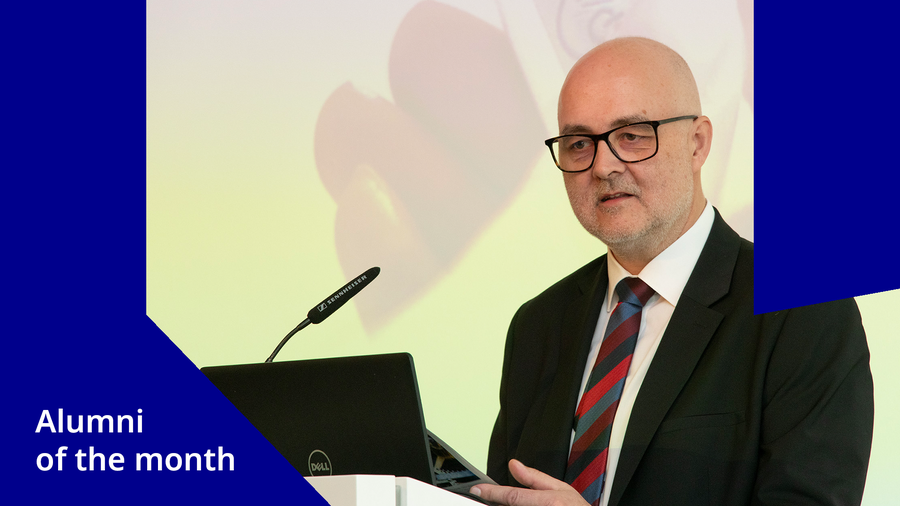
Dr. Markus Böhl is the Alumnus of the Month for March 2026.
(interview from 2026)
Thomas Scheufler
"During my time as a undergraduate student, a PhD student and postdoc at TU Dresden, I got to know and came to appreciate interdisciplinary work. This has helped me in every phase of my professional life."
Dr. Markus Böhl studied food chemistry at TU Dresden and obtained his doctorate there. Today, he is President of the State Investigation Office in Rhineland-Palatinate and is responsible for food safety, protection from infectious diseases, and healthy livestock in this federal state. His experience studying at TUD, his improvisational skills and the independence he acquired during his many internships are particularly valuable to him.
|
Name: |
Dr. Markus Böhl |
|
Degree program |
Food Chemistry |
|
Faculty |
Chemistry and Food Chemistry |
|
At the university: |
1996-2001 |
|
Current work: |
President of the Rhineland-Palatinate State Investigation Office |
Where are you employed today and what are your responsibilities?
I have been President of the State Investigation Office in Rhineland-Palatinate since March 2025. Our main mission involves maintaining food safety, protecting people from infectious diseases and ensuring healthy livestock.
What still has a lot of value for you today? What would you like to have had more of?
My undergraduate studies, my PhD and time as a postdoc at TU Dresden have all taught me to be independent - and reap the rewards of this every day.
Why did you decide to study at TU Dresden?
To be honest, that was the decision of the Central Office for the Allocation of Study Places (ZVS). When I applied to study Food Chemistry, I had given them a list of places that I’d like to study and was offered a place in Dresden. Looking back, I am very grateful that the ZVS chose Dresden for me.
What made you choose this degree program?
I grew up in a family where we did winemaking on the side and therefore had an idea about food production and food processing. After graduating from high school, I wanted to get a science degree. “Food chemist" was definitely the kind of job where I had a good idea of what it would entail. That weighed heavily on my decision.
What researchers or lecturers influenced you the most during your studies?
My immediate supervisors during the (very long) internship periods had the most profound impact on me. I was met with open ears and a committed didactic approach from everyone. Their main goal was to teach us how to work independently and transfer knowledge. I remember the following quote from one of the internship supervisors: "You studied at an East German university and are therefore in the best position to improvise!"
What advice would you give to our current first-years?
Take a chance on something new! Every experience gained in education and in professional life proves to be incredibly valuable in the end.
What do you remember most fondly about your time as a student?
Studying was an intense and challenging time for me, but it all took place in a very positive environment. Classmates you could pretty much rely on no matter what, as well as an amazing student life in the halls of residence, in the student clubs and in the Neustadt. I will always have positive memories of being a student in beautiful Dresden.
What was your favorite place on campus?
The lecture halls in the time-honored Fritz Förster building were the epitome of academic flair for me. I enjoyed it very much.
What tips do you have for hitting the ground running in your industry?
I think it's important, regardless of the area of work you want to go into, that you have a deep interest and enthusiasm for what you do. You end up radiating this, and it is definitely visible to others.
What connects you to TU Dresden today?
The important contacts I still have with former classmates and colleagues.
Contact:
Dr. Markus Böhl
Rhineland-Palatinate State Investigation Office