
Aug 03, 2026
“As a State Councilor, today I still benefit from the diversity of my studies at TUD.”
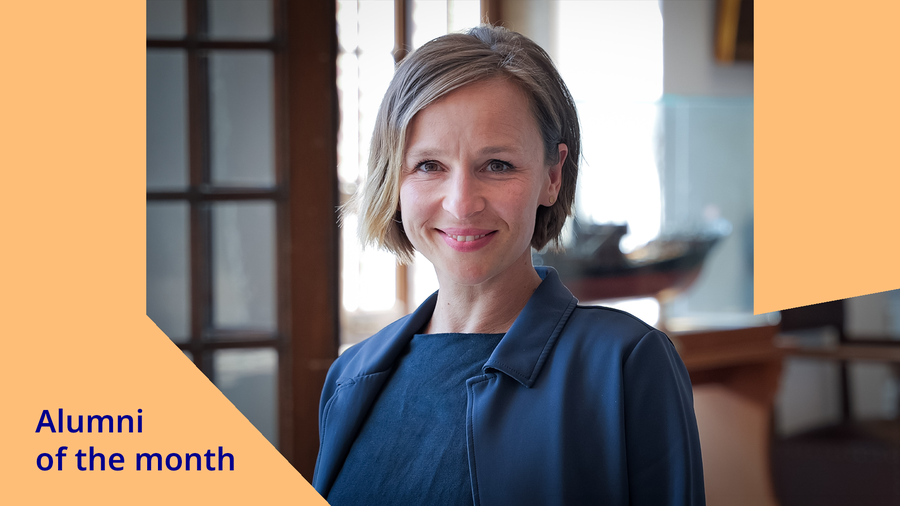
The Alumna of the Month for August 2026 is from the Department of Linguistics.
(interview from 2026)
Thomas Scheufler
“Today, I still benefit from the open-mindedness I encountered during my studies. It was an environment where you could try things out, discussions were possible, and different perspectives were taken seriously.”
Nancy Böhning graduated from TU Dresden with a Magister's in German Studies and Linguistics. She currently serves as State Secretary for International Affairs and Plenipotentiary of the Free Hanseatic City of Bremen to the Federal Government and for European Affairs. The openness, community and diversity she experienced during her studies have had a lasting impact on the person she is today and on her professional career.
|
Name: |
Nancy Böhning |
|
Degree program |
German Studies / Linguistics |
|
Faculty |
Faculty of Linguistics, Literature and Cultural Studies |
|
At the university: |
1998-2005 |
|
Current work: |
Federal and European Affairs Representative and State Councilor for Development Cooperation and International Affairs of the Free Hanseatic City of Bremen |
Where are you employed today and what are your responsibilities?
I am currently the Plenipotentiary of the Free Hanseatic City of Bremen to the Federal Government and to the European Union, and I serve as State Secretary for International Affairs. I represent Bremen in Berlin vis-à-vis the federal government, coordinate European policy issues, and work to ensure that Bremen’s interests are taken into account early on in federal policy decisions. This also involves engaging in dialogue, building alliances, and presenting issues in a way that ensures they are understood and taken on board by the relevant stakeholders. As an elected member of the Bremen State Senate, I am a member of the German Bundesrat.
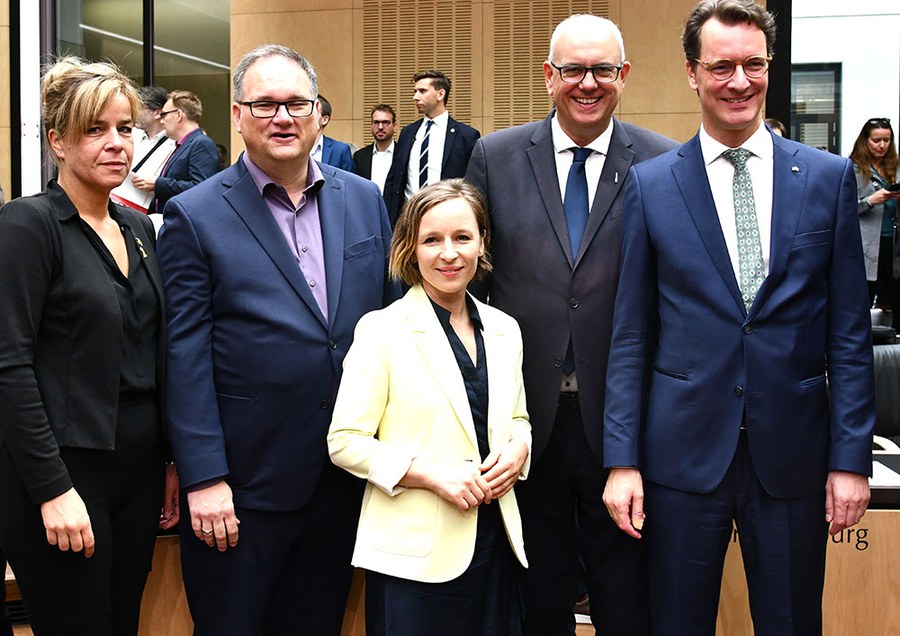
Prior to the plenary session of the Federal Council for the 1058th meeting of the Federal Council.
What still has a lot of value for you today? What would you like to have had more of?
I still benefit today from the open-mindedness I encountered during my studies. It was an environment where you could try things out, discussions were possible, and different perspectives were taken seriously. This mix of different people, backgrounds and perspectives really shaped who I am. I would have liked to have seen even more visible diversity among the students in some areas, as well as more structured spaces where people from different walks of life can interact. That's not a complaint, but rather a wish, because diversity hugely enhances the quality of debates and broadens one's own horizons.
Why did you decide to study at TU Dresden?
To be honest, one of the main reasons was that it was close to home. I wanted to stay within the region I knew well, while also attending a university that offered a wide range of classes and good facilities. That combination worked for me back then.
What made you choose this degree program?
I've always been a fan of German. Language, texts, arguments – I was interested in these things, and I wanted to understand how language works and how it shapes thought and debate. So, that’s why I chose German Studies. At the same time, I’ve always been interested in how society works and why things are the way they are. This is where sociology, economic history, and social history come into play. I wanted to understand how things are connected—for example, how social groups form, what role work and the economy play, and how historical developments continue to have an impact today. This combination created a harmonious overall picture for me.
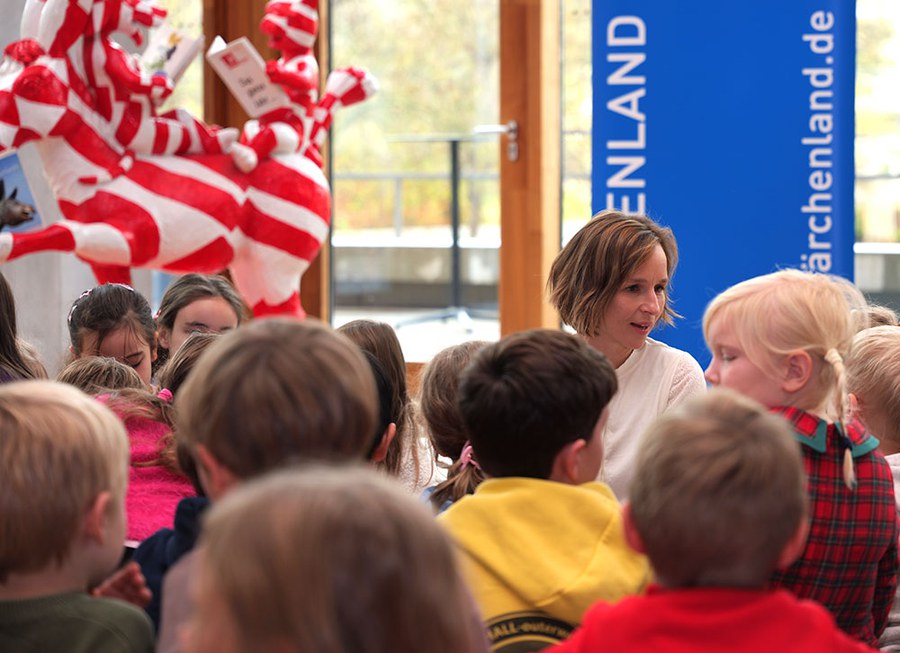
Nancy Böhning at the Berlin Fairy Tale Days. Nancy Böhning reads the fairy tale "The Bremen Town Musicians" to children at the Bremen State Representation.
What researchers or lecturers influenced you the most during your studies?
There were several lecturers who had a big influence on me, more because of the way they worked rather than because of any one specific name. I particularly remember the seminars where we had to construct sound arguments, where critically evaluating sources was important, and where we learned to examine our own positions. This blend of high standards and openness really resonated with me. I don't want to single anyone out, because in the end, it was the sum total. Good teaching is often when you are being taken seriously while still being challenged.
What advice would you give to our current first-years?
Make the most of your studies, not just as a way to accumulate knowledge, but as a training ground for critical thinking. Learn how to ask good questions, read texts, explain your points of view, and listen to others. And look for people early on who you can work with, not against. University isn't a competition; it's a time when we can help each other grow. And on a practical note: Go to the lectures that don't seem relevant to your field. Often, the best ideas come where different fields intersect.
What do you remember most fondly about your time as a student?
I have particularly fond memories of all the new people I was constantly meeting. And this feeling of us all being in this together was really strong. There was a strong sense of solidarity; people helped one another, shared materials, and learned together. I hardly ever encountered any competitive behavior back then, and that made it a very pleasant time.
What was your favorite place on campus?
Off the top of my head, I would way the Mensa canteen. That was a social hub; it was where people gathered together. And if I'm being honest, I'd have to mention the library, too, because it feels like I spent half my time there during my studies. And in the summer, the meadows around campus were a real favorite spot – just to get outside, chat, read, and take a quick breather before getting back to it.

Bremen’s Senator for Finance Björn Fecker, President of the Bundesrat and President of the Senate Andreas Bovenschulte, and State Councilor Nancy Böhning in the Bundesrat on the Bremen Bench (from left).
What tips do you have for hitting the ground running in your industry?
I have a hard time with the term “industry” because my career path hasn't followed a straight line into a specific industry. After graduating, I chose positions that interested me, and that’s how my professional profile took shape. My studies gave me a solid foundation that I still draw on today: analytical thinking, strong writing skills, the ability to construct well-structured arguments, and the skill to explain complex topics in an understandable way. For when you're just starting your career, I would say: Move beyond the theory and try things out. Internships, student projects, volunteer work, and involvement in initiatives – these experiences make a difference because they allow you to take on responsibility and see what the real world of work is really like. Build yourself a network – not just a collection of business cards, but through genuine collaboration. And be open to paths that don't fit into your career plan. Often, the next step comes from a task you've done well, not from a perfect plan.
What connects you to TU Dresden today?
What connects me most to TU Dresden is the time I spent there learning how to approach topics systematically and how to construct a sound argument. This is something I still rely on in my daily work when it comes to organizing, weighing, and clearly communicating complex political issues. It's also a very real piece of my life story. TU Dresden represents a formative period of my life, during which I met many people, grew both professionally and personally, and came to appreciate how important an open atmosphere is for learning and discussion. And that has stayed with me, even though I’ve long since moved on to a different job.
Contact:
Nancy Böhning
Instagram: @frauboehning