
Volker Heinsberg Prize of the ZIS: About the person who gave the prize its name
Volker Heinsberg (*11 May 1943 in Gotha; † 28 September 2016 in Berlin) was a guest lecturer in the interdisciplinary degree programs "International Relations" at the Center for International Studies for many years. He put his decades of impressively diverse and far-reaching practical diplomatic expertise at the service of the academic education of IB students at TU Dresden. Between 2009 and 2013, he was a regular guest lecturer in the political science part of the IB curriculum, but also supported the ZIS in many ways through guest lectures and, last but not least, through advice and support.
Career
After studying German philology, political science, law and political science, he joined the Foreign Service in 1973. This was followed by positions at the embassy in the Soviet Union and at the Federal Foreign Office in Bonn. From 1979 to 1982 he was Permanent Representative of the Ambassador in Tripoli, Libya. This was followed by an assignment at the Permanent Mission to the United Nations in New York (Advisor for Press and Public Relations Advisor) and from 1988 again at the Federal Foreign Office in Bonn (Deputy Head of Division for West-East Economic Relations).
From 1991 to 1993 he was Ambassador of the Federal Republic of Germany to Haiti. This was followed by a position as Permanent Representative of the Head of the Permanent Mission to the Western European Union (WEU) in Brussels until 1997. From 1997 to 2001 he was then Head of the Division for European Security and Defense Policy at the Federal Foreign Office in Bonn. From 2001 to 2005, Volker Heinsberg headed the German delegation to the Geneva Conference on Disarmament (2005), before becoming German Ambassador to Lithuania between 2005 and 2008.
Origin of the prize
After Volker Heinsberg passed away far too early in 2016, his widow, Mrs. Ursula Heinsberg-Hartmann, founded the prize named after him to honor the best academic theses by ZIS students in the field of international relations. In this way, his name continues what he declared to be a special concern: to support the "exceptionally talented" Dresden IB students and the institution at which they studied. For him as a long-standing and experienced top diplomat, the combination of academic excellence and political decisions in practice as well as the interdisciplinary analysis of the IB were particular concerns, which he intended to promote with his generous support of the ZIS, among other things.
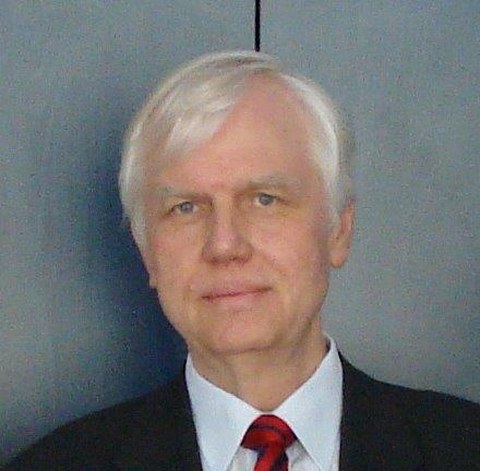
Botschafter a.D. Volker Heinsberg