
Campus life
Sustainable, inclusive, vibrant - campus life at TU Dresden offers space for learning, working and meeting. With sustainable infrastructure, green open spaces and modern learning facilities, the university creates an environment that takes equal account of academic, social and ecological needs. The campus promotes community, participation, health and innovation - and supports students and staff in their personal and professional development. This creates a lively, open place with a high level of identification.
(Cross-references to the Sustainability & University Development Strategy can be found throughout this section)
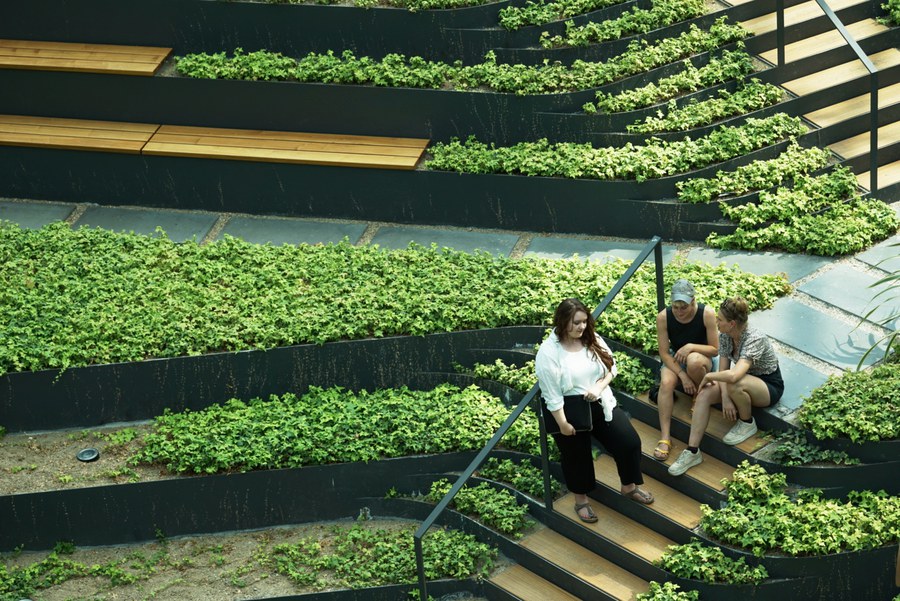
students while digitally learning at the TUD campus
What do we want?
Our common goal is to create a green campus that combines sustainability and quality of life. We therefore want a campus that offers a friendly atmosphere, brightness, tranquillity and openness and where the various stakeholders of the university enjoy spending time. With its green, open, safe and functional design, it facilitates encounters and promotes joint learning, both within the TU Dresden community and with civil society. The aim is to create a dynamic and future-oriented campus that meets the needs of current and future generations of students, teachers and staff.
Where do we want to go?
TU Dresden's green campus combines diverse greenery with sustainable energy generation: roofs and facades are greened or equipped with solar panels, public areas are planted and designed to be inviting. There are numerous comfortable, partly covered seating areas as well as weather-protected workstations with power connections. Water dispensers and freely accessible toilets are available throughout the campus. The car-free campus is easily accessible via park-and-ride, public transport and a dense network of cycle paths and footpaths. A bicycle-friendly infrastructure with covered parking spaces and repair stations completes the mobility offer.
The atmosphere is calm, open and inviting. Study rooms are easily accessible and many can be used around the clock. Light, ventilation and air conditioning ensure a good indoor climate, and pathways and buildings are well lit. The university supports a healthy lifestyle, e.g. through free fruit at events and a simple supply of water, coffee and tea.
All new construction and renovation projects follow sustainable construction methods with environmentally friendly materials and the expansion of renewable energy. Accessibility is a matter of course on the entire campus - both physically and digitally. Space and resources are available in a targeted manner for research and innovation, particularly in the areas of sustainability, the environment and digital education.
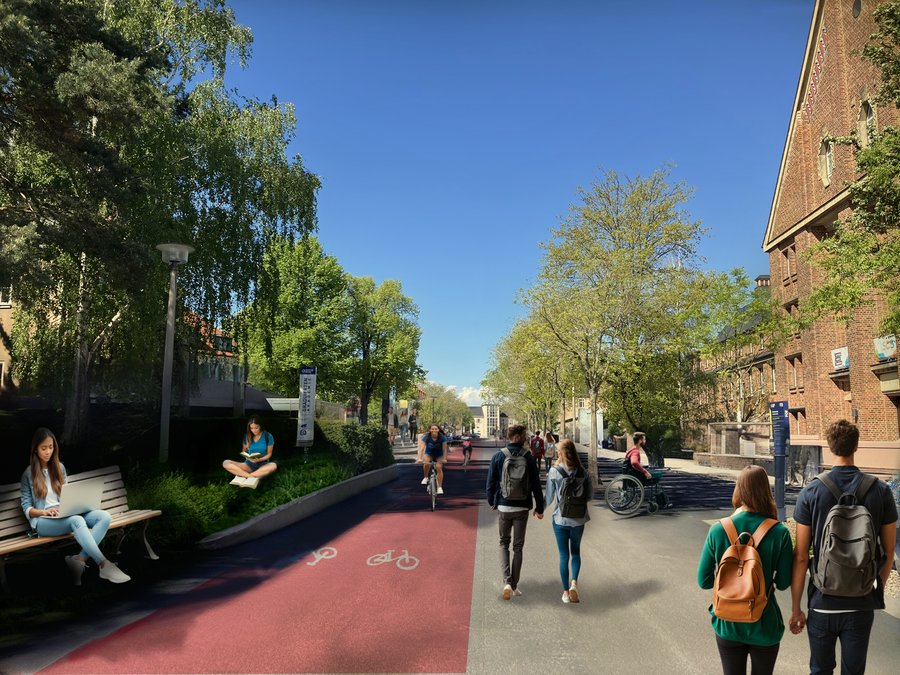
Campus of the Future - Image generated by AI
How do we achieve this?
- Making the core zones of the campus car-free, i.e. turning roads into cycle paths, creating green spaces (e.g. in collaboration with landscape architects from TU Dresden); striving for sustainability, including in terms of water consumption and animal welfare
- Integration of green roofs and green facades or solar panels on buildings to generate energy
- Installation of solar energy systems and other renewable energy sources on campus
- Install tables and chairs on every (larger) lawn area
- Firmly anchoring and roofing bicycle racks
- Lay power lines
- Install water dispensers
- Cooperation with regional farmers
- Integrate environmentally friendly building materials and energy-efficient systems into new construction projects
- Renovating existing buildings in line with sustainability standards
- Implementing energy-saving measures, such as energy-efficient lighting and heating systems
- Redesigning campus areas to ensure barrier-free access for all people
- Implementation of accessible digital platforms and online resources
The implementation of these measures requires close collaboration between the university administration, faculties, student representatives and other stakeholders. A comprehensive plan and clear communication are crucial to successfully implement the desired changes.