
20.03.2026
Unsere Pflanze der Woche: Der Bulgarische Polstersteinbrech
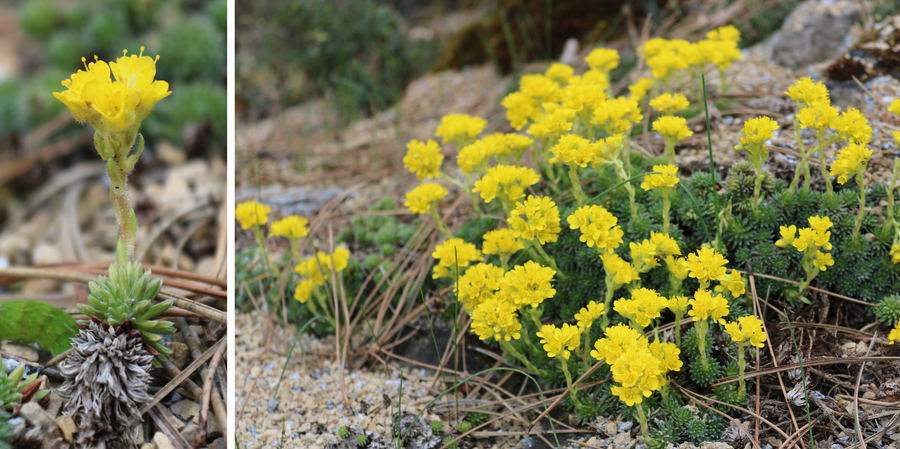
Saxifraga ferdinandi-coburgi Kellerer & Sünd.
Zitronengelb sind nicht nur die ersten heimischen Tagfalter, die in der Frühlingssonne auf Nektarsuche gehen - auch die Blüten einer polsterförmig wachsenden Gebirgspflanze strahlen uns in diesem Farbton entgegen. Der Bulgarische Polstersteinbrech kündigt als eine der ersten Blütenpflanzen den Frühling im Alpinum an. Er stammt aus den Gebirgszügen in Nordostgriechenland und im Südwesten Bulgariens (u.a. Pirin, Rhodopen und Slawjanka). Auf Kalkfelsen in Höhenlagen von 1.500 bis 2.200 m Höhe blüht er dort oft schon, wenn noch Schnee liegt - die Sommer in den Bergen sind schließlich kurz! Aufgrund ihrer Seltenheit gilt die Art in Bulgarien als gefährdet.
Der ungewöhnliche wissenschaftliche Name verweist auf Ferdinand I, der aus der Adelsfamilie Sachsen-Coburg des Hauses Wettin stammte und Ende des 19. Jahrhunderts Fürst (später auch Zar) von Bulgarien war. Ähnlich wie rund hundert Jahre zuvor der sächsische König Friedrich August I war Ferdinand I botanisch und zoologisch überaus interessiert und wissbegierig. Seiner Sammler- und Forschernatur verdankt unter anderem Bulgariens Hauptstadt Sofia ein Naturkundemuseum und einen zoologischen Garten. Der Tiroler Gärtner und Botaniker Johann Kellerer folgte im Jahr 1896 seiner Einladung nach Bulgarien, um die bis dato auf dem Balkan unbekannten ersten Alpenpflanzengärten anzulegen und die königlichen Sammlungen des naturbegeisterten Fürsten weiter auszubauen. Kellerer begleitete den Fürsten auf zahlreiche Exkursionen in die bulgarischen Gebirge und wurde zu einem der besten Kenner der bulgarischen Flora. Zusammen mit dem Botaniker Franz Sündermann entdeckte er auf einer dieser Exkursionen eine neue Steinbrech-Art und nannte sie zu Ehren Ferdinands I Saxifraga ferdinandi-coburgi.
(KW 12/26)
Etwa 10.000 Pflanzenarten wachsen im Botanischen Garten der TU Dresden. Auf dieser Seite stellen wir Ihnen regelmäßig ein Beispiel aus dieser Vielfalt näher vor. Die Besonderheiten unserer wissenschaftlichen Pflanzensammlung zeigen sich auf vielerlei Art und Weise: in erstaunlichen Anpassungen, wunderlichen Namen, einer interessanten Verwendung oder auch in einer außergewöhnlichen Blütenpracht.
Die bisherigen Beiträge zur Pflanze der Woche können Sie im Archiv einsehen.