
Nov 13, 2026
A Systematic Literature Review on the Media Portrayal of Energy Transition Technologies
We are pleased to announce the publication of the article “How energy-transition technologies acquire media meaning: a systematic review of framing configurations and the media construction of socio-technical legitimacy” in the journal Frontiers in Communication (Impact Factor 2.0; JCR Q2). The study was authored by doctoral student Majid Ali (Project E4) at the Boysen-TUD-Research Training Group and supervised by Prof. Lutz Hagen of the Institute of Media and Communication at TUD.
The study examines how energy transition technologies are portrayed in the news media and what role media coverage plays in society’s assessment of these technologies. The study is based on a systematic literature review of 93 scientific studies on the media portrayal of various energy technologies, including wind and solar energy, nuclear energy, hydrogen, bioenergy, geothermal energy, and carbon capture and storage (CCS) technologies. The focus is on the question of which interpretive patterns (frames) recur in media coverage and how these differ across technologies, countries, and over time.
The analysis identifies eight overarching dimensions of media framing: technical capabilities, economic viability, environmental and climate policy impacts, political and institutional governance, energy security and geopolitics, health and safety, social equity, and societal and local acceptance. The analysis reveals that the same dimensions can be evaluated both positively and negatively. For example, a technology may be portrayed as an economic opportunity, while at the same time its costs, technical uncertainties, or environmental consequences are discussed critically.
The results illustrate that media portrayals of energy transition technologies are not determined solely by their technical characteristics. Rather, national energy policy framework conditions, a technology’s stage of development, societal controversies, and journalistic coverage play an important role. Even dramatic events such as the Fukushima nuclear disaster can reinforce or alter existing patterns of interpretation without necessarily leading to a fundamental reassessment of other energy technologies.
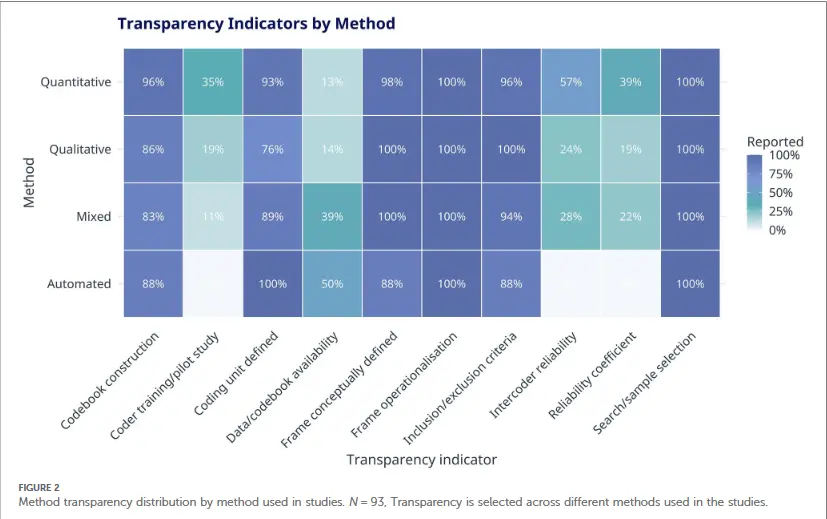
Another key finding concerns the state of research itself. Although scholarly engagement with the media framing of energy technologies has increased significantly, research to date has focused predominantly on Europe and North America. Furthermore, differing theoretical approaches and methods make it difficult to systematically compare the studies. Issues of social justice and civic participation have been relatively under-researched to date.
This study makes a theoretical and methodological contribution to communication research by developing a comprehensive analytical framework for examining the media’s construction of sociotechnical legitimacy. This framework illustrates how journalistic reporting reveals different perceptions of technological opportunities, risks, and societal desirability. Thus, this work provides a foundation for future international comparative studies and a deeper understanding of public communication regarding the energy transition.
The article is available as open access at the following link: