
WiSe 26 - Foundation course
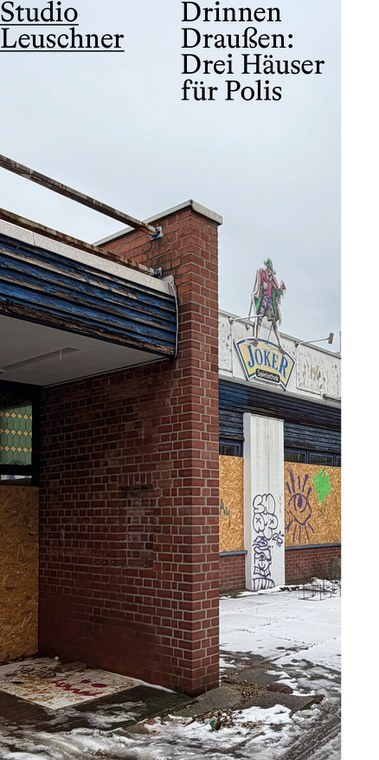
The starting point for our work at the Chair is an appreciation of what already exists; for us, it forms the foundation on which we, as architects, are allowed to build. Our actions are always situated within the context of a larger whole. We therefore view houses less as objects and more as specific formations that are part of an organism—whether built or natural.
Against this background, in the summer semester of 2026 we intend to focus on the relationship between house and open space. Three houses are to be planned for Prohlis that both activate the use of public spaces and, through their program, contribute to the upgrading of the neighbourhood. The Dresden district of Prohlis exemplifies the challenges of post-socialist large-scale housing estates. Shaped by the industrialised housing construction of the 1970s and 1980s as well as by the urban-planning paradigms of the GDR, the quarter to this day exhibits functional deficits and tendencies of socio-spatial segregation. In light of changing societal, economic, social, and ecological framework conditions, there is considerable need for development here. With the Masterplan Prohlis 2030+, a strategic orientation framework was created that was developed in an open, cooperative process involving the specialist municipal departments, local stakeholders, and the resident community. Building on the Masterplan, the design studio “Inside Outside – Three Houses for Prohlis” investigates the role of public buildings as spatial, social, and programmatic mediators between the house and the urban realm. Central is the question of how architectural concepts—through the design of transitions, threshold spaces, and open spaces—can activate public space and strengthen socio-spatial qualities.
Through the new development, a spatially as well as programmatically interconnected ensemble of public infrastructure is to emerge. Three buildings are to be designed—a youth centre, a counselling and health centre, and a child and family facility—assigned to the Masterplan Prohlis 2030+ fields of action of education, culture, and social affairs. Students are free to retain the existing buildings in their entirety or in parts, or to replace them completely. The designs are intended to help create lively places of encounter, support, and participation that strengthen the neighbourhood and the integration of socially disadvantaged groups.
Methodologically, we build on the preceding semesters and reflect on the use of references in the design process. In this context, we consider iconic architectures, analyse and model them in parts in order to grasp their essence and particularities. In a subsequent step, we will transform these buildings and adapt them to the specific conditions and typological particularities of our design task. The project will be carried out in groups of three.
__________________________________________
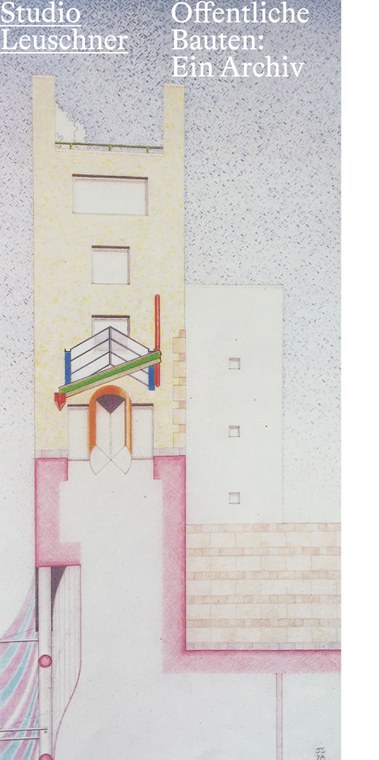
Winter semester 2025 - 2026
__________________________________________
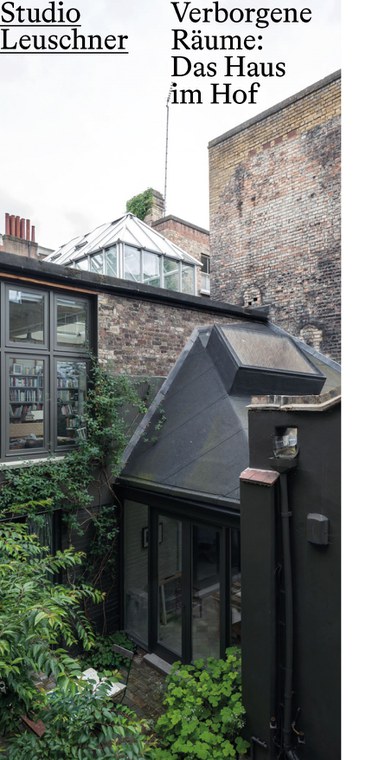
Summer semester 2025
__________________________________________
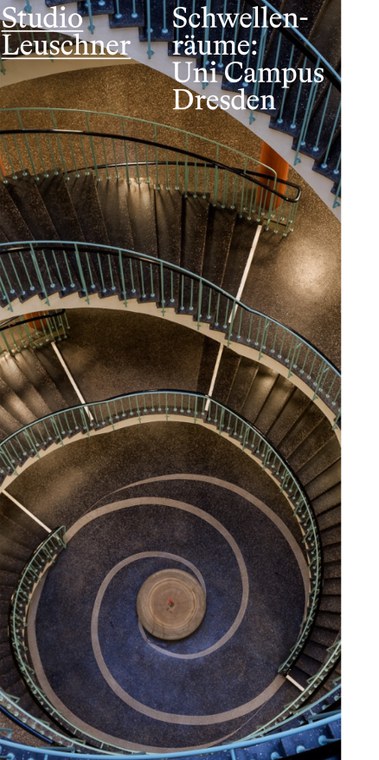
Winter semester 2024 - 2025
__________________________________________
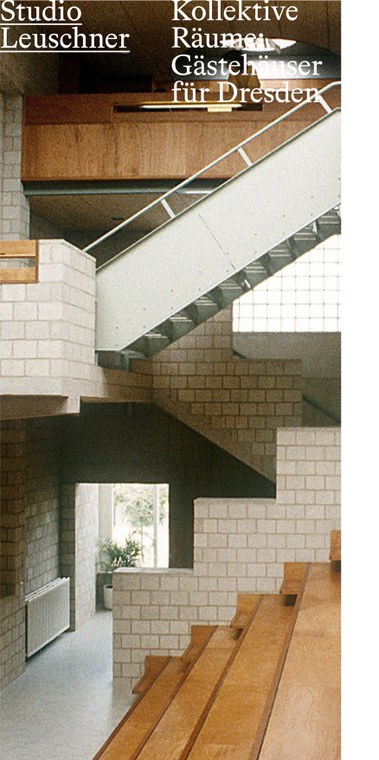
Summer semester 2024
__________________________________________
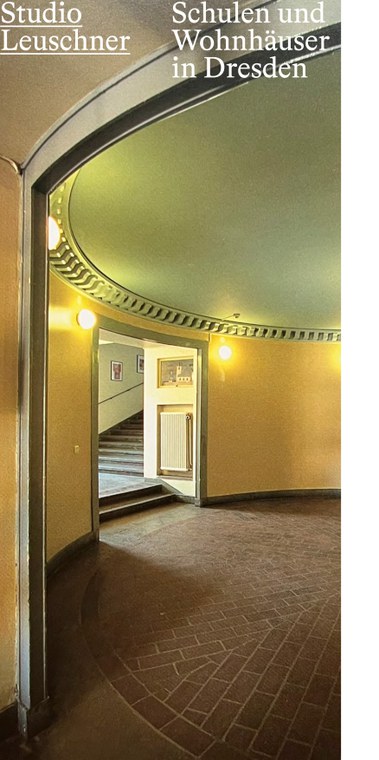
Winter semester 2023 - 2024