
Oct 01, 2026
Smart City Summer School Dresden 2026: Sharing Knowledge, Creating Impact, and Facilitating Solution Transfer
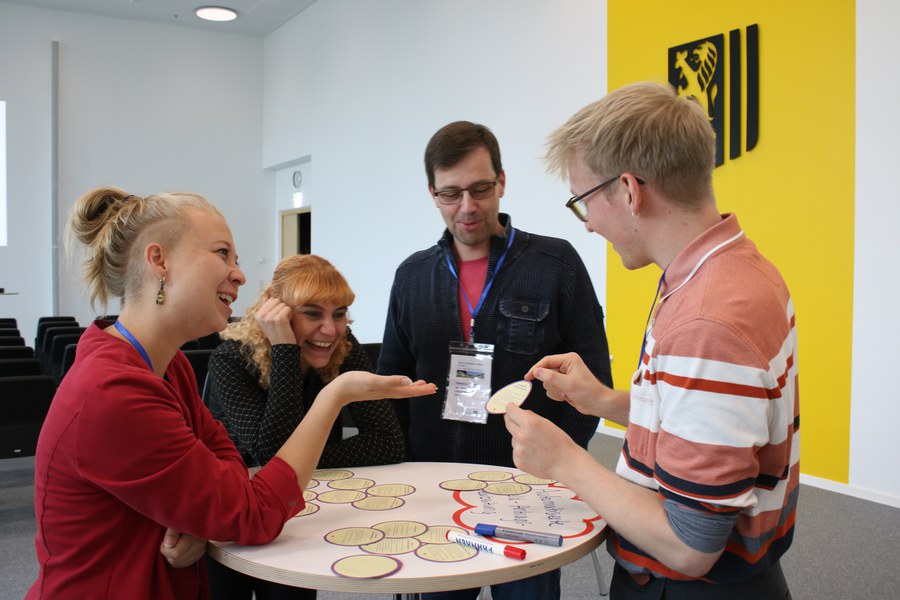
For two action-packed days, researchers from around 50 German universities, colleges, and Institutes gathered at the Dresden Stadtforum to connect smart city research and applications through workshops, presentations, and discussions.
The event was hosted by the Model Project Smart City Dresden, a funded collaboration between the state capital and the TUD Dresden University of Technology. The research group WISSENSARCHITEKTUR – Laboratory of Knowledge Architecture (TU Dresden) leads the scientific research and is actively involved in the Smart City science network, founded in 2025. The network provided the impetus to share knowledge in a summer school and to collectively explore the full range of relevant smart city topics.
The program was therefore structured around masterclasses featuring keynote presentations and interactive workshop elements, with a deliberate focus on exchange and interaction.
Prof. Jörg Rainer Noennig (WISSENSARCHITEKTUR) and Michael Breidung (Eigenbetrieb IT-Dienstleistungen) opened the event. Klaus Kühling (Saxon State Ministry for Infrastructure and Regional Development) and Renate Mitterhuber (Federal Ministry of Housing, Urban Development, and Construction) delivered welcoming remarks.
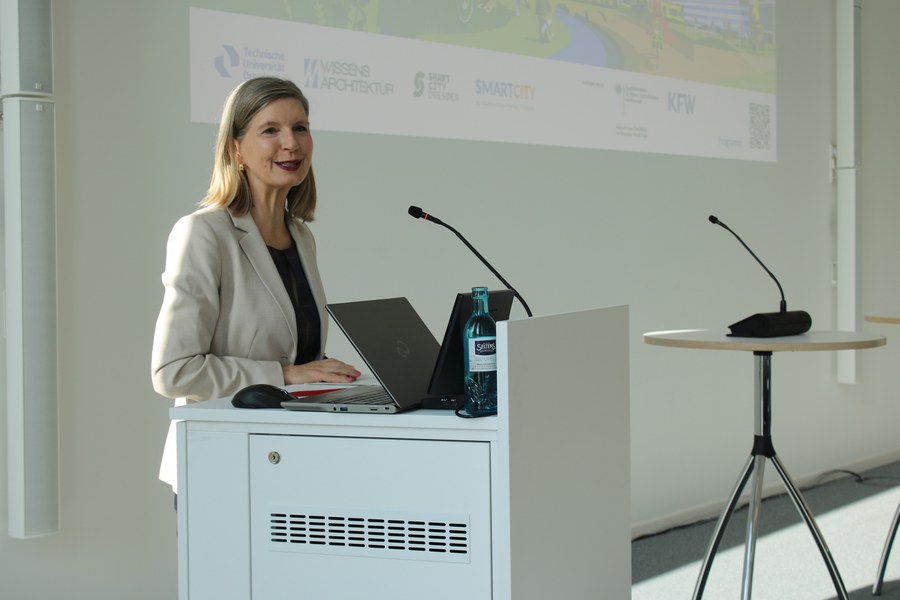
Renate Mitterhuber (Bundesministerium für Wohnen, Stadtentwicklung und Bauwesen)
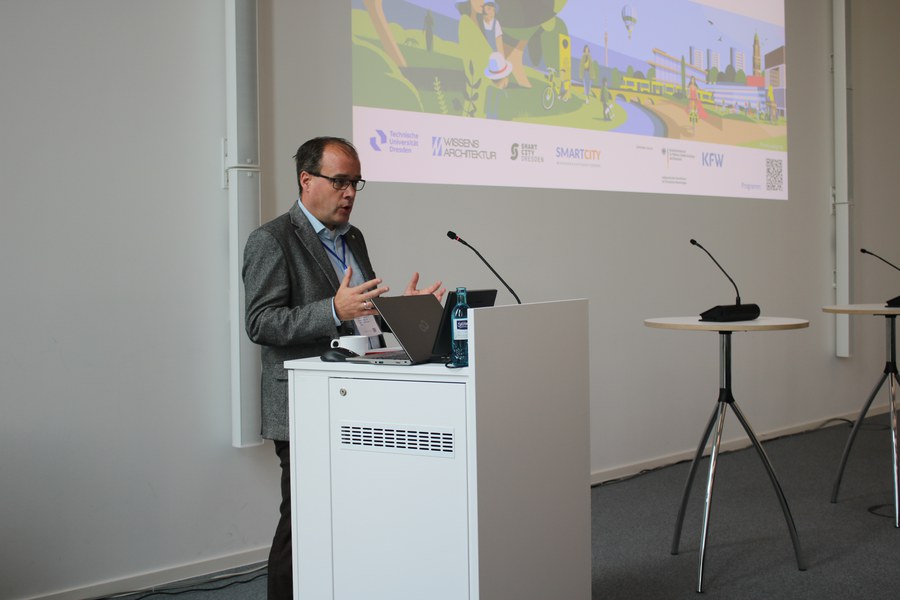
Klaus Kühling (Sächsisches Staatsministerium für Infrastruktur und Landesentwicklung)
Resilience and Smart Citizenship
Municipal resilience has regained importance in recent years. In the masterclass, it was examined against the backdrop of new technological opportunities and risks—ranging from climate change and civil defense to governance and the resilience of digital infrastructures. The focus was on the role of the population, modern emergency planning, and solutions that enable municipalities to maintain their action-taking capacity and ensure data exchange even in the event of power or cellular network outages.
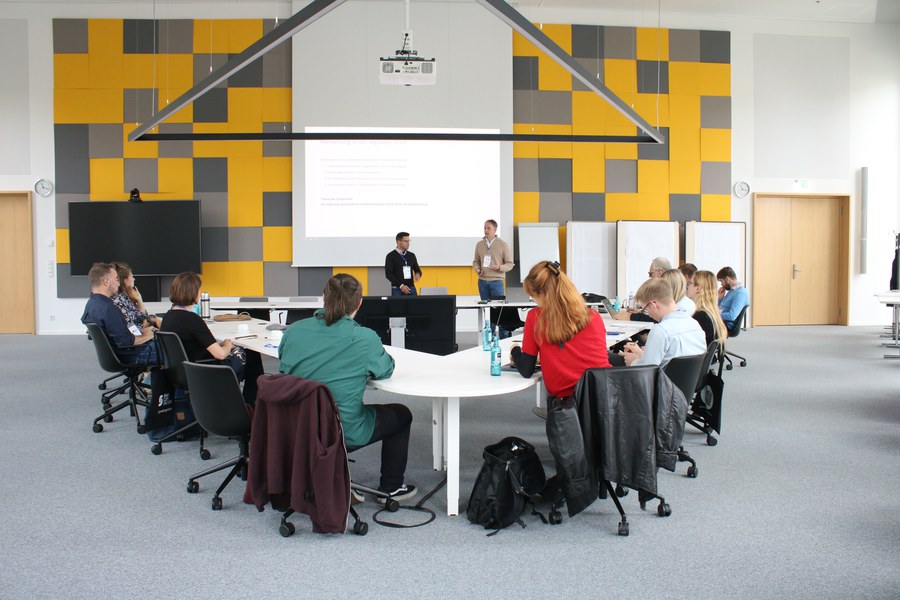
The smart city is also a social transformation in which citizens are empowered through digital learning and appropriate tools to actively help shape their city. The masterclass “Smart Citizenship—Empowerment, Participation, and Engagement in the Digital City” used digital participation formats and AI to illustrate the opportunities and challenges involved and how municipalities can promote sustainable, participatory urban development.
Digital participation formats offer the opportunity to involve young people more closely in urban planning, as they are more accessible and connect to the young people’s everyday lives and media environment. Drawing on studies and the use of digital tools—such as those for the 2033 Federal Horticultural Show in Dresden—a masterclass explored how young people can actively help shape their communities while developing important skills.
What remains of the smart city pilot projects?
A central question of the Summer School was: How can good ideas from individual pilot projects be scaled up?
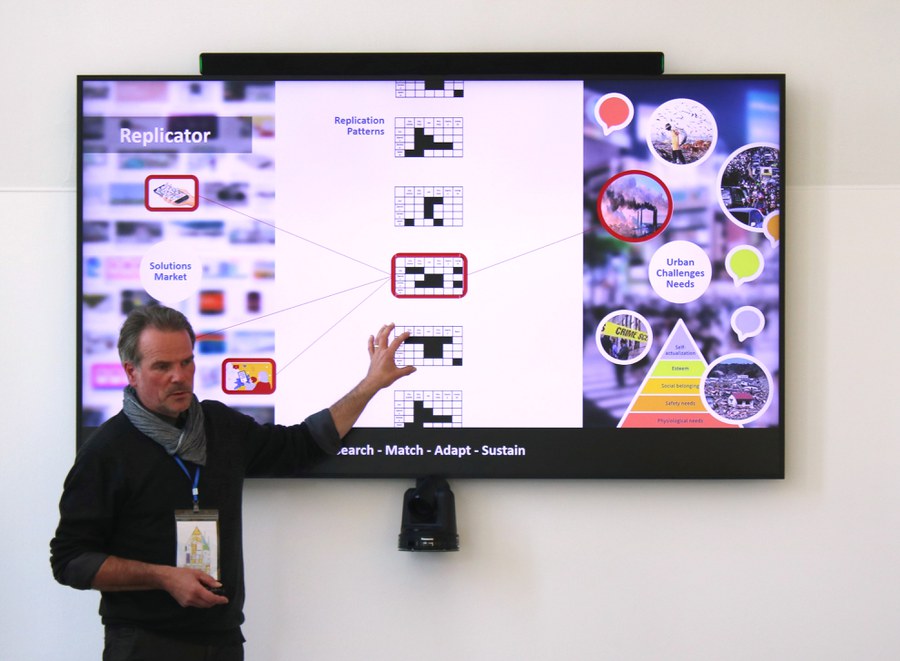
WISSENSARCHITEKTUR-Leiter Prof. Jörg Rainer Noennig
The successful transfer of smart city solutions requires suitable regional structures that connect relevant stakeholders and developments at the local, state, federal, and international levels. The “Solutions for all!” masterclass therefore presented a concept for a transfer hub designed to support the continued use and dissemination of successful smart city solutions.
Another masterclass addressed the question of how smart city solutions from the Smart Cities Model Projects (MPSC) can be permanently embedded in municipalities and transferred to other cities and towns. Specific obstacles, conditions for success, and approaches for a successful transfer were discussed based on municipal experiences, current research findings, and the knotdots strategy tool.
The potential of open data and open-source solutions for civil society and municipal administrations is currently also being explored in Dresden. Using concrete applications such as an energy transition dashboard and the Index Data Explorer, it became clear that successful data-driven applications should meet requirements for transparency, documentation, transferability, and the responsible handling of sensitive data.
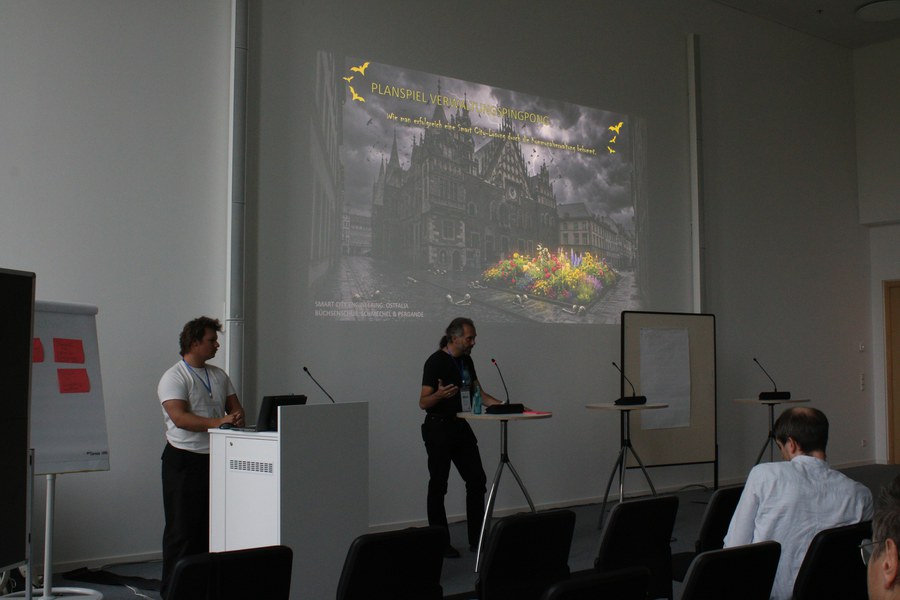
An entertaining interactive simulation game wrapped up the first day: “Game. Set. Victory. How to Successfully Get a Smart City Solution Approved by Local Government.”
Impact, Governance, and Sustainability
On the second day, the focus shifted to the impact analysis of smart city measures. In addition to impact-oriented management, the discussion covered practical approaches from sustainability management, evaluation methods involving soundscapes, and studies on subjective perceptions of safety.
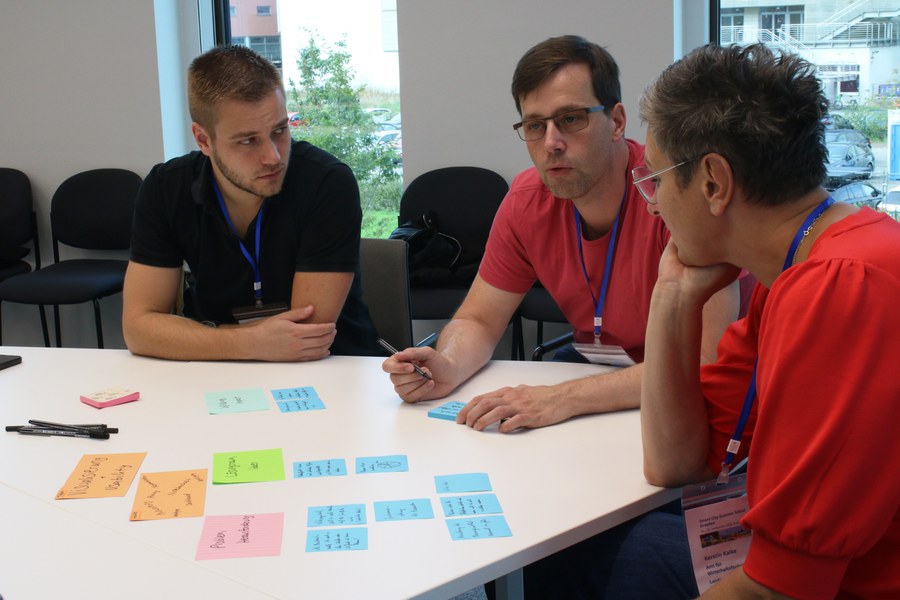
“Smart governance” means integrating aspects of infrastructure, resource management, and societal needs within public administration. Using a small German town as a case study, along with municipal asset management and sustainable AI, different perspectives and conflicting goals were examined and weighed collectively in an interactive stakeholder role-playing exercise.
Blue-green infrastructure and digital twins—along with the energy transition and stable power grids—contribute to the sustainable and resilient use of resources. The masterclass presented innovative approaches for local energy markets, cryptographic coordination, and the use of industrial byproducts as building blocks of a sustainable energy supply.
Thinking Ahead Together
Two masterclasses looked toward the future of science and practice: “How ‘Smart’ Is the Smart City (Still)? Future Competency Needs and Research Perspectives” and “Transfer Between Research and Practice: Framework Conditions, Formats, and Standards.” Participants explored relevant competencies, research perspectives, and the transfer of knowledge and solutions —ranging from the need for skilled workers and intelligence research to standardization and norm setting. In interactive sessions, concrete experiences and opportunities for knowledge transfer were discussed, and a “knowledge architecture for smart cities” was outlined.
At the end of the Summer School, participants’ feedback was consistently positive: they praised the open, productive atmosphere, the intensive exchange of ideas, and the diverse insights gained. The Summer School demonstrated how valuable it is to look beyond disciplinary and institutional boundaries—and that sustainable smart city development succeeds above all where knowledge is shared, experiences are exchanged, and new ideas are developed collaboratively.
Podcast recording
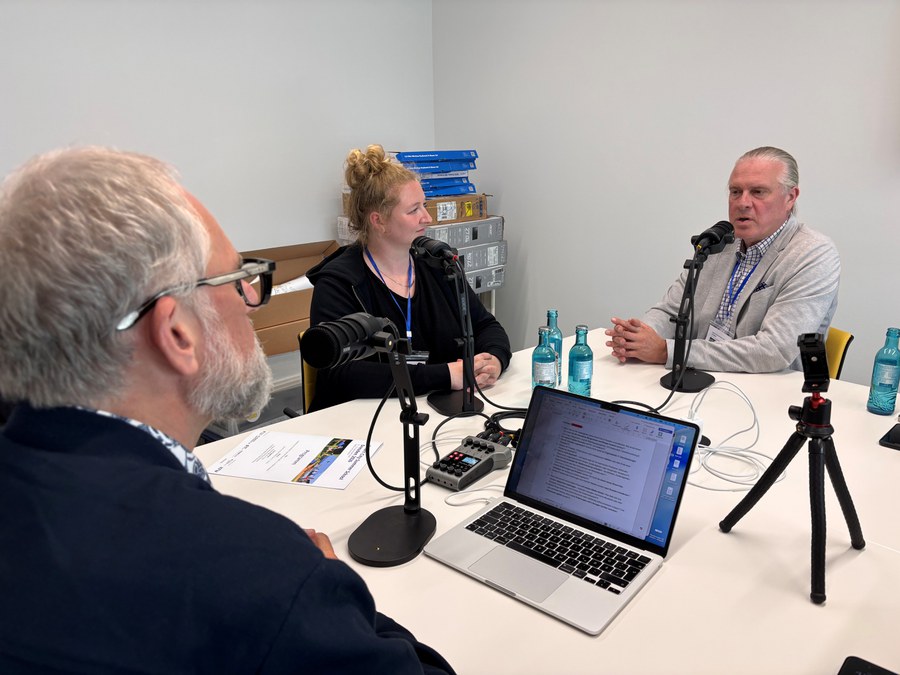
In parallel with the event, an episode of the“Raumdigital” podcast was recorded with the participants. It is scheduled to be released on Thursday, October 8, 2026.