
Topics for Final Year Projects and Theses
As an alternative to the proposed topics and themes listed below you can discuss with us your own ideas for projects. DO not hesitate to contact us.
Themes and topics of this category are recommended for:
| CE | BB | GEM | KI | SV | WU | "ohne" | ACCESS |
| ● | ● | ● | ● | ● | ● | ● | ● |
Short description
Semantic technologies for BIM: IFC→RDF conversion, SPARQL/SHACL reasoning, machine-readable rules, and Linked-Data integration (bSDD/JSON-LD) to improve automation and interoperability.
Example thesis topics (BSc/MSc)
-
A.1 IfcOWL in practice: Build an IFC→RDF pipeline, design SHACL shapes, and show how SPARQL/SHACL automates two BIM tasks (e.g., rule checking and data aggregation). Benchmark effort, accuracy, and runtime.
-
A.2 Taxonomy → IFC alignment: Automatically align a domain taxonomy to bSDD/IFC PropertySets; generate IDS and a JSON-LD context; evaluate coverage and consistency on sample models.
-
A.3 SmartRegBase (LD): Design an RDF/SHACL model and minimal API for machine-readable rules with versioning and provenance.
-
A.4 SemanticBIM links: Link external product/asset datasets to IFC elements via persistent URIs; demonstrate cross-model queries (costs, materials, LCA attributes).
-
A.5 STEP vs. triple store: Compare typical queries (e.g., “doors without fire rating”) on IFC (STEP) vs. RDF store; measure query complexity and performance.
-
A.6 Ontology quality & governance: Assess IfcOWL + extensions using competency questions, OOPS! checks, and SHACL validation; propose a governance checklist.
Expected skills
-
Must-have: Python, basic IFC, Git.
-
Nice-to-have: RDF/OWL, SPARQL, SHACL, rdflib/Jena, JSON-LD, bSDD/IDS.
Contact
Topics in this category are recommended for the below listed specializations:
| CE | BB | GEM | KI | SV | WU | "ohne" | ACCESS |
| ● | ● | ● | ● | ● | ● | ● | ● |
Short description
Construction robotics: BIM-informed localization & navigation, live 3D mapping, safety functions, teleoperation, and IoT/CDE integration for smart construction sites.
Task for a master thesis:
- Analysis and Potential Assessment of Reusing Environmental Data for Hardware Optimization on Digitalized Construction Sites (task sheet)
Example thesis topics (BSc/MSc)
-
B.1 Modular construction robot – Safety & geofencing: Core safety functions (emergency stop, reduced-speed mode) and geofencing derived from IFC zones.
-
B.2 BIMNav – SLAM↔BIM alignment: Robust robot localization by matching the SLAM map with BIM (RTAB-Map/ORB-SLAM3).
-
B.3 BIM Path – Obstacle-aware path planning: Navigation2/costmaps under BIM constraints (no-go/one-way areas, safety clearances).
-
B.4 LiveBIM Update – Change detection: 3D mapping → automatic detection of deviations and updating IFC geometry/attributes.
Contact
Research Associate
NameMr Xiangyu Wang Dipl. -Ing.
Send encrypted email via the SecureMail portal (for TUD external users only).
Visiting address:
Beyer-Bau, 207 George-Bähr-Str 1d
01069 Dresden
Research Associate
NameMs Mukta Rajan Nisal M.Sc.
Send encrypted email via the SecureMail portal (for TUD external users only).
Certificate of DFN-PKI for encrypted email communication.
Visiting address:
Beyer-Bau, 1.OG, Room 111 George-Bähr-Str. 1d
01069 Dresden
Topics in this category are recommended to students from the below listed specializations:
| CE | BB | GEM | KI | SV | WU | "ohne" | ACCESS |
| ● | ● | ● | ● | ● | ● | ● | ● |
Topics
- Room-Level Completeness Detection for RoomPlan-to-IFC Reconstruction (P)
Development of a rule-based method for detecting incomplete room geometries after RoomPlan-to-IFC reconstruction. The method identifies issues such as open wall loops, missing room corners, uncertain openings, and insufficient ceiling information. The detected problems are summarized in a structured report on scan and reconstruction quality.
- IFC-Guided Rescan Target Generation for Robot-Assisted Indoor Scan-to-BIM (T)
Extension of the completeness detection module by converting identified reconstruction problems into specific rescan targets for a mobile robot. The method evaluates whether the available scan data are sufficient for IFC or BEM reconstruction and proposes suitable next robot positions to improve room closure, opening detection, and the generation of space boundaries.
Beneficial Prior Knowledge
Basic programming skills in Python or C++, an interest in robotics, 3D data acquisition, Scan-to-BIM, and BIM, as well as a basic understanding of geometric room structures are beneficial. For more advanced work, experience with ROS, mobile robots, LiDAR, depth cameras, photogrammetry, or IFC data structures is helpful.
Contact
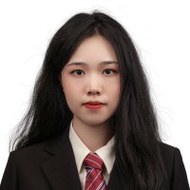
Research Associate
NameMs Hanwen Hu M.Sc.
Send encrypted email via the SecureMail portal (for TUD external users only).
Visiting address:
Beyer-Bau, 1.OG, Room 111 George-Bähr-Str. 1d
01069 Dresden
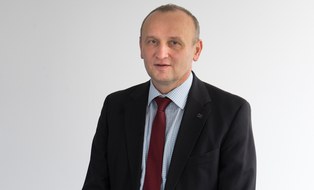 © TU Dresden, CIB
Professor
NameProf. Dr.-Ing. habil. Karsten Menzel
Head of the insitute
Send encrypted email via the SecureMail portal (for TUD external users only).
Visiting address:
Beyer-Bau
01069 Dresden, Room 205
George-Bähr-Str 1d
01069 Dresden
Office hours:
- Thursday:
- 13:15 - 14:15
- über OPAL buchen
by appointment
Themen in dieser Gruppe sind geeignet für folgende Vertiefungsrichtungen:
| CE | BB | GEM | KI | SV | WU | "ohne" | ACCESS |
| ● | ● | ● | ● | ● | ● |
Short description
Automated rule checking for BIM models and lean approval workflows in CDEs. Focus areas: NLP-based rule extraction from standards, machine-readable rule models, IFC/IDS-based validators, and cloud workflow automation.
Example thesis topics (BSc/MSc)
-
RegBIM AI: Extract requirements from DIN/EN standards and map them to IFC (NLP + bSDD/IDS).
-
SmartRegBase: Design a JSON-LD/Linked-Data schema and web APIs for machine-readable rules.
-
CloudCheck BIM: CI/CD pipeline that runs IFC/IDS checks automatically on CDE upload and reports results.
-
Validator benchmarking: Compare accuracy, runtime, and value of rule-checking engines (cost–benefit).
-
CDE approval workflow: Role/rights-based process with audit trail and notifications.
Topic proposals
We welcome your ideas. Please use the contact box on this page and send a short outline (title, objective, link to our clusters, available data, language, relevant skills, timeline).
Expected skills
-
Must-have: Python (parsing/NLP), Git, basic IFC/IDS/MVD
-
Nice-to-have: Docker, REST APIs, CDE APIs, Linked Data/JSON-LD
Language
German or English
Topics in this category are recommended to students from the below listed specializations:
| CE | BB | GEM | KI | SV | WU | "ohne" | ACCESS |
| ● | ● | ● | ● | ● |
Topic E.1:
Data Mining to improve the analysis of building performance.
Topic E.2:
Development of sophisticated diagnosis technologies for highly-automated buildings
Betreuer
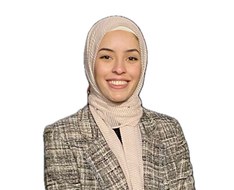 © Emara, Merna
Research Associate
NameMs Merna Emara M.Sc.
Send encrypted email via the SecureMail portal (for TUD external users only).
Visiting address:
Beyer-Bau, 1.OG, Room 207 George-Bähr-Str. 1d
01069 Dresden
© TU Dresden, CIB
Professor
NameProf. Dr.-Ing. habil. Karsten Menzel
Head of the insitute
Send encrypted email via the SecureMail portal (for TUD external users only).
Visiting address:
Beyer-Bau
01069 Dresden, Room 205
George-Bähr-Str 1d
01069 Dresden
Office hours:
- Thursday:
- 13:15 - 14:15
- über OPAL buchen
by appointment
Topics in this category are recommended to students from the below listed specializations:
| CE | BB | GEM | KI | SV | WU | "ohne" | ACCESS |
| ● | ● | ● | ● |
Topic F.1:
Knowledge-based management of repair measures using Web ontologies (Supervisor: Yang)
Topic F.2:
Adopting the U-Net++ architecture to segment crack images for Strucral Health Moniotirng (Supervisor: Lin)
Contact
© TU Dresden, CIB
Professor
NameProf. Dr.-Ing. habil. Karsten Menzel
Head of the insitute
Send encrypted email via the SecureMail portal (for TUD external users only).
Visiting address:
Beyer-Bau
01069 Dresden, Room 205
George-Bähr-Str 1d
01069 Dresden
Office hours:
- Thursday:
- 13:15 - 14:15
- über OPAL buchen
by appointment
Themen in dieser Gruppe sind geeignet für folgende Vertiefungsrichtungen:
| CE | BB | GEM | KI | SV | WU | "ohne" | ACCESS |
| ● | ● | ● | ● | ● | ● |
Short description
XR research on multi-user interaction and spatial cognition using our room-scale, projection-based CAVE integrated with the XR Twin. Focus: networking across AR/VR/CAVE, user studies on spatial memory, usability/UX in multi-user settings, and end-to-end streaming performance for AI-generated 3D scenes.
Example thesis topics
-
BIM Model Checking Scenarios in VR-CAVE (P)
Development of practical inspection scenarios and simple interaction workflows for exploring building models in an immersive VR-CAVE environment. The project may include defining typical BIM checking tasks, implementing interaction techniques such as object selection, layer control, annotation, or issue marking, and testing their suitability for model inspection. -
Immersive BIM Model Validation in VR-CAVE (T)
Scientific investigation of whether VR-CAVE-based model validation provides measurable advantages over conventional desktop-based methods. Possible evaluation criteria include error-detection performance, task completion time, spatial understanding, usability, cognitive workload, and user experience. The thesis may include the design and implementation of a comparative user study.
Beneficial Prior Knowledge
Basic knowledge of BIM modelling, IFC, or Revit is beneficial. Experience with Unity, Unreal Engine, SteamVR, OpenXR, or related development environments is helpful. An interest in human–computer interaction, UX design, immersive technologies, and empirical research methods is recommended. For the thesis topic, prior participation in the preparatory project is advantageous but not mandatory.
Language
German or English
Research Associate
NameMs Hanwen Hu M.Sc.
Send encrypted email via the SecureMail portal (for TUD external users only).
Visiting address:
Beyer-Bau, 1.OG, Room 111 George-Bähr-Str. 1d
01069 Dresden
Themen in dieser Gruppe sind geeignet für folgende Vertiefungsrichtungen:
| CE | BB | GEM | KI | SV | WU | "ohne" | ACCESS |
| ● | ● | ● | ● | ● | ● |
Short description
AI for BIM geometry and materials: from material classification & synthesis to geometry generation from images/point clouds and conversion into IFC-ready components and digital product passports.
Example thesis topics (BSc/MSc)
-
AI-generated BIM materials: Train/control a model to create seamless PBR textures from material labels; export maps and evaluate realism & performance in a BIM/XR viewer.
-
Facade patch dataset: Curate and label a high-quality facade/material dataset (Blender + Python), then benchmark CNN/Transformer baselines.
-
Multi-modal material recognition: Fuse visual data with XRF readings for robust material classification; calibration + cross-site generalization.
-
Latent diffusion to 3D: Generate voxel/rough mesh room geometry from panoramic images; compare to ground truth and report metrics.
-
Detections → IFC objects: Pipeline that converts 2D/3D detections into parametric IFC entities and JSON-LD digital product passports (map to bSDD/IDS).
-
Constraint-based geometry fitting: Snap prefab components to images/point clouds via optimization; evaluate IoU/accuracy and export to IFC.
-
RGB–Thermal Material Classification: Comparison and fusion of RGB and thermal IR for robust façade material recognition; BIM/IFC linkage and CAVE visualization.tasksheet
Topic proposals
We welcome your ideas. Please use the contact box on this page and send a short outline (title, objective, link to our clusters, available data/sensors, language, skills, timeline).
Expected skills
-
Must-have: Python, ML/DL (preferably PyTorch), OpenCV, Git; basic understanding of IFC.
-
Nice-to-have: Blender scripting, Unity (for rendering/validation), Stable Diffusion/ControlNet or similar, point-cloud processing, Hugging Face, JSON-LD/bSDD/IDS.
Language
German or English.
Research Associate
NameMs Hanwen Hu M.Sc.
Send encrypted email via the SecureMail portal (for TUD external users only).
Visiting address:
Beyer-Bau, 1.OG, Room 111 George-Bähr-Str. 1d
01069 Dresden