
Nov 11, 2026
A Look Back at the 30th Dresden Structural Engineering Seminar: Reality, Modeling, and Structural Design
Construction consumes large amounts of raw materials and energy. In particular, the production of cement—a key component of concrete—generates significant CO₂ emissions. At the same time, when buildings, bridges, and other structures are demolished, they are typically torn down completely. The resulting concrete is crushed and reused as recycled material. However, many concrete structural elements could be reused directly due to their high strength and good material quality. So why process proven structural components into recycled material when they can be reused as-is? What might the transition from linear resource consumption to circular construction look like, specifically in structural engineering?
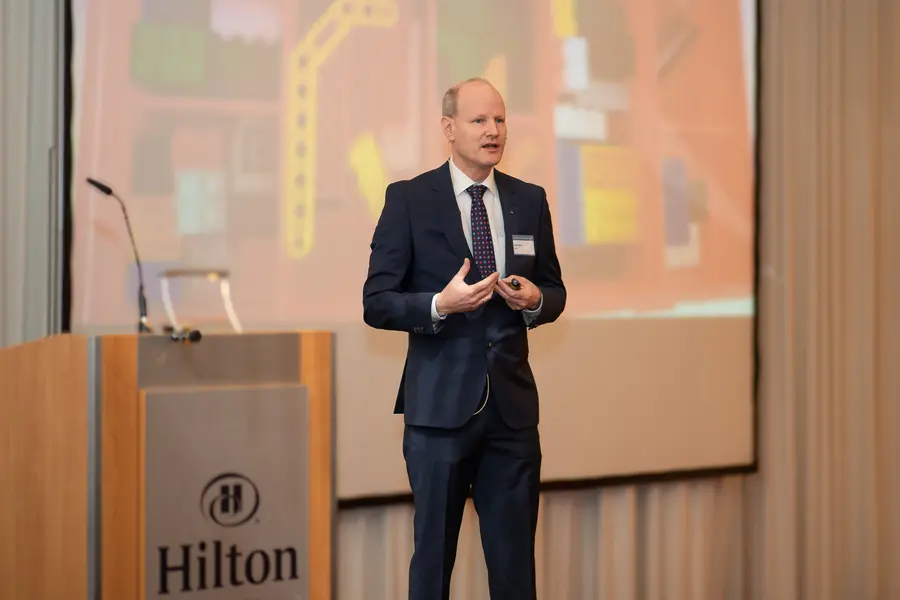
Prof. Dr.-Ing. P. Mark vom Lehrstuhl für Massivbau der Ruhr-Universität Bochum mit Lego-Steinen als Beispiel für zirkuläres Bauen.
Prof. Dr.-Ing. P. Mark from the Chair of Concrete Structures at Ruhr University Bochum illustrated how this concept can be put into practice using Lego bricks at the beginning of his lecture “Modular Reuse in Structural Engineering”: They can be taken apart and reassembled into new structures time and time again. What is a given with toys could also play a greater role in the construction industry. Instead of crushing concrete structural elements after demolition, they could be preserved as a whole and reused in new structures.
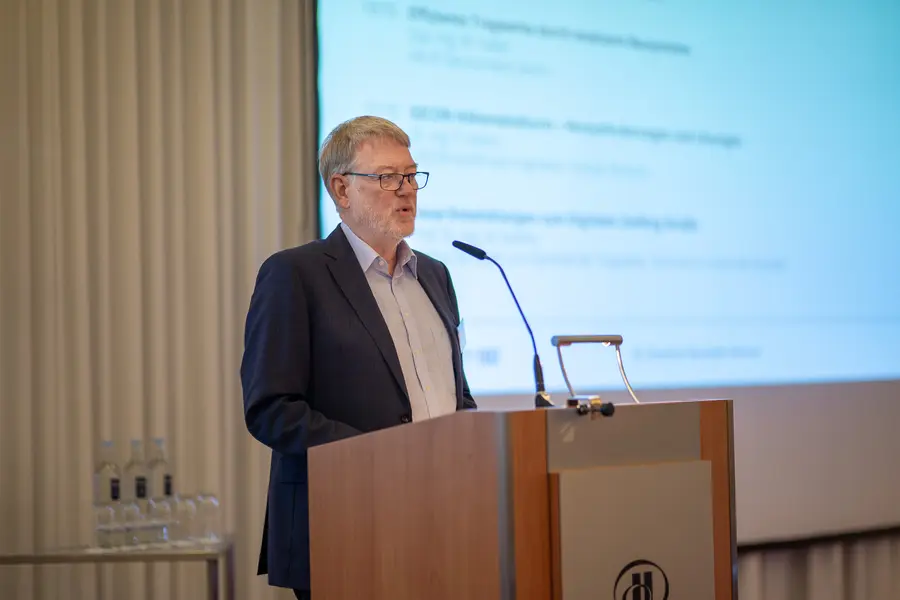
Prof. Dr.-Ing. M. Kaliske vom Institut für Statik und Dynamik der Tragwerke der TU Dresden eröffnet die Veranstaltung.
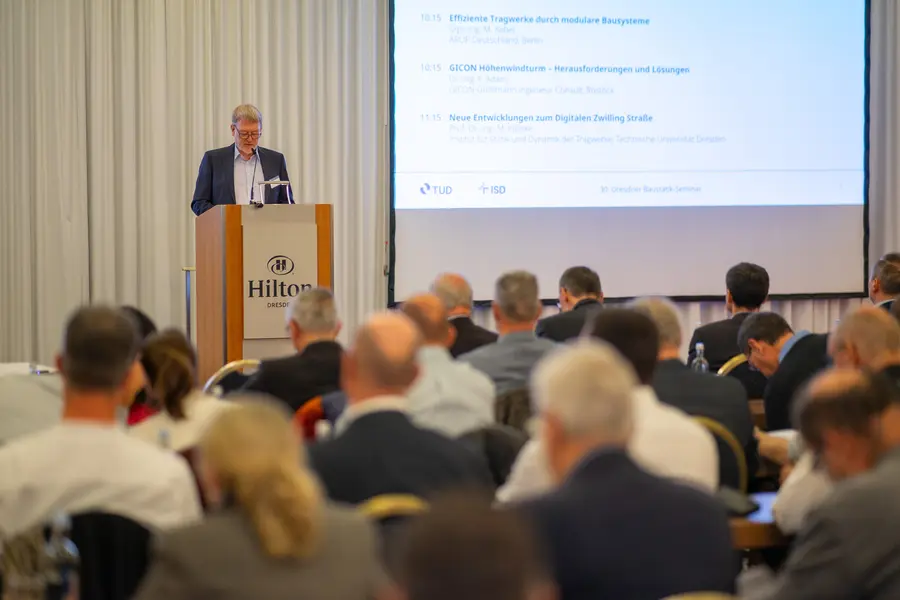
Prof. Mark was the first advisor at the 30th Dresden Structural Engineering Seminar, which took place on November 6, 2026, at the Hilton Dresden. Under the title “Reality – Modeling – Structural Design,” the program addressed current issues in structural engineering. The subsequent presentations covered a wide range of topics, from modular building systems and digital twins to specific construction projects and resource-efficient building methods.
The seminar was organized by the Institute of Structural Analysis at TU Dresden in collaboration with the State Association of Testing Engineers for Construction Technology in Saxony and the Saxony Chamber of Engineers.
Complete Presentation Program
Morning
Modular Reuse in Structural Engineering
Prof. Dr.-Ing. P. Mark, Chair of Concrete Structures, Ruhr University Bochum
Efficient Structural Systems Through Modular Construction Systems
Dipl.-Ing. M. Kabel, ARUP Germany, Berlin
GICON High-Altitude Wind Tower – Challenges and Solutions
Dr.-Ing. F. Adam, GICON-Großmann Ingenieur Consult, Rostock
New Developments in the Digital Twin for Roads
Prof. Dr.-Ing. M. Kaliske, Institute of Structural Analysis, TU Dresden
Afternoon
From the FEM Model to the Digital Twin
Prof. Dr.-Ing. R. Wüchner, Chair of Statics and Dynamics, Technical University of Munich
Construction of the New Cruise Terminal in Warnemünde
Dipl.-Ing. H. Mennenga, INROS LACKNER SE, Rostock
The Structural System of a Modern New School Building in Leipzig
Dr.-Ing. F. Purtak, TragWerk Ingenieure, Dresden
Sustainability and Concrete Construction—How Do They Fit Together in the Future?
Dr.-Ing. K. Pfeffer, UNIDOME Deutschland, Eltville-Martinsthal
Resource-Efficient Construction and Digitalization in Concrete Construction
Prof. Dr.-Ing. V. Mechtcherine, Institute of Construction Materials, TU Dresden
The event also featured the awards ceremony of the State Association of Testing Engineers for Construction Technology in Saxony.