
Mar 18, 2026
Hydraulic engineering between technology and nature: 49th hydraulic engineering colloquium in Dresden
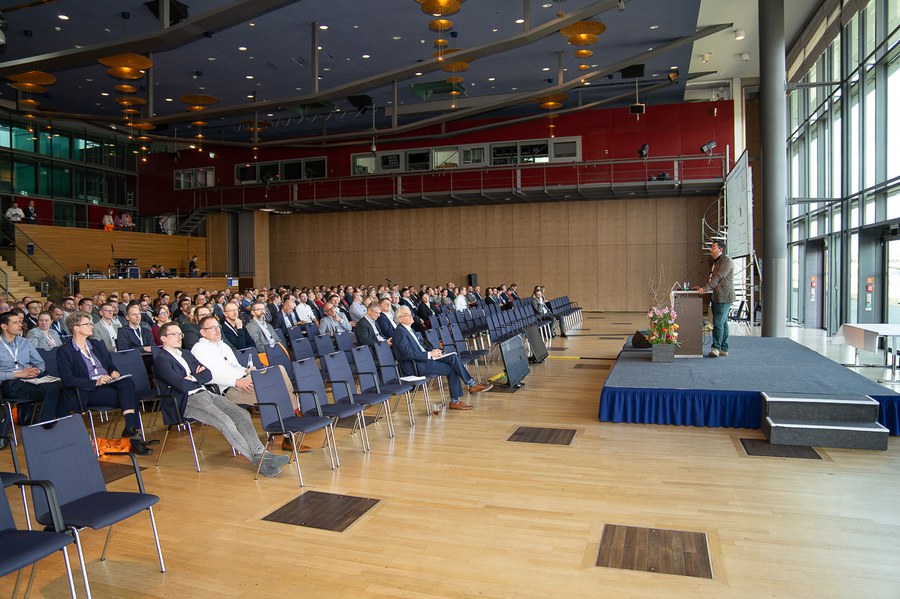
Current developments and new perspectives characterized the discussions at this year's hydraulic engineering colloquium in Dresden.
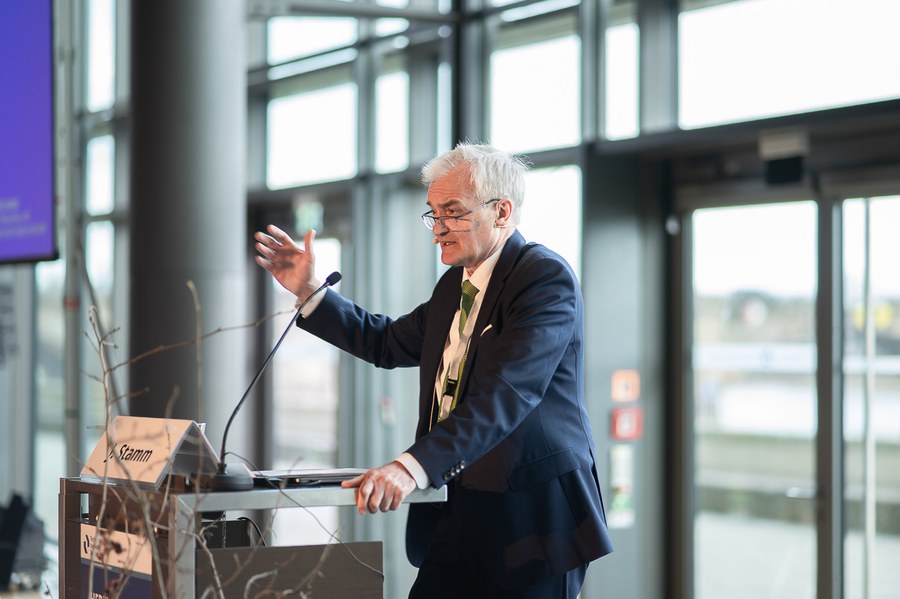
Prof. Dr.-Ing. Jürgen Stamm eröffnet das 49. Dresdner Wasserbaukolloquium
The 49th Hydraulic Engineering Colloquium brought together experts from science, administration and practice at the International Congress Center Dresden on March 12 and 13, 2026. Under the guiding theme of "Hydraulic engineering between technology and nature - multifunctional solutions for the future", the participants discussed current challenges and innovative approaches in dealing with water as a resource.
The traditional colloquium was organized by the Institute of Hydraulic Engineering and Technical Hydromechanics at TUD Dresden University of Technology. J. Stamm welcomed the guests and emphasized the importance of interdisciplinary solutions in the face of increasing conflicts of use and climatic changes.
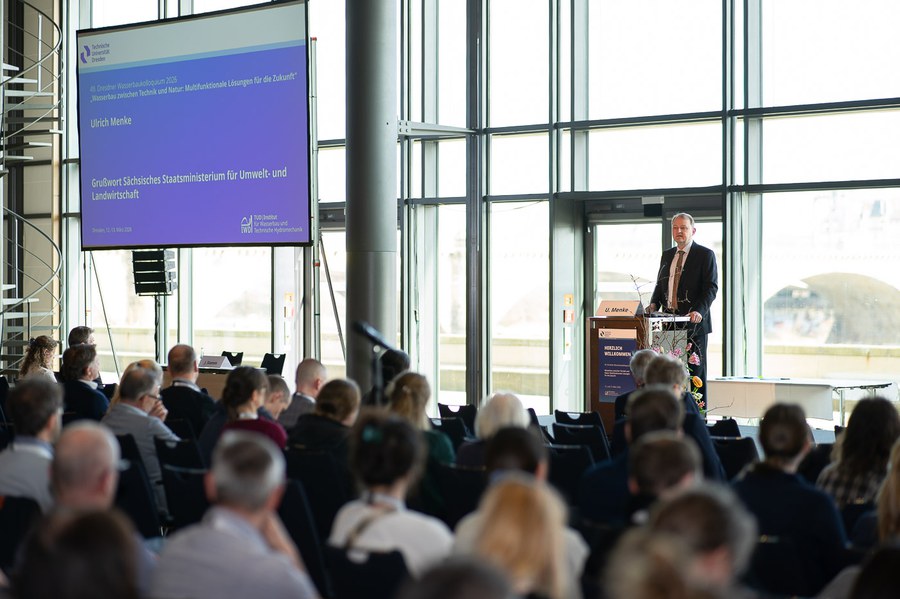
Grußwort des Sächsischen Staatsministeriums für Umwelt und Landwirtschaft, Ulrich Menke
This was followed by words of welcome from politicians and professional associations: Ulrich Menke spoke on behalf of the Saxon State Ministry for the Environment and Agriculture, Prof. Dr.-Ing. H. Milke conveyed the greetings of the German Association for Water Management, Waste Management and Cultural Engineering, Saxony/Thuringia Regional Association. Birgit Lange concluded the event on behalf of the Association of Engineers for Water Management, Waste Management and Cultural Engineering, Regional Association of Saxony.
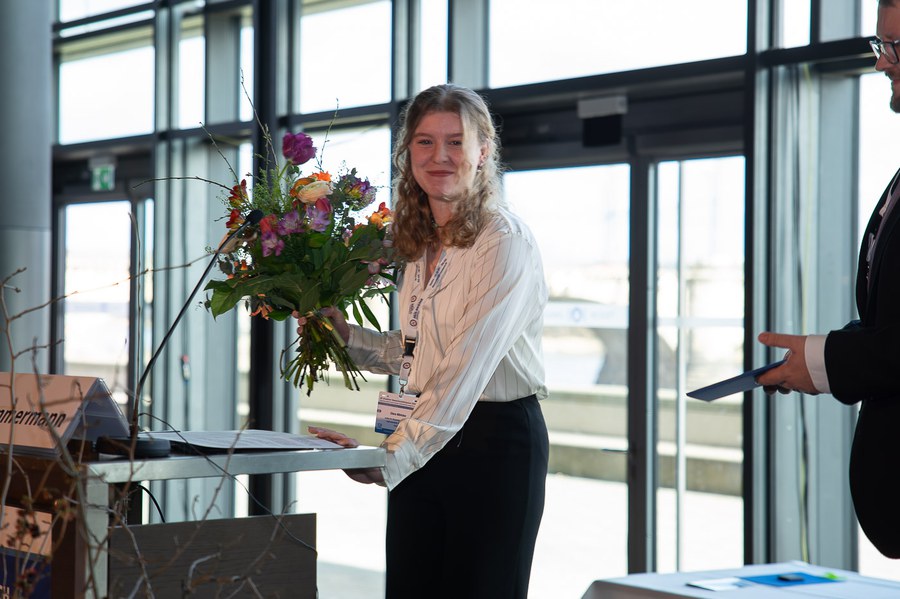
Dipl.-Ing. Clara Möricke erhält die Hubert-Engels-Medaille für Ihre Diplomarbeit
A first highlight was the awarding of the Hubert Engels Medal by Dr.-Ing. R. Zimmermann, Chairman of the Association. Dipl.-Ing. Clara Möricke was honored for her outstanding diploma thesis and apl. Prof. Dr.-Ing. habil. Detlef Aigner for his scientific life's work. For many years, Aigner played a key role in shaping the Hubert Engels Laboratory at TU Dresden and thus experimental hydraulic engineering research.
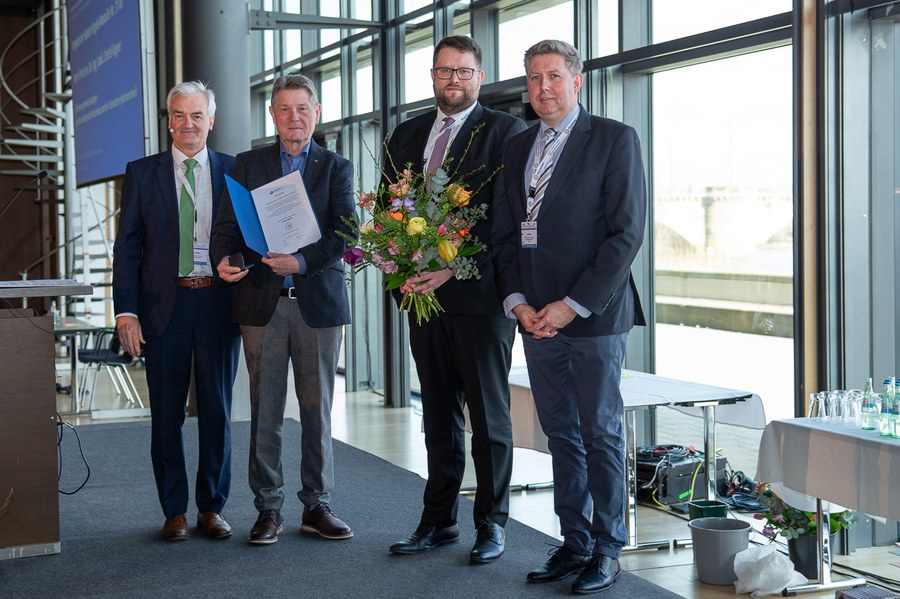
Für sein Lebenswerk erhält Prof. Dr.-Ing. habil. Detlef Aigner die Hubert-Engels-Medaille. Er war viele Jahre Laborleiter im Hubert-Engels-Labor der TU Dresden. Von links: Prof. Stamm, Prof. Aigner, Dr. Rocco Zimmermann, Dr. Ulf Helbig.
The concluding introductory lecture by Prof. Dr. Christoph Neinhuis deliberately set an interdisciplinary accent. Entitled "Plant-water interactions: On dealing with a valuable resource", he opened up a new perspective on hydraulic engineering issues. His plea was to understand nature not just as framework conditions, but as a model. Plants impressively demonstrated how processes can be efficiently controlled and regulated - an approach that is also becoming increasingly important for technical solutions in hydraulic engineering.
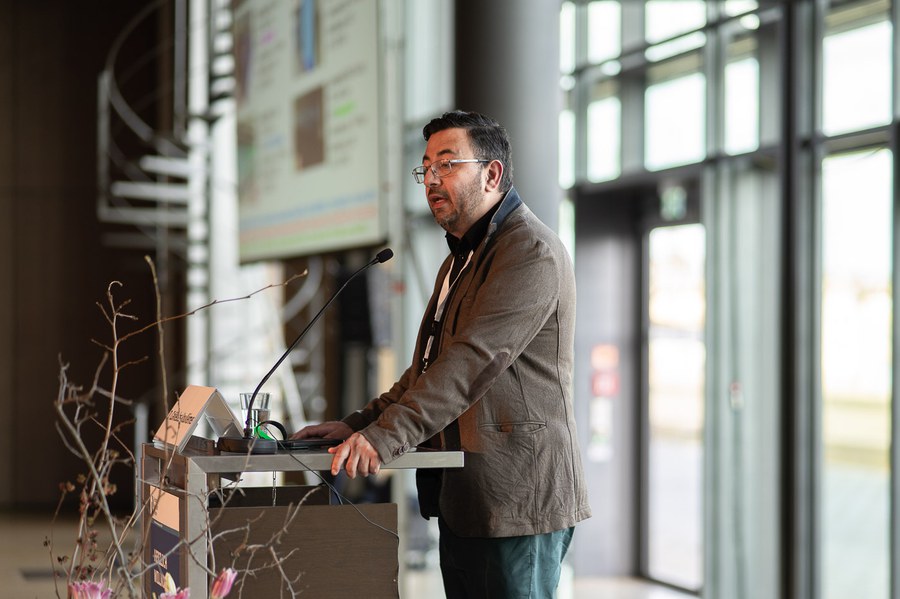
"Hochleistungsfähige Simulation der Hydrodynamik in der Umwelt – Instrumente für Wasserbau und Geowissenschaften" von Prof. Dr. D. Caviedes-Voullièmes, neuer Leiter der Professur für Environmental Fluid Dynamics and Modeling am Institut für Wasserbau der TU Dresden
The first block of lectures then continued with a clear technical focus. Prof. Dr. D. Caviedes-Voullièmes presented modern modeling approaches in his presentation "High-performance simulation of hydrodynamics in the environment - tools for hydraulic engineering and geosciences". At the same time, he took the opportunity to present himself as the new Head of the Chair of Environmental Fluid Dynamics and Modeling at the Institute. His research underlines the growing role of numerical simulations as a key tool for analyzing complex hydraulic engineering systems.
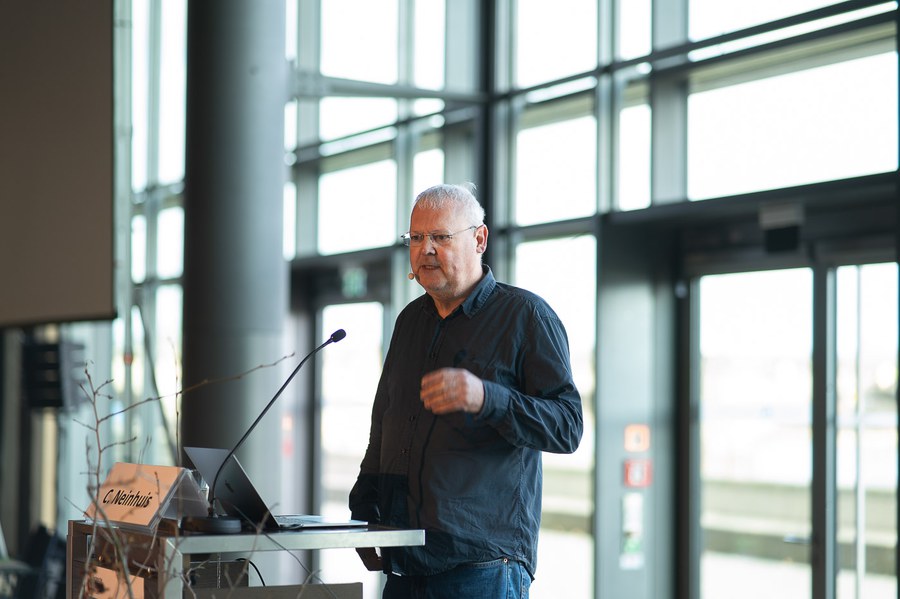
Prof. Dr. Christoph. Neinhuis, Professur für Botanik, SynoSys, Technische Universität Dresden
Overall, the colloquium made it clear that the future of hydraulic engineering lies in the intelligent linking of technology and nature. The focus is on multifunctional solutions that take ecological, economic and social requirements into account in equal measure - a claim that characterized the discussions over the two days and is likely to have a lasting impact on further professional exchange.